Manthara’s Whisper and Kaikeyi’s Two Boons
King Dasharatha decides to make Rama the crown prince, and all Ayodhya rejoices. But on the night before the ceremony the maid Manthara turns Queen Kaikeyi’s heart, and Kaikeyi demands two boons that send Rama to the forest for fourteen years.
Dasharatha’s decision
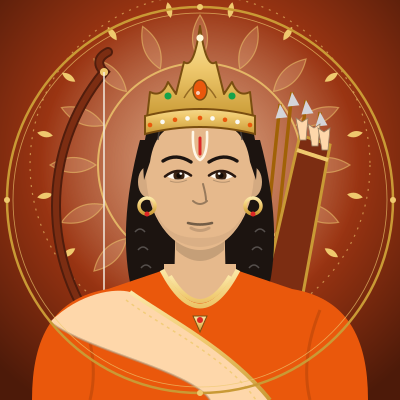
After the weddings, as we saw at the end of the last chapter, Bharata went to stay with his grandfather in Kekaya, taking Shatrughna with him. In Ayodhya, Rama became more and more beloved. Valmiki describes him as calm, gentle and truthful. He was always the first to speak a kind word. He forgot a hundred wrongs done to him, but remembered even a single kindness, and he honoured elders, sages and ordinary people alike.
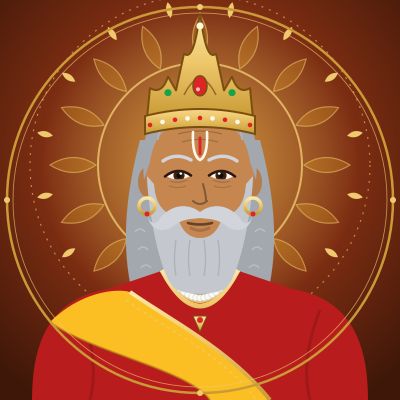
Dasharatha had grown old and had ruled for a very long time. Seeing Rama’s virtues, and seeing how deeply the people loved him, the king longed to make Rama the yuvaraja, the crown prince who would share the burden of ruling. He had also seen troubling signs in the sky and had bad dreams, and he felt that he should not delay.
He called a great assembly of his ministers, the leading citizens and the kings of many lands. In his hurry he did not invite King Janaka or the king of Kekaya, thinking they would hear the good news later. In a voice as deep as a rain cloud, Dasharatha said, “I have grown old under the shade of the royal white umbrella, and my body is tired. With your approval, I wish to make my eldest son Rama the crown prince.”
The assembly burst into joy, like peacocks dancing at the sight of rain clouds. Still, the king tested them: “Why do you want Rama while I am still ruling?” They answered by describing Rama’s qualities: his courage, truthfulness and learning, his care for the sick and the poor, and how he asked about each citizen’s welfare as a father asks about his children. “We long to see Rama as crown prince,” they said.
The city prepares
Dasharatha was delighted. “This is the beautiful month of Chaitra, when the forests are full of flowers,” he said. “Let everything be prepared for Rama’s anointing tomorrow, under the star Pushya.” Vasishtha and Vamadeva gave the orders. Gold, jewels, sacred waters, white flowers, honey, ghee, the white umbrella, fly-whisks, a fine elephant and the royal chariot were to be ready by sunrise.
Then the king sent his charioteer Sumantra to bring Rama. When Rama arrived, Dasharatha held him close and said, “You are my eldest son, born of my chief queen Kaushalya, and you are virtuous. Tomorrow you will be made crown prince. I have seen fearful omens and bad dreams. While Bharata is away from the city, it is best that your anointing take place quickly.”
The king added, “Bharata is good and righteous and devoted to his elder brother. But the minds of people can change.” He told Rama to fast that night with Sita and to sleep on kusha grass, as the rule requires. Rama went to his mother Kaushalya and found her praying for him, with Sumitra, Lakshmana and Sita beside her. Rama said to Lakshmana, “Rule this earth with me. You are my second self.”
That evening Vasishtha himself came to Rama’s palace and guided Rama and Sita through the vow of fasting. Rama and Sita worshipped Lord Narayana, offered ghee into the fire and lay down on kusha grass in the shrine. All night the city was decorated. Flags flew from houses and temples, the roads were sprinkled with water and strewn with flowers, and trees of lamps were set up to light the way. Everyone waited for the morning.
Manthara climbs the terrace
Among the women of Kaikeyi’s palace was Manthara, a hunchbacked maid who had come with Kaikeyi from her father’s house. By chance she climbed to the palace roof and saw Ayodhya glittering with flags and garlands. Seeing Rama’s old nurse dressed in fine clothes and smiling, she asked why the people were so happy. The nurse told her that the next day Rama would be anointed as crown prince.
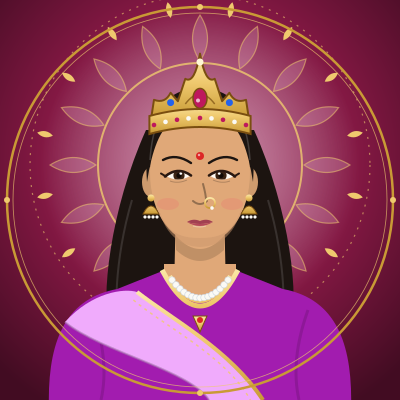
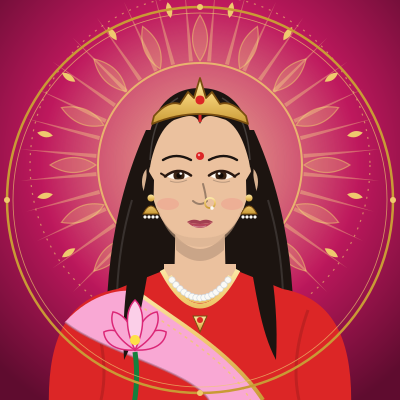
Manthara was furious. She hurried down to Kaikeyi, who was resting, and cried, “Get up, foolish one! A great danger is coming to you. The king speaks sweetly to you, but tomorrow he is crowning Kaushalya’s son, while your son Bharata has been sent far away.” Kaikeyi was not alarmed at all. Delighted, she gave Manthara a beautiful ornament as a reward for the good news. “Rama is as dear to me as Bharata,” she said.
Manthara threw the ornament away in anger. Again and again she argued: once Rama was king, Kaushalya would be the honoured queen mother and Kaikeyi would have to serve her. Bharata might be sent away or even put in danger, and the throne would pass to Rama’s sons, not to Bharata. At first Kaikeyi defended Rama. She said that he served her even more than his own mother, and that Bharata would rule after him.
But Manthara did not stop, and slowly her words took root. Kaikeyi’s face grew red with anger and she sighed deeply. “Manthara, I will send Rama to the forest this very day and have Bharata crowned,” she said. “But tell me how it can be done.” Manthara had been waiting for exactly this question.
The two boons
“Do you not remember?” said Manthara. “You told me yourself long ago. When the gods fought the asuras, King Dasharatha went to help Indra against the asura Shambara, at the city of Vaijayanta in the south, near the Dandaka forest. You went with him. In a night attack the king was wounded by weapons and lost consciousness, and you carried him away from the battle and saved his life.”
“Pleased with you, the king offered you two boons. You told him you would ask for them when you needed them, and he agreed. Now is the time. Ask that Bharata be crowned, and that Rama be sent to the Dandaka forest for fourteen years. In fourteen years Bharata will win the hearts of the people, and his rule will become firm.”
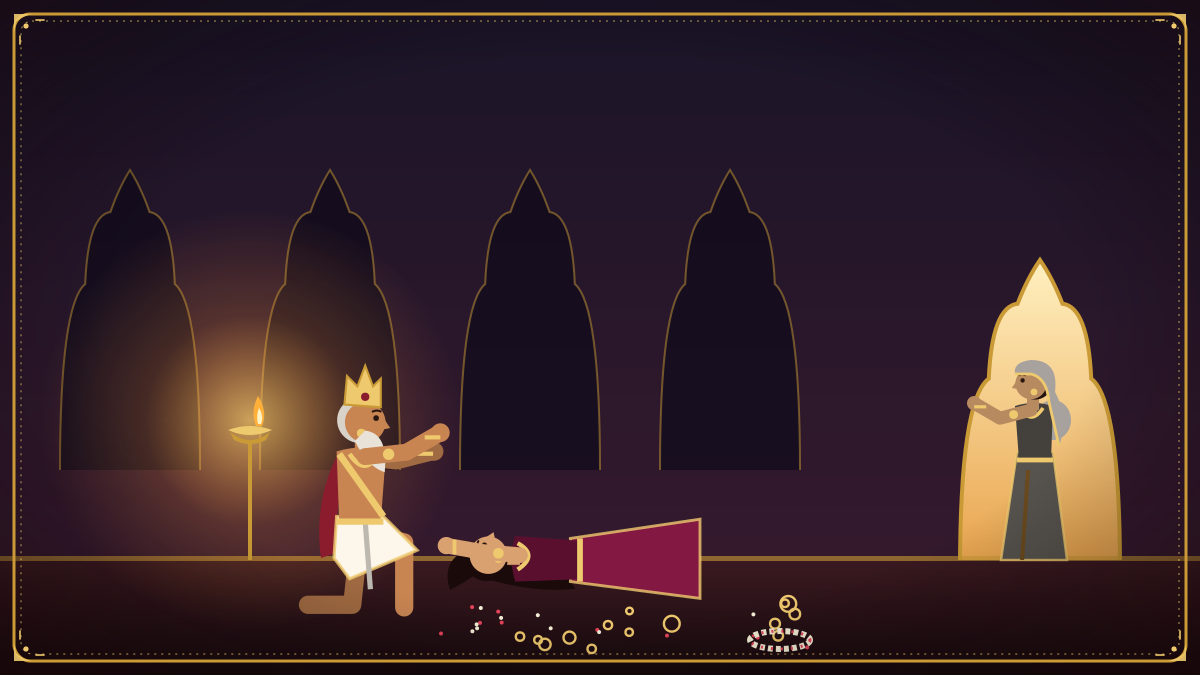
Manthara told her exactly what to do. “Go to the krodhagara, the chamber of anger. Take off your ornaments, put on soiled clothes and lie on the bare floor. Do not look at the king or speak to him. He loves you dearly and cannot bear to see you unhappy. Do not get up until he gives his promise.” Kaikeyi praised Manthara’s cleverness and did just as she said, throwing her jewels on the floor.
Until that moment Kaikeyi had loved Rama like her own son, as her first words to Manthara showed. Her change came from listening to a bitter voice and letting fear and pride enter her heart. It is a quiet warning for every family: a few poisonous words, repeated often enough, can turn love into anger.
A long night in Kaikeyi’s palace
Dasharatha, full of joy, came to Kaikeyi’s palace to share the happy news. When he learned that she was in the chamber of anger, he was deeply troubled. He found her lying on the ground like a fallen creeper. Gently he stroked her and said, “Who has hurt you? Tell me what you want. I swear by Rama, without whom I cannot live even for a moment, I will do whatever you ask.”
Kaikeyi called the gods, the sun and moon, the sky, day and night, the directions and the earth to witness his oath. Then she spoke: “Remember the two boons you gave me when I saved you in the battle of the gods and asuras. With the preparations made for Rama, let my son Bharata be anointed. And let Rama go to the Dandaka forest for fourteen years, wearing bark garments and deerskin and living as an ascetic.”
Dasharatha was stunned, as if he had been struck. He fell unconscious, and when he woke he burned with grief. He pleaded with her: “What wrong has Rama done to you? He serves you as he serves his own mother. How can I send away a son who has done nothing wrong?” He joined his palms, he even touched her feet and begged her, but Kaikeyi did not move.
“You call yourself truthful,” she said. “If you break your word, you will shame your whole family. King Shibi gave his own flesh to keep a promise, and King Alarka gave away his eyes. If you do not do what I ask, I will drink poison this very day, before your eyes.” The king wept and lay awake all night, now pleading, now fainting. The night that should have been full of joy became the longest night of his life.
Rama hears the news
At dawn Vasishtha arrived at the palace with his pupils and the sacred materials, and the streets were crowded with people waiting. Sumantra went in to wake the king with songs of praise, but found him broken. Kaikeyi told Sumantra, “The king stayed awake all night thinking of Rama and is tired. Go and bring Rama here.” Sumantra brought Rama, and the crowds cheered as he passed in his chariot.
Rama entered and saw his father sitting beside Kaikeyi, pale and sad. Rama bowed at his feet. The king could only say “Rama!” and then his eyes filled with tears and he could not speak. Rama was alarmed. He asked Kaikeyi, “Have I offended my father? Is he unwell? Has something happened to Bharata or Shatrughna, or to my mothers?”
Kaikeyi said, “The king is not angry, and nothing has happened to anyone. He has something to tell you but is afraid to say it. Promise first that you will do it.” Rama replied, “At my father’s word I would leap into fire, drink poison or sink into the sea. Tell me what he wants. I promise to do it. Rama never speaks twice.”
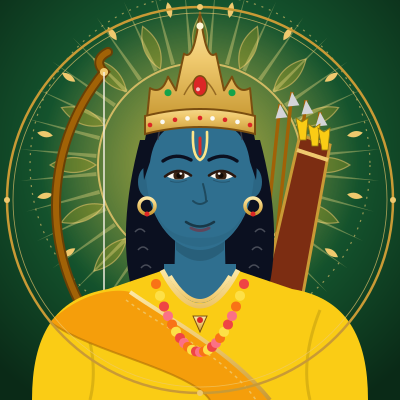
Then Kaikeyi told him about the two boons: Bharata was to be crowned, and Rama was to live in the Dandaka forest for fourteen years with matted hair and bark garments. Rama heard this without the slightest sorrow. “So be it,” he said. “I will go to the forest. For Bharata I would gladly give up the kingdom, Sita, even my own life. I only grieve that my father does not tell me this himself.”
“Let swift messengers go and bring Bharata from his grandfather’s house,” Rama said. “I will leave for the forest at once.” He walked around his father and Kaikeyi with respect and left the room. People saw that his face had not changed at all, just as the moon keeps its beauty even as it wanes. Now he had to go and tell his mother Kaushalya, and that would be the hardest step of all.
Into the Forest
Rama takes leave of his mothers, and Sita and Lakshmana insist on going with him. The three leave Ayodhya, cross the Ganga with Guha’s help and reach Chitrakuta, while in Ayodhya King Dasharatha dies of grief for his son.
Kaushalya’s grief and Lakshmana’s anger
As we saw at the end of the last chapter, Rama accepted Kaikeyi’s demand without a word of complaint. Now he walked to the palace of his mother Kaushalya. She had spent the night praying for his coronation and making offerings into the sacred fire. When she saw him, she embraced him joyfully. Gently Rama told her, “Mother, a great sorrow has come. I must go to the Dandaka forest for fourteen years, and Bharata will be crowned.”
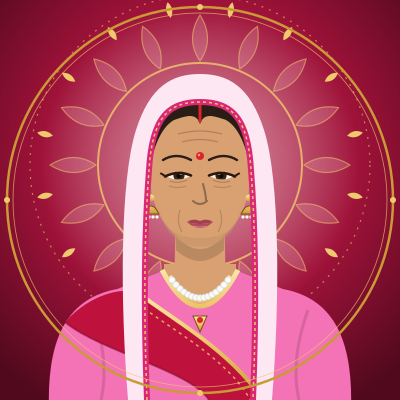
Kaushalya fell to the ground like a branch cut by an axe. Weeping, she said that she had waited all her life for happiness through her son, and now she would have to live humbled among the other queens. “If you go,” she said, “I will follow you to the forest as a cow follows her calf.” Rama lifted her up and comforted her, reminding her that a wife’s first duty is to stay with her husband, and the king needed her now.
Lakshmana, who stood beside them, burned with anger. “Our father is old and has been ruled by Kaikeyi’s wish,” he said. “Before anyone hears of this, let us take the kingdom ourselves. I will stand beside you with my bow, and no one will be able to stop you.” Rama listened patiently and then spoke to him calmly and lovingly.
“Lakshmana, this is the work of destiny,” Rama said. “Kaikeyi always loved me as her own son. Her mind would never have changed like this unless fate itself had moved it. Do not blame her, and do not be angry. Keeping our father’s word is the highest dharma.” Kaushalya, seeing that he could not be held back, blessed him with a long prayer for his safety, asking every god and every power of nature to protect him in the forest.
Sita and Lakshmana choose the forest
Rama then went to his own palace, where Sita was waiting happily for the ceremony. When she saw his sad face she trembled. Rama told her everything and asked her to stay in Ayodhya, to serve his parents and to respect Bharata as king. “The forest is full of hardship,” he said. “There are wild animals, thorns, cold winds and hunger. It is no place for you.”
Sita answered with love and firmness. “A father, a mother, a son or a friend each receives the fruit of their own actions, but a wife shares her husband’s fate. If you go to the forest today, I will walk ahead of you and tread down the thorns on your path. With you the forest will be heaven; without you, even heaven would be hell.” When Rama still hesitated, she even spoke sharply to him, asking whether her father had chosen a son-in-law who would leave his wife behind.
Then Sita wept, holding him tightly. Rama embraced her and said, “Sita, I did not want to take you without knowing your heart fully. Come with me and share my dharma in the forest. Give your jewels and wealth to the brahmins and to those in need.” Lakshmana, too, fell at Rama’s feet. “I will walk before you with my bow,” he said. “I will gather roots and fruits and keep watch while you sleep.”
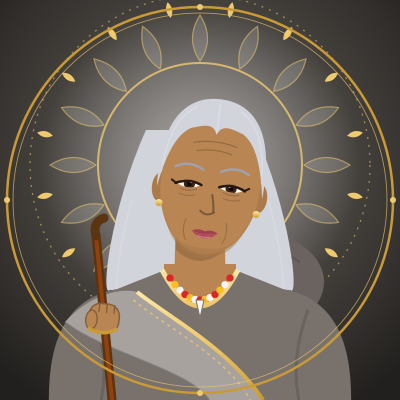
Rama agreed and asked Lakshmana to take leave of their mother Sumitra and to bring the two divine bows, the armour, the swords and the quivers given by Varuna, which were kept in Vasishtha’s house. Then the three gave away their wealth. A poor old brahmin named Trijata asked for help. Rama smiled and told him to throw his staff as far as he could. The staff flew across the Sarayu and landed among thousands of cows, and Rama gave him all the cows up to that spot.
Farewell to Ayodhya
Rama, Sita and Lakshmana went to say goodbye to the king. Kaikeyi brought them garments of bark. Rama and Lakshmana put them on, but Sita, who had never worn such clothes, did not know how to tie them and stood with tears in her eyes. Vasishtha was angered and rebuked Kaikeyi: the boon was for Rama alone, and Sita should go in fine clothes and ornaments. Dasharatha ordered that Sita be given clothes and jewels enough for fourteen years.
Sumitra embraced Lakshmana and gave him words that devotees still remember: “Think of Rama as your father Dasharatha, think of Sita as me, your mother, and think of the forest as Ayodhya. Go happily, my son.” Kaushalya blessed Sita, and Sita promised that she would never forget a wife’s duty. Rama bowed to all of Dasharatha’s three hundred and fifty queens, calling each of them mother, and asked them to forgive any fault of his.
Sumantra brought the chariot, and the three climbed in. The whole city came out weeping. People ran after the chariot, and Dasharatha and Kaushalya hurried behind it until the king fell in the dust. Rama could not bear the sight. He told Sumantra to drive faster. “If the king scolds you for not stopping,” he said, “tell him you did not hear.” The king stood gazing at the dust of the chariot until it disappeared.
Many citizens and brahmins followed Rama on foot, determined to live with him in the forest. That first night they camped on the bank of the Tamasa river, and Rama took only water. Before dawn, while the people were still asleep, Rama asked Sumantra to drive the chariot a little way north and then turn back, so that the citizens would think he had returned to Ayodhya. In this way he gently freed them from following him.
Guha and the Ganga
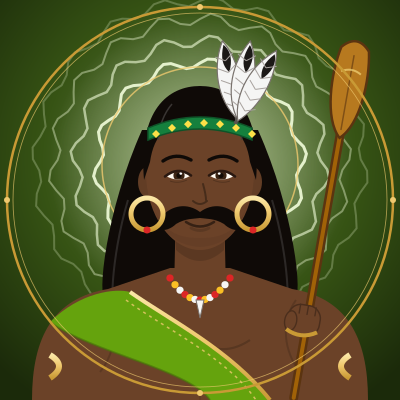
The chariot crossed the rivers Vedashruti, Gomati and Syandika and left the land of Kosala. Rama turned towards Ayodhya, joined his palms and bade farewell to his city. At last they reached the holy Ganga near Shringaverapura. There ruled Guha, king of the Nishadas, a strong chief of the forest people who was Rama’s friend, as dear to him as his own self.
Guha came with his ministers and relatives, embraced Rama and offered him food, drinks, beds and even his kingdom. “This land is as much yours as Ayodhya,” he said. Rama embraced him in return and thanked him, but explained that he had taken the vow of an ascetic and could accept nothing for himself. He asked only for grass and water for the chariot horses, because they were dear to his father.
That night Rama and Sita slept on a bed of grass under a tree, while Lakshmana stayed awake with his bow. Guha begged him to rest, but Lakshmana said, “How can I sleep when Rama lies on the bare ground?” All night the two talked. Lakshmana spoke of his father, who might not survive this grief, and of the mothers left behind, and Guha wept with him.
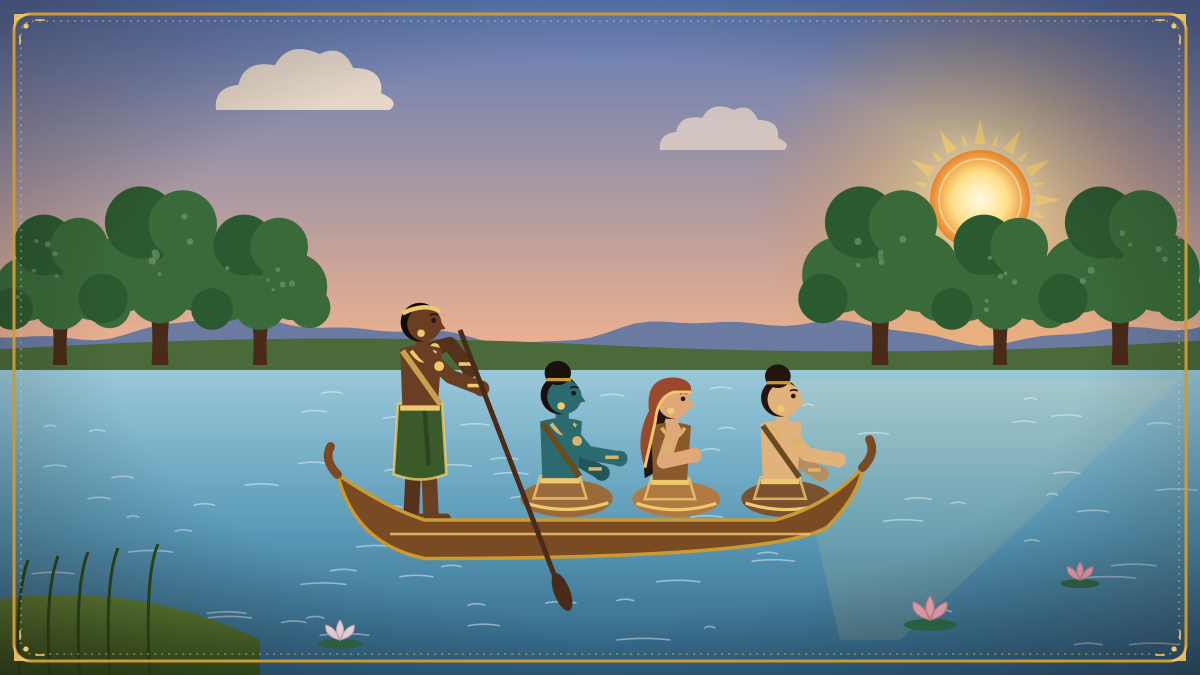
In the morning Rama and Lakshmana matted their hair with the sap of a banyan tree, as forest ascetics do. Rama sent Sumantra back to Ayodhya with loving messages for his father, his mothers and Bharata. Guha brought a fine boat. In the middle of the river Sita joined her palms and prayed, “Mother Ganga, protect my husband. When we return safely after fourteen years, I will worship you with offerings.” They reached the far bank and walked on into the forest.
Bharadvaja and Chitrakuta
Walking through the forest, Rama, Sita and Lakshmana reached Prayaga, where the Ganga and the Yamuna meet. There, in his peaceful hermitage, lived the great Sage Bharadvaja. He welcomed them warmly and offered them fruit and water. He already knew why Rama had come to the forest, and he invited the three to stay in his ashram for the whole fourteen years.
Rama gently declined. “This place is too close to Ayodhya,” he said. “People will keep coming here to see us.” So Bharadvaja told them of Chitrakuta, a beautiful hill about ten krosha away, full of fruit trees, peacocks, streams and the ashrams of sages. The next morning the three crossed the Yamuna on a raft that Lakshmana made from logs and creepers, and Sita again prayed to the river for their safe return.
On the far bank Sita prayed before a great banyan tree called Shyama, and they walked on. Lakshmana gathered flowers and fruits for Sita, and she asked Rama the names of the trees and creepers she had never seen before. After resting for a night on the way, they reached Chitrakuta. There they came to the ashram of Sage Valmiki, bowed to him, and were welcomed with love.
Lakshmana built a strong, comfortable hut of wood and leaves near the hill and the river Mandakini. Rama performed the rites to bless the new home, and the three entered it together. For a while there was peace. But far away in Ayodhya, the news that Sumantra was carrying home would bring a terrible sorrow.
The death of King Dasharatha
Sumantra, who had stayed with Guha until Rama was far away, returned with an empty chariot. The city was silent and sad. He gave Dasharatha Rama’s message: Rama bowed to his father, asked him to look after his mothers, and asked that Bharata treat all the queens as his own mother. The king fainted. When he woke he wept, crying again and again, “Rama! Sita! Lakshmana!”
In her grief Kaushalya spoke sharp words to the king, blaming him for sending away their son. Dasharatha joined his palms and begged her forgiveness. Seeing her husband so humble, Kaushalya was filled with regret. She placed his joined hands on her head and asked him to forgive her harsh words. For a short while the king slept. When he woke, on the sixth night after Rama had left, he remembered something from his youth.
“Kaushalya,” he said, “a person reaps what he sows. When I was a young prince, I was proud that I could hit a target just by hearing its sound. One rainy night I went hunting by the Sarayu. In the darkness I heard a sound like an elephant drinking and shot an arrow at it. Then I heard a human cry. A young ascetic who was filling his water pot had been struck by my arrow.”
“The young man told me that his old, blind parents were waiting for water, and asked me to draw out the arrow and go to them. When I did so, he passed away. I carried the water to his parents and confessed everything. In his grief the old father said to me, ‘Just as I am dying of sorrow for my son, you too will die grieving for a son.’ Then both parents gave up their lives. Kaushalya, that curse has now come true.”
Speaking of that old sorrow, the king called out to Rama, longing to see him just once more, and at midnight he passed away. In the morning the palace women found that the king was gone, and all Ayodhya wept. Since none of his sons was present, Vasishtha had the king’s body kept in a vessel of oil. Messengers rode swiftly to Kekaya to bring Bharata home, without telling him what had happened.
Bharata’s Love: The Sandals on the Throne
Bharata comes home from his grandfather’s kingdom, refuses the throne his mother won for him, and walks to Chitrakuta to bring Rama back. When Rama will not break their father’s word, Bharata carries Rama’s sandals home and rules as their servant from Nandigram.
A city without a king
We left Ayodhya in deep mourning, for King Dasharatha had died of grief soon after Rama went to the forest. A kingdom cannot stay without a ruler, so the next morning the ministers and royal priests gathered and turned to Sage Vashishtha. Rama was in the forest, and Bharata and Shatrughna were far away in the kingdom of Kekaya, at the home of Bharata’s grandfather. Someone had to be crowned, and a son had to perform the king’s last rites.
Vashishtha decided calmly. The king’s body was laid in a large vessel of oil so that it would be kept safe until a son arrived. Then he chose swift messengers and sent them to Kekaya with gifts for the king and for Bharata’s mother’s brother, his mama Yudhajit. He gave them one strict instruction: they must not tell Bharata about his father’s death or Rama’s exile. They were only to say that the family priest wanted him to come quickly.
On the night before the messengers reached the city of Girivraja, Bharata had a frightening dream. He saw his father, pale and with loosened hair, falling from a mountain top into a pool of mud, and later riding south in a chariot drawn by donkeys. In the morning he could not smile. His friends tried to cheer him with music and stories, but he told them that his heart was full of a heavy fear he could not explain.
When the messengers arrived, Bharata asked at once whether his father, his mothers, Rama and Lakshmana were well. The messengers answered carefully, “All those whose welfare you ask about are well.” Bharata took leave of his grandfather, King Ashvapati, who gave him many gifts, and hurried home with Shatrughna. The journey took seven nights, and with every day the feeling that something was wrong grew stronger in his heart.
Bharata learns the truth
Ayodhya, which used to ring with music and the chanting of the Vedas, was silent when Bharata entered it. The streets were unswept, doors were shut, and people turned away with tears in their eyes. Bharata went first to his father’s palace, and not finding him there, he went to his mother Kaikeyi. She rose joyfully to greet him and asked about her family in Kekaya as if nothing had happened.
When Bharata asked where his father was, Kaikeyi told him that the king had gone the way all living beings must go. Bharata fell to the ground weeping. Then he asked, “Where is my elder brother Rama, who is like a father to me? I want to touch his feet.” Kaikeyi calmly told him everything: the two boons, Rama’s exile for fourteen years with Sita and Lakshmana, and the kingdom now waiting for him. She expected him to be pleased.
Instead Bharata was overcome with grief and anger. He told his mother that she had destroyed the family, caused his father’s death and sent away the noblest of brothers, and that he wanted no kingdom gained in this way. He declared that he would bring Rama back from the forest and serve him. His words to her were very harsh, for his heart was broken.
Then Bharata went to Queen Kaushalya. In her sorrow she spoke bitterly, saying that he now had the kingdom he wanted, and asked to be sent to Rama in the forest. Bharata fell at her feet and swore many solemn oaths that he had known nothing of this plan, and that whoever had wished for Rama’s exile should share the sins of the worst wrongdoers. Kaushalya saw his tears, believed him, and held him to her heart.
The last rites and an empty throne
With Vashishtha’s guidance, Bharata performed the funeral of King Dasharatha. The body was taken from the oil, placed on a decorated bier and carried to the bank of the Sarayu with the king’s sacred fires. Bharata lit the funeral fire, and the queens and the whole city wept. In the days that followed, he performed all the rites and gave many gifts to brahmins in his father’s name.
In those days Shatrughna saw Manthara near the palace door, dressed in fine clothes and ornaments. The guards brought her to him, saying that she was the cause of all their sorrow. Shatrughna seized her in anger and dragged her across the floor, and Kaikeyi ran to Bharata for protection. Bharata stopped his brother. “A woman must not be killed,” he said. “If Rama hears of it, he will never speak to us again.” Shatrughna let her go.
On the fourteenth day the ministers met in the royal assembly. They told Bharata that the kingdom had no master and asked him to be crowned at once. Bharata walked around the things gathered for the coronation and answered firmly: “In our family the kingdom always goes to the eldest son. Rama is our king. I will go to the forest and bring him back, and if he will not come, I will live there in his place.”
The assembly was filled with joy at these words. Bharata ordered a road to be made ready all the way to the forest. Workers levelled the ground, cleared bushes, built bridges and dug wells. Then a great company set out from Ayodhya: Vashishtha and the other priests, the three queens, the ministers, the army with chariots, elephants and horses, and thousands of citizens, all longing to see Rama again.
Guha and Sage Bharadvaja
When the great army reached the Ganga at Shringaverapura, Guha, the king of the Nishadas and Rama’s friend, grew worried. Perhaps Bharata had come to harm Rama in the forest. He gathered his men and boats along the river bank, ready to stop the army if needed. Then he went to meet Bharata himself, carrying gifts, to find out what was in his heart.
When Bharata explained that he was going to bring Rama home, Guha was overjoyed. He showed Bharata the place under the ingudi tree where Rama and Sita had slept on a bed of grass, and told how Lakshmana had stood guard all night with his bow. Bharata’s heart ached to see it. He decided that from that day he too would wear matted hair and bark clothes and sleep on the ground until Rama returned.
Guha brought five hundred boats, and the whole company crossed the Ganga. Bharata went on to the ashram of Sage Bharadvaja near Prayaga, where the Ganga and the Yamuna meet. The sage first asked him carefully why he had come: did he mean any harm to Rama? Bharata answered with tears that he only wished to take Rama home. The sage said gently that he had known this, and had asked only to make Bharata’s goodness shine.
Bharadvaja then welcomed the entire army as his guests. By the power of his penance he called upon Vishvakarma and the gods, and that night food, drink, comfortable dwellings and music appeared in the forest for every soldier and every animal. Bharata introduced his three mothers to the sage. Bharadvaja told him not to blame Kaikeyi too much, for Rama’s going to the forest would one day bring happiness to the world.
The meeting at Chitrakuta
At Chitrakuta, Rama was showing Sita the beauty of the hill and the clear Mandakini river when a great noise and a cloud of dust rose in the distance. Lakshmana climbed a tall sal tree and saw a huge army carrying the Kovidara flag of Ayodhya. Alarmed and angry, he cried that Bharata had come to kill them so that he could rule without fear, and that he would fight him.
Rama calmed him. “Bharata loves us more than his own life,” he said. “He has surely come to see us, or perhaps to take me home. He has never done me any wrong. If you want the kingdom, Lakshmana, I need only ask Bharata, and he will gladly give it to you.” Lakshmana felt ashamed of his words and came down from the tree.
Bharata left the army behind and came forward on foot with Shatrughna, Guha and Sumantra. When he saw Rama sitting before the leaf hut, with matted hair and a deerskin, he cried “Brother!” and fell at his feet weeping. Rama lifted him up, held him close and lovingly asked about the king, the kingdom and the people. In this talk Rama gave Bharata many teachings on how a good king should rule.
Then Bharata gave the sad news: their father had died of grief. Rama fell to the ground like a tree cut at the root. When he recovered, he went with his brothers and Sita to the Mandakini, offered water for his father’s soul and placed an offering of ingudi pulp mixed with jujube fruit, saying that a man offers his ancestors the same food he himself eats. Soon the three queens arrived, and Rama and Lakshmana touched their mothers’ feet with great love.
The sandals on the throne
The next day Bharata begged Rama, before the whole gathering, to return and accept the kingdom. Rama answered with love but firmly. Their father had given his word to Kaikeyi, and a son must keep his father’s promise. “You rule Ayodhya, and I will live in the forest,” he said. When the priest Jabali argued that only this world is real and that a promise to a dead father means nothing, Rama rejected his words strongly. Truth, he said, is the root of dharma.
Vashishtha too reminded Rama of the custom of the Ikshvaku family and urged him to listen to his guru and his brother. Bharata even lay down on the bare ground at Rama’s door, saying he would fast until Rama agreed. Rama told him that this was not the way of a kshatriya. At last the great sages watching unseen from the sky spoke to Bharata: he should accept Rama’s word, for Rama wished to free their father from the debt of his promise.
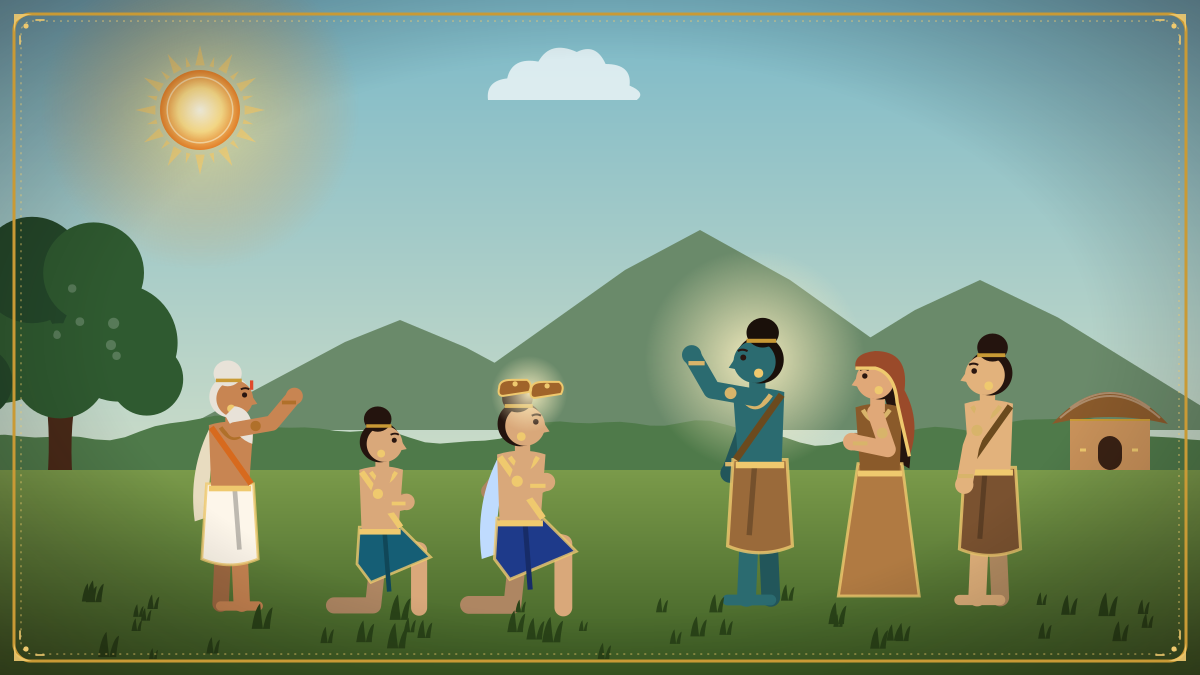
Bharata then brought a pair of sandals decorated with gold and asked Rama to step into them. Rama did so and gave them to him. Bharata bowed to the sandals and made a vow: “For fourteen years I will wear matted hair and bark, live outside the city and give the kingdom to these sandals. If you do not return on the first day after the fourteen years are complete, I will enter the fire.” Rama embraced him and said, “Look after mother Kaikeyi, and do not be angry with her.”
Bharata placed the sandals on his head and carried them on an elephant back to Ayodhya. He did not stay in the city to rule. He went to the village of Nandigram nearby, placed the sandals on the throne, held the royal umbrella over them and ruled in their name, reporting every matter to them like a servant. Back at Chitrakuta, the place now filled Rama with memories of his family, and he decided to go deeper into the forest.
Key moments
- Dasharatha decides to make Rama the crown prince
- The assembly of Ayodhya rejoices at the news
- The anointing is fixed for the star Pushya
- Manthara sees the decorated city from the palace roof
- Kaikeyi first rewards Manthara for the good news
- Kaikeyi lies in the chamber of anger
- The two boons: Bharata crowned, Rama in the forest for 14 years
- Rama accepts calmly: “Rama never speaks twice”
- Kaushalya blesses Rama with a prayer for his safety
- Rama calms Lakshmana: keeping our father’s word is dharma
- Sita: “With you the forest is heaven”
- Sumitra: “Think of Rama as Dasharatha, of Sita as me, of the forest as Ayodhya”
- Rama quietly leaves the citizens at the Tamasa river
- Guha welcomes Rama; Lakshmana keeps watch all night
- Sita prays to Mother Ganga while crossing the river
- Dasharatha remembers his curse and dies on the sixth night
- Bharata’s frightening dream in Kekaya
- Bharata refuses the kingdom won by Kaikeyi’s boons
- Shatrughna punishes Manthara and Bharata stops him
- Guha shows Rama’s grass bed by the Ganga
- Bharadvaja’s feast for the whole army
- The brothers meet at Chitrakuta
- Rama’s golden sandals placed on the throne
- Bharata rules from Nandigram as a servant
What this kanda teaches us
Kaikeyi was not wicked at first; she was turned by repeated bitter words and by fear for her son. Dasharatha, bound by his promise, suffered terribly, while Rama gave up a kingdom without a trace of anger. The chapter teaches us to guard our hearts from poisonous advice and to keep our word even when it costs us everything.
Sita and Lakshmana teach us that love means sharing hardship, not only comfort, and Guha shows that true friendship does not depend on rank. Dasharatha’s story reminds us that every action, even one done carelessly long ago, returns to us in time. Through it all, Rama walked into the forest without blaming anyone.
Bharata could have had a kingdom without a fight, yet he pushed it away because it was not his by right. Rama could have gone home, yet he stayed in the forest to keep his father’s word. When brothers each try to give rather than take, a family is saved even in its darkest hour.
Did you know?
- In the assembly Dasharatha said he had grown old “under the shade of the white umbrella”, the royal umbrella of a ruling king.
- Rama’s anointing was set for the spring month of Chaitra, on the day of the star Pushya.
- When Manthara first told her the news, Kaikeyi was so happy that she gave Manthara a precious ornament as a reward.
- To press the king, Kaikeyi reminded him of King Shibi, who gave his own flesh to keep a promise, and King Alarka, who gave away his eyes.
- Before leaving, Rama asked forgiveness of all three hundred and fifty of Dasharatha’s queens, calling each of them mother.
- Rama asked a poor brahmin named Trijata to throw his staff, and gave him all the cows up to the place where it fell, across the Sarayu.
- Rama took nothing from Guha except grass and water for the horses, because his father loved those horses.
- Dasharatha died on the sixth night after Rama left, and his body was kept in a vessel of oil until Bharata could return.