Into the Dandaka Forest
Rama, Sita and Lakshmana travel through the great Dandaka forest, receive the blessings of Atri, Anasuya, Sharabhanga and Agastya, and promise to protect the sages. At Panchavati, Shurpanakha’s visit leads to Rama’s battle with Khara and Dushana.
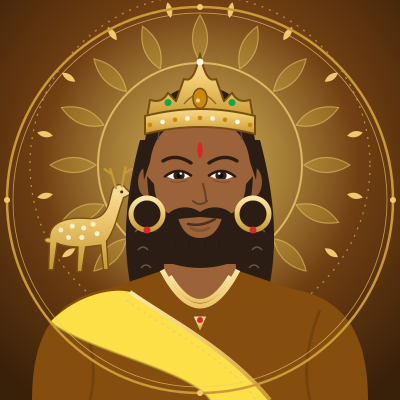
Atri and Anasuya
After Bharata returned home with the sandals, Rama left Chitrakuta and travelled with Sita and Lakshmana to the ashram of the great Sage Atri. The old sage received them like his own children. He introduced Rama to his wife Anasuya, an aged woman of great penance, and asked that Sita go to her.
Atri told Rama about her greatness. Once, when no rain had fallen for ten years and the whole world was burning, Anasuya by her austerity made roots and fruits grow and caused the holy Ganga to flow there. For the sake of the gods she had once turned ten nights into one. Rama told Sita to go to her just as she would go to her own mother.
Sita bowed at Anasuya’s feet. The holy lady was delighted that Sita had left a palace to follow her husband into the forest, and spoke to her about the duty of a faithful wife. Then, as a blessing, she gave Sita a heavenly garland, garments, ornaments and a fragrant ointment that would never fade, saying that with them Sita would always shine beside Rama.
That evening Anasuya asked Sita to tell the story of her marriage. Sita told how King Janaka had found her in a furrow of the earth, how her father had set the test of Shiva’s bow, and how Rama alone had lifted and broken it. Anasuya listened with joy. The next morning the sages told Rama about the path ahead, and the three set out into the vast Dandaka forest.
Viradha and Sharabhanga
The Dandaka forest was full of peaceful ashrams, and the sages there welcomed Rama as their protector. But the forest also held danger. One day a huge rakshasa named Viradha rushed out roaring, seized Sita and declared that he would make her his wife. Rama was deeply pained to see Sita in the grip of a rakshasa, and said to Lakshmana that this was exactly what Kaikeyi had wished for.
The brothers shot many arrows at Viradha, but because of a boon from Brahma no weapon could kill him. He put Sita down, lifted both brothers onto his shoulders and carried them away. Then Rama and Lakshmana broke his arms and overpowered him. Since weapons could not end his life, they dug a deep pit and laid him in it, for that was the only way he could die.
Before he died, Viradha recognised Rama and told his story. He had been a gandharva named Tumburu who was cursed by Kubera to become a rakshasa, and the curse would end only when Rama, son of Dasharatha, overcame him. He told them to visit Sage Sharabhanga, whose ashram was not far away. Then, freed from the curse, he returned to his heavenly home.
When the travellers reached Sharabhanga’s ashram, they saw Indra himself speaking with the sage, but Indra left as Rama came near. Sharabhanga told Rama that he had been ready to go to Brahma’s world, but had waited to see Rama first. He told them to visit Sage Sutikshna. Then, before Rama’s eyes, the old sage entered a sacred fire and rose to the highest world in a shining form.
A promise to the sages
After Sharabhanga departed, many groups of sages gathered around Rama. They were thin from penance and lived on roots, fruits, water and even air alone. They showed him heaps of bones of holy men who had been killed by rakshasas in the forest. “You are our king and our protector,” they said. “Save us from these rakshasas.” Rama replied that he had come to the forest for this very purpose and promised to destroy those who troubled them.
As they walked on, Sita spoke gently to Rama. She said that there are three faults born of desire: speaking falsehood, desiring another man’s wife, and violence toward those who have done no harm. Rama had never told a lie and never looked at another woman. But now he had promised to fight the rakshasas of the forest, even though they had done him no wrong.
She told the story of an ascetic to whom Indra gave a sword for safekeeping. Carrying it always, the ascetic slowly grew fond of violence and lost his penance. “Weapons change the mind of the one who carries them,” she said. “I say this only out of love.” Rama was pleased by her concern. He replied that a kshatriya carries a bow to protect the suffering, and that he had given his word to the sages, which he could never break.
So they travelled from ashram to ashram in the Dandaka forest, staying a few months in one place and a year in another. The sages welcomed them everywhere, and ten years passed happily in this way. At last they returned to Sage Sutikshna, and Rama said that he wished to meet the greatest sage of the south, Agastya. Sutikshna gladly showed him the way.
Agastya’s gifts
On the way they stayed at the ashram of Agastya’s brother. Rama told Lakshmana the famous story of that region. Two rakshasa brothers, Ilvala and Vatapi, used to kill brahmins by a trick: Vatapi would become food, and when a guest had eaten it, Ilvala would call him and he would burst out alive. When they tried this on Agastya, the sage digested Vatapi completely and burned Ilvala with his angry glance. Since then the south had been safe for sages.
Lakshmana went ahead to announce their arrival. Agastya, glowing with penance and surrounded by his disciples, came out to welcome Rama. He honoured him with water and food and spoke with him about dharma. Then he brought out wonderful gifts, saying that they would help Rama in his battles against the rakshasas.
He gave Rama the great bow of Lord Vishnu, made by Vishvakarma and decorated with gold and diamonds; an unfailing arrow given by Brahma; two quivers given by Indra that would never run out of arrows; and a sword with a golden sheath. Rama accepted them with deep respect. These were the weapons he would carry through the rest of his life in the forest.
Agastya praised Sita for following her husband through such hardship. He told Rama to make his home at Panchavati, about two yojanas away on the bank of the Godavari, a lovely place full of fruits, flowers and deer. On the way there, the three met a great vulture named Jatayu, who said that he had been a friend of King Dasharatha and offered to watch over Sita whenever Rama and Lakshmana were away. Rama accepted his friendship with joy.
Panchavati and Shurpanakha
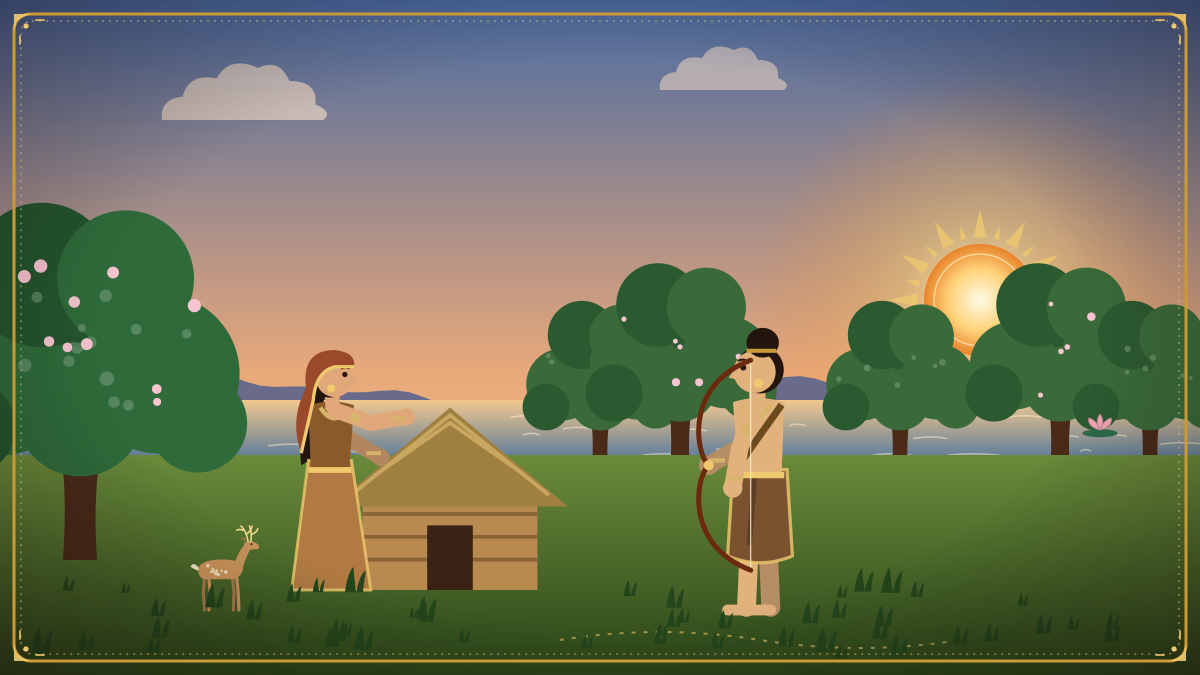
At Panchavati, Lakshmana built a beautiful hut of earth, bamboo, leaves and grass near the Godavari. Rama embraced him and said that with such a brother he felt as if his father were still alive. They lived there in peace. One cold winter morning, while walking to the river, Lakshmana spoke of Bharata, who was living a hard life at Nandigram for Rama’s sake, and the brothers remembered home with tender hearts.
One day, as Rama sat at the hut with Sita and Lakshmana, a rakshasi named Shurpanakha came there. She was the sister of Ravana, the king of Lanka. Seeing Rama, she desired him at once. She told him who she was and who her mighty brothers were, and said that Rama should leave Sita and make her his wife instead.
Rama smiled and answered that he was already married, and jokingly sent her toward Lakshmana. Lakshmana in turn joked that he was only Rama’s servant and sent her back. Thinking that Sita stood in her way, Shurpanakha rushed at Sita to harm her. Rama stopped her and told Lakshmana to punish her. Lakshmana drew his sword and cut off her nose and ears, and she fled screaming into the forest.
Shurpanakha ran to her brother Khara, who ruled the Janasthana region of the forest with a large army of rakshasas. She fell before him and demanded revenge on the two brothers and the woman with them. Khara first sent fourteen strong rakshasas to kill them, but Rama struck all fourteen down with his arrows. Shurpanakha returned to Khara in even greater fury.
The battle of Janasthana
Now Khara himself set out with his general Dushana, the three-headed Trishira and fourteen thousand rakshasas. Many bad omens appeared, but Khara ignored them. Rama saw the signs and told Lakshmana to take Sita to a safe cave in the hills and guard her there. Lakshmana obeyed, and Rama put on his armour and stood alone, bow in hand, before the approaching army.
The rakshasas surrounded Rama on every side and rained weapons upon him. Rama stood firm like a mountain. His arrows flew so fast that no one could see when he took them from the quiver or when he let them go. Row after row of the rakshasa army fell. The gods and sages watching from the sky were amazed that one warrior could stand against so many.
Dushana fell to Rama’s arrows, and then Trishira. Finally Khara came against Rama in his chariot. Rama broke the chariot, and when Khara attacked with a mace and then with a tree, Rama struck him down with a blazing arrow. In a short time the whole army of fourteen thousand had been destroyed by Rama alone. The sages showered praise on him, for their forest was now free from fear.
Lakshmana brought Sita back from the cave, and Sita embraced Rama with joy and pride. But one rakshasa named Akampana had escaped from the battlefield, and Shurpanakha too was alive. Both were making their way to Lanka, to the ten-headed king Ravana. The peace of Panchavati would not last much longer.
The Golden Deer and Sita Taken
Urged by Shurpanakha, Ravana forces Maricha to become a golden deer. While Rama chases it and Lakshmana is sent after him, Ravana carries Sita away; the brave old Jatayu fights to save her and falls.
News reaches Lanka
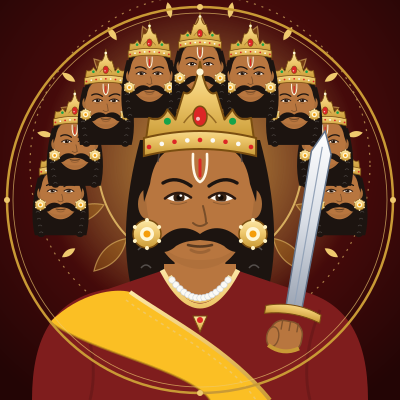
As we saw, two survivors from the battle of Janasthana were hurrying to Lanka. The first was Akampana. He told Ravana that Khara, Dushana and fourteen thousand rakshasas had been killed by Rama, son of Dasharatha, alone. Ravana was furious and wanted to destroy Rama at once. Akampana told him that no one could defeat Rama in battle, but that Rama would die of grief if his beloved wife Sita were taken from him.
Ravana liked this plan. He rode in his chariot across the sea to the hermitage of Maricha, the rakshasa who had once faced Rama at Vishvamitra’s sacrifice. But Maricha warned him: “Whoever gave you this idea wants to destroy you. Rama is like a blazing fire. Do not go near him.” Ravana listened and returned to Lanka.
Then Shurpanakha arrived at Ravana’s court, where he sat on a golden throne among his ministers. She told him angrily that he was lost in pleasures and did not even know what was happening in his own kingdom. She described how Rama had killed Khara and his army, and then praised the beauty of Sita, saying that such a wife was fit only for Ravana. “Take her,” she urged, “and Rama will be destroyed by grief.”
This time Ravana’s mind was fixed. He sent away his ministers, climbed into his golden chariot, drawn by donkeys with the faces of goblins, and flew once again over the ocean to Maricha. Maricha was now living as an ascetic, wearing bark and matted hair, in a quiet hermitage beside the sea.
Maricha’s warning
Ravana told Maricha his plan. Maricha was to take the form of a golden deer with silver spots and wander near Rama’s hut. Sita would want it, Rama and Lakshmana would go after it, and Ravana would carry her away. Maricha turned pale with fear. He told Ravana that Rama was not cruel or unjust, as Ravana believed, but dharma in human form.
Then he told his own story. When Rama was only a boy guarding Vishvamitra’s sacrifice, a single arrow from him had thrown Maricha a hundred yojanas into the ocean. Later, in the Dandaka forest, Maricha and two companions attacked Rama in the form of fierce deer. Rama’s arrows killed the other two, and Maricha barely escaped. “Since then,” he said, “wherever I look I see Rama. I even dream of him.”
Maricha begged Ravana to go home and live happily with his own wives, and warned that this deed would destroy him, his family and his city. But Ravana would not listen. He told Maricha that he had come to give an order, not to ask for advice, and that if Maricha refused, Ravana would kill him on the spot.
Maricha thought to himself: “If I go, Rama will kill me. If I refuse, Ravana will kill me. It is better to die at the hands of Rama.” With a heavy heart he agreed and set off with Ravana in the flying chariot. When they reached the forest near Panchavati, Ravana hid himself, and Maricha changed his form.
The golden deer
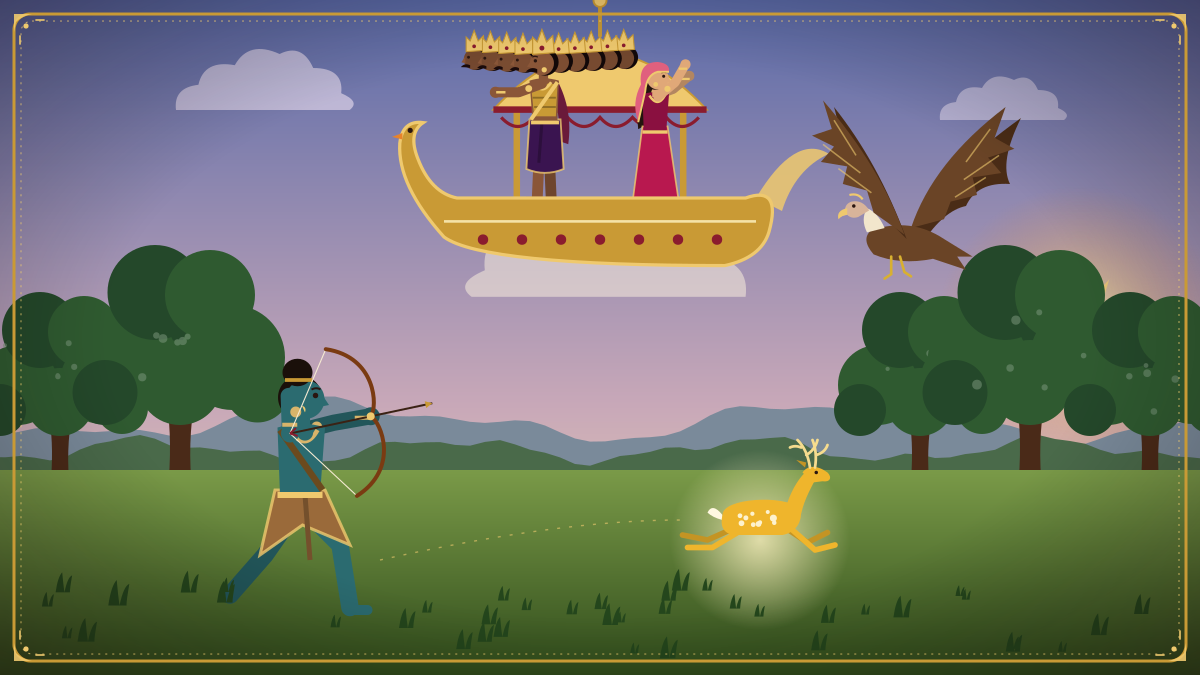
A wonderful deer began to wander near the hut. Its body shone like gold and was covered with silver spots, its horns were tipped with jewels, and its hooves gleamed like precious blue stone. While picking flowers, Sita saw it and was filled with wonder. She called Rama and Lakshmana to come and see this amazing creature.
Lakshmana was suspicious at once. “No such deer exists in the world,” he said. “This must be Maricha, who has killed many kings in this forest by taking such forms.” But Sita was charmed. She asked Rama to catch the deer alive, so that she could keep it in the ashram and later take it to Ayodhya, or, if it was killed, to bring her its golden skin.
Rama agreed. He told Lakshmana, “If this is a real deer, we will have its skin. If it is Maricha, I must kill him anyway, for he has troubled the sages.” He told Lakshmana to stay with Sita and guard her carefully, with Jatayu’s help, and not to leave her for a moment. Then he took his bow and sword and went after the deer.
The deer led Rama deep into the forest, appearing and disappearing, sometimes coming close and then leaping far away. At last Rama shot a blazing arrow that pierced its heart. As Maricha fell, he took his true form, and with his last breath he cried out in a voice exactly like Rama’s: “Ha Sita! Ha Lakshmana!” Rama understood the trick at once and hurried back, full of worry.
The ascetic at the door
The cry reached the hut. Sita was terrified and begged Lakshmana to go and help his brother. Lakshmana tried to comfort her. No one in the three worlds could defeat Rama, he said, and this was surely a rakshasa’s trick. He would not leave her alone, for Rama had commanded him to stay.
But in her fear and grief, Sita spoke very harsh and unjust words to Lakshmana, even doubting his loyalty and his intentions. These words hurt Lakshmana deeply. He told her that he could not answer her, for she was like a goddess to him, and that he was going only because she forced him to. He asked the spirits of the forest to protect her, and left with a heavy heart.
This was the moment Ravana had waited for. He came to the hut in the form of a wandering ascetic, wearing saffron robes and carrying a staff and a water pot. Even the trees stopped moving and the Godavari seemed to flow more slowly in fear. Seeing a holy man at her door, Sita welcomed him as a guest and offered him a seat, water and food from the forest.
When he asked who she was, Sita told him simply: she was Janaka’s daughter and Rama’s wife, and they had come to the forest to keep King Dasharatha’s word. Then Ravana revealed himself. He said he was the king of Lanka, praised her beauty and asked her to become his chief queen. Sita answered without fear that Rama was like a lion and Ravana like a jackal, and that she would never be his. Ravana took his true, fearful form, seized Sita and placed her in his chariot.
Jatayu’s battle
As the chariot rose into the air, Sita cried out to Rama and Lakshmana. She called to the trees, the flowering bushes, the Godavari and the animals of the forest to tell Rama that Ravana had taken her. Then she saw Jatayu, the old king of the vultures, resting on a tall tree, and called to him for help.
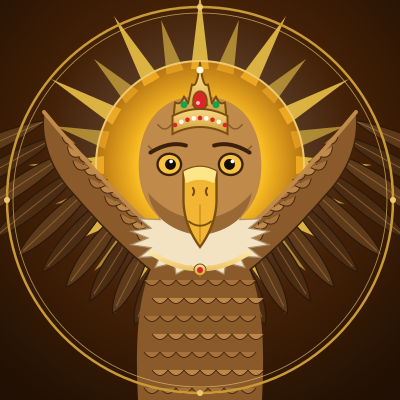
Jatayu woke and spoke to Ravana with dignity. He said that he had ruled the birds for sixty thousand years, that Rama was the lord of the world, and that a king must protect other men’s wives, not carry them off. “I am old and you are young and armed,” he said, “but while I live you shall not take Sita.” Then he flew at Ravana.
The battle in the sky was fierce. With beak and claws Jatayu broke Ravana’s bow, struck down his donkeys, killed his charioteer and smashed the chariot itself. Ravana fell to the ground with Sita in his arms. But the old bird grew tired, and Ravana rose again. With his sword he cut off Jatayu’s wings and feet, and the brave Jatayu fell to the earth, close to death.
Ravana seized Sita once more and flew south through the sky. Sita wept, and her flowers and ornaments fell as she was carried away. Passing over a mountain, she saw five vanaras sitting on a peak. Quickly she tied some ornaments in her yellow silk upper cloth and dropped it among them, hoping that they would one day tell Rama. Ravana did not notice.
Ravana crossed the ocean and brought Sita to his palace in Lanka. He showed her all his riches and begged her to be his queen. Sita placed a blade of grass between them and refused him. Ravana gave her twelve months to change her mind, and then had her kept in the Ashoka grove, guarded by fierce rakshasis.
Rama’s grief and Jatayu’s last words
Meanwhile Rama, hurrying home, met Lakshmana on the way, and his heart sank. “Why did you leave Sita alone?” he asked. Lakshmana explained that Sita’s harsh words had forced him to go. Rama said that he should not have left her, whatever she had said in her fear. They ran to the hut and found it empty.
Rama searched everywhere, calling Sita’s name. He asked the trees, the river and the mountains whether they had seen her. The deer of the forest looked toward the south and ran in that direction, as if showing the way. The brothers found scattered flowers, and then signs of a great fight: a broken bow, armour, pieces of a chariot and the bodies of donkeys.
Rama’s grief turned into terrible anger. He said that if the gods did not return Sita, he would destroy all the worlds with his arrows. Lakshmana calmed him with wise words: the whole world should not be punished for the crime of one person; they should find the wrongdoer and punish him alone. Rama listened to his younger brother and grew calm.
Further on they found Jatayu lying on the ground, badly wounded. Jatayu told Rama that Ravana had carried Sita away to the south, and that he had tried to stop him and been struck down. He comforted Rama, saying that Sita had been taken at the hour called Vinda, so the thief would surely lose what he had stolen. He said that Ravana was the son of Vishrava and the brother of Kubera, and then his life left him.
Rama wept for Jatayu as for his own father. “This king of birds gave his life for me,” he said. He gathered wood, lit the funeral fire himself and performed all the rites with love, and Valmiki tells us that Jatayu went to the highest worlds. Then, with heavy hearts but firm resolve, Rama and Lakshmana turned south and began the long search for Sita.
The Search Begins
The Empty Hut
In the last chapter Ravana carried Sita away towards the south, while brave Jatayu lay wounded on the ground. Now we return to Rama. After killing Maricha, he was hurrying back to the ashram at Panchavati. Jackals howled behind him and bad omens appeared on every side. Then he saw Lakshmana coming towards him, and his heart sank. “Why have you left Sita alone in a forest full of rakshasas?” he asked.
Lakshmana explained with folded hands. When Sita heard Maricha’s false cry in Rama’s voice, she was sure that Rama was in danger. She pleaded with Lakshmana to go, and in her fear she spoke very harsh words to him. Only then did he leave, much against his will. Rama said gently but firmly, “Even so, brother, you should not have left her because of words spoken in fear.”
When they reached the ashram, it was empty. The deerskins and the seats of kusha grass lay scattered, and the little hut looked bare, like a lotus pond in winter. Rama ran from tree to tree calling Sita’s name. He asked the kadamba, the bilva and the ashoka trees, “Have you seen my Sita? Tell me where she has gone.” The trees could give no answer.
He hurried to the bank of the Godavari, where Sita often went to fetch water, and asked the river. But the Godavari stayed silent, as if afraid of Ravana. Then the deer of the forest rose together, looked at Rama, turned their faces towards the south and gazed up at the sky. Lakshmana understood at once. “Brother, they are showing us the direction. Let us go south.”
Going south they found flowers that had fallen from Sita’s hair, and then the great footprints of a rakshasa. Further on lay a broken bow decorated with gold, a shattered chariot, a royal parasol, pieces of armour and drops of blood. Rama thought that rakshasas had fought over Sita and had harmed her. His grief turned into a blazing anger.
Rama’s Anger and Jatayu’s Last Words
Rama fitted a shining arrow to his bow. “If the gods do not give my Sita back to me,” he said, “I will shake all three worlds with my arrows.” His face blazed like the fire at the end of an age. The forest creatures trembled, for they had never seen gentle Rama like this.
Lakshmana stood before him with folded hands. “Brother, you have always been calm, kind and self-controlled. It is not right to destroy the whole world for the wrong done by one person. Let us first find out who did this. Even the greatest beings have faced sorrow in their lives. You are wise, so bear this grief with wisdom.” Slowly Rama’s anger cooled, and they walked on.
Soon they saw Jatayu, huge like a mountain peak, lying on the ground covered in blood. At first Rama took him for a rakshasa who had harmed Sita and raised his bow. But the old bird spoke in a weak voice: “The lady you are searching for, and my own life, have both been taken by Ravana. I fought him, broke his chariot and his bow, but he cut off my wings.”
Rama threw down his bow, held Jatayu in his arms and wept. With his last breath Jatayu said that Ravana, the son of Vishravas and the brother of Kubera, had flown towards the south. “He took her at the hour called Vinda,” he said, “a time in which what is stolen soon returns to its owner. Do not grieve, you will get Sita back.” Saying this, the king of vultures gave up his life.
Rama said, “Lakshmana, this king of birds gave his life for me. He is as worthy of honour as my father Dasharatha.” With his own hands Rama built the funeral fire, performed the last rites for Jatayu and offered water to him in the Godavari, as a son does for his father. Blessed by Rama, Jatayu went to the highest worlds.
Kabandha
The brothers went on through the Krauncha forest into a thick and gloomy jungle. Suddenly they were caught by a gigantic being. He had no head and no neck. A single great eye burned in his chest, and his mouth, full of sharp teeth, was in his belly. His two arms were a yojana long, and with them he grabbed every creature that came near. This was Kabandha.
He held both brothers tightly and said, “You have come to me as my food.” Lakshmana grew anxious, but Rama stayed steady. Quickly the brothers drew their swords. Rama cut off his right arm and Lakshmana his left. Kabandha fell to the ground with a great roar and asked who they were. Lakshmana told him that this was Rama, son of King Dasharatha.
Kabandha was filled with joy. “Welcome! It is my good fortune that you have come.” He told them that long ago he had a handsome and shining form, but he used to frighten the sages by taking a terrible shape. Sage Sthulashira cursed him to keep that frightening shape. When he begged for mercy, the sage said, “When Rama cuts off your arms and burns you in the forest, you will be free.”
Later, proud of the long life that Brahma had given him, he attacked Indra. Indra struck him with the thunderbolt, which drove his head and thighs into his body. So that he could live, Indra gave him these long arms and the mouth in his belly. “Burn my body,” said Kabandha, “and then I will tell you who can help you find Sita.”
The brothers placed his body in a pit and lit a fire. From the flames rose a shining being in clean garments, seated in a divine chariot. He said, “Make friends with Sugriva, the vanara, son of the Sun god, whom his elder brother Vali has driven out. He lives on Rishyamuka mountain near Lake Pampa, and he knows every land where rakshasas live.” He also told them about Shabari at Matanga’s ashram, and then rose into the sky.
Shabari’s Long Wait
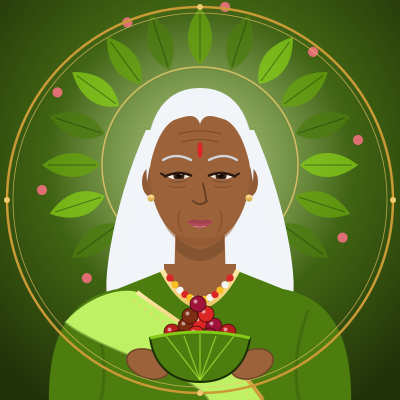
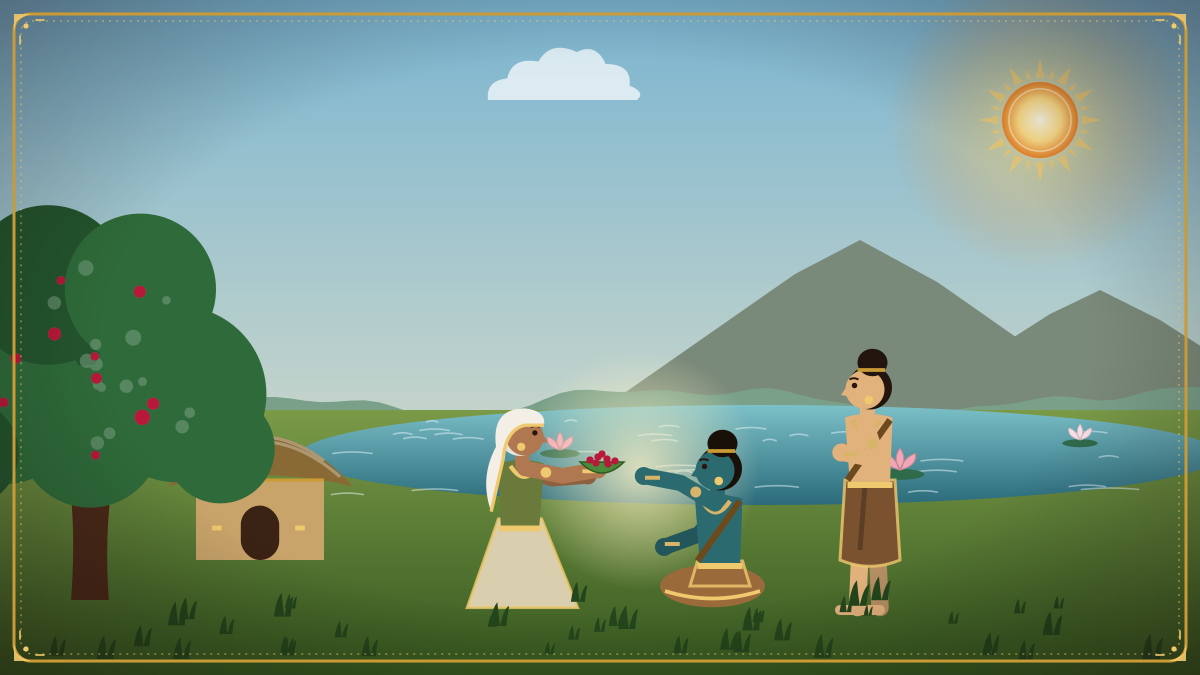
Following Kabandha’s directions, the brothers walked west and reached the western shore of Lake Pampa. There stood the ashram of Sage Matanga, and there lived Shabari, an old ascetic woman who had served Matanga’s disciples for many years. When she saw the two princes, she rose at once, bowed at their feet with joined hands and welcomed them with water for their feet and for sipping.
Rama asked kindly, “Has your penance gone well? Are you at peace?” Shabari answered, “Today my penance has borne its fruit, because I have seen you. The sages I served went to the higher worlds when you came to Chitrakuta. Before leaving, they told me, ‘Rama will come to this holy ashram. Receive him as your guest, and after seeing him you will go to the imperishable worlds.’”
“For you,” she said, “I have gathered many kinds of forest fruits from the banks of Pampa.” Rama accepted her offering with love. He did not see her age or her humble life; he saw only her pure devotion and her long years of waiting. For Shabari, this was the day her whole life had been leading to.
Then she showed them the Matanga forest. There stood the altar where the sages had worshipped; even now it shone with their power. The bark garments they had hung on the trees to dry were still not dry, and the flowers they had offered had not faded. She told them that by the power of the sages’ thought, the waters of the seven seas had come there for their bathing.
Then, with Rama’s permission, Shabari offered herself into a sacred fire and rose in a shining form, bright like lightning, to the holy worlds where her teachers had gone. Rama said to Lakshmana, “We have seen this wonderful ashram. Now let us go to Pampa and find Sugriva.” For the first time since Sita was taken, hope began to rise in his heart.
Key moments
- Anasuya’s blessings and gifts to Sita
- Viradha defeated and freed from a curse
- Sharabhanga waits to see Rama, then enters the fire
- Rama promises to protect the sages
- Sita’s gentle warning about weapons
- Agastya gives Vishnu’s bow and unfailing quivers
- Lakshmana builds the hut at Panchavati
- Rama alone destroys Khara’s army of fourteen thousand
- Akampana and Shurpanakha bring the news to Ravana
- Maricha’s warning and his fear of Rama
- The golden deer with silver spots
- Maricha’s dying cry in Rama’s voice
- Ravana comes disguised as an ascetic
- Jatayu breaks Ravana’s chariot
- Sita drops her ornaments among five vanaras
- Rama performs Jatayu’s funeral
What this kanda teaches us
Rama took on a hard duty because helpless sages asked him for protection, and he kept his word even when it brought danger. Sita’s gentle warning shows that true love also speaks up with care. Strength is noble only when it is used to protect others.
Jatayu knew he was old and could not win, yet he fought because it was right to protect someone in danger. Maricha’s warnings show that good advice cannot help one who is blinded by desire. When we face wrong, even a small effort made with courage is never wasted.
Did you know?
- Atri told Rama that during a drought of ten years, Anasuya’s penance made fruits and roots grow and brought the Ganga flowing to their ashram.
- Viradha could not be killed by any weapon because of a boon from Brahma, so Rama and Lakshmana laid him in a deep pit.
- Valmiki says Rama, Sita and Lakshmana spent ten happy years moving among the ashrams of the Dandaka forest before they reached Agastya.
- Agastya gave Rama the bow of Lord Vishnu, an arrow given by Brahma and two quivers from Indra that never ran out of arrows.
- Maricha told Ravana that after Rama’s arrows struck him, he was so afraid that he saw Rama everywhere, even in his dreams.
- Sita told the disguised Ravana that Rama was twenty-five years old and she was eighteen when they left for the forest.
- Jatayu told Ravana that he had ruled as king of the birds for sixty thousand years.
- The five vanaras who saw Sita drop her ornaments were Sugriva and his companions, who later showed them to Rama.