The Uttara Kanda: Sita’s Sons and Rama’s Return
After the coronation, Sage Agastya tells Rama the history of Ravana and the story of Hanuman’s childhood, and Rama rules Ayodhya in peace. Sita, sent away because of the people’s talk, raises Lava and Kusha in Valmiki’s ashram; at Rama’s Ashvamedha the twins sing the Ramayana, Sita returns to the Earth, and in the end Rama leaves the world at the Sarayu.
The Sages Tell of Ravana’s Family
Rama now sat on the throne of Ayodhya. One day the great sages came from all four directions to bless the new king, led by Sage Agastya, who had once given Rama divine weapons in the forest. The sages praised Lakshmana’s victory over Indrajit even more than the fall of Ravana, and Rama, surprised, asked them why.
Long ago, Agastya said, the rakshasa brothers Malyavan, Sumali and Mali had lived in Lanka, a city built for them by Vishwakarma, the architect of the gods. They troubled the gods so much that Lord Vishnu fought them. Mali fell, and the others fled to Patala. Lanka stood empty until Kubera, son of Sage Vishravas and grandson of Sage Pulastya, came to rule there.
Sumali longed to see his people strong again. He sent his daughter Kaikasi to Sage Vishravas, and she became the mother of four children: Ravana, the ten-headed one; the giant Kumbhakarna; their sister Shurpanakha; and the gentle Vibhishana. The three brothers went to the forest and performed hard penance. Ravana even offered his heads into the sacred fire, one by one, until Brahma appeared before him.
Ravana asked that no god, demon, yaksha, naga or rakshasa should be able to kill him. He did not even think of mentioning human beings, and so his death would one day come from a man. Kumbhakarna was about to ask for something terrible, but at the gods’ prayer Goddess Saraswati entered his speech, and he asked for long sleep instead. Vibhishana asked only that his mind should stay fixed on dharma even in the greatest trouble.
Proud of his boon, Ravana drove Kubera out of Lanka and took the Pushpaka chariot. He shook Mount Kailasa until Shiva pressed it down with his toe. He defeated Yama and many kings, and his son captured Indra himself, earning the name Indrajit, “conqueror of Indra.” Yet King Kartavirya Arjuna once held him captive, and Vali carried him under his arm across the four oceans.
Agastya Tells of Young Hanuman
“Hanuman’s strength is beyond measure,” Rama said. “Why then did he not help Sugriva when Vali drove him away?” Agastya told the story of Hanuman’s childhood. Hanuman, he said, was the son of Anjana, wife of the vanara chief Kesari, and he was born of Vayu, the wind god.
One morning, while his mother was away, baby Hanuman grew hungry. He saw the rising sun, red as a ripe fruit, and leapt into the sky to catch it. The Sun did not burn him, knowing he was only a child. But it was the very day Rahu was to seize the sun, and Rahu complained to Indra. When the child rushed towards them, Indra struck him with his thunderbolt, the vajra.
The child fell onto a mountain, and his jaw, called hanu, was broken; from this he came to be known as Hanuman. Vayu was so angry that he carried his son into a cave and stopped blowing. Without air, every living being began to suffer. The gods ran to Brahma, who went to the cave and lovingly touched the child. Hanuman woke up at once, and Vayu began to blow again.
Then the gods gave him boons. Indra promised that the vajra would never harm him. Surya gave him a part of his own brightness and promised to teach him the scriptures. Varuna, Yama, Kubera, Shiva and Brahma protected him from their weapons. Young Hanuman played pranks on the sages in the forest, and they gently laid a curse on him: he would forget his strength until someone reminded him of it. That, said Agastya, is why he waited until Jambavan reminded him at the ocean shore.
Farewells and the Good Rule of Rama
When the sages had gone, the kings who had come for the coronation, King Janaka, Kaikeyi’s brother Yudhajit and the King of Kashi, returned home with rich gifts. The vanaras and bears, and Vibhishana with his rakshasas, had stayed on happily in Ayodhya. Now Rama honoured each of them with jewels and loving words.
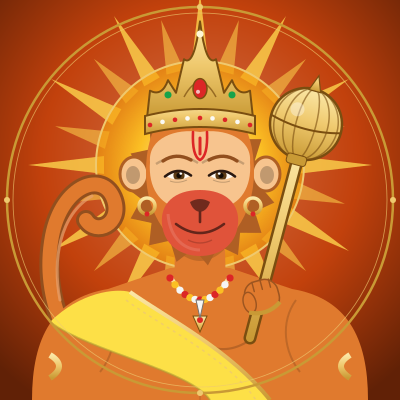
Rama embraced Sugriva and asked him to rule Kishkindha well, and he asked Vibhishana to rule Lanka with dharma. Hanuman bowed and asked for one blessing: “May my love for you never fade, and may I live as long as your story is told on earth.” Rama embraced him and said: “So be it. As long as my story is told in the world, you will live.”
Rama ruled with his brothers beside him, and his rule, Ramarajya, became a model of justice. Each morning he sat in the royal court, listened to the needs of his people and settled their troubles with justice. In the afternoons Rama and Sita spent happy hours together in the Ashoka garden of the palace.
In time Sita was expecting a child, and Rama lovingly asked her what she wished for. She said she longed to visit the holy ashrams on the bank of the Ganga and spend even one night among the sages, eating fruits and roots as they did. Rama gladly promised that she would go the very next day. Neither of them knew what that journey would bring.
Sita Sent to the Forest
That evening Rama sat with his friends and asked what the people were saying about him. His friend Bhadra at last told him the truth. People were talking about how Rama had taken Sita back after she had lived in Ravana’s power. “Now we too will have to accept such things from our wives,” they said, “for the people follow the king.”
Rama was struck to the heart. He called Bharata, Lakshmana and Shatrughna and told them what he had heard. “I know that Sita is pure,” he said. “Agni himself declared it before the gods. But a king cannot live with dishonour among his own people.” With great pain he ordered Lakshmana to take Sita across the Ganga and leave her near Valmiki’s ashram, and he made his brothers promise not to argue.
The next morning Lakshmana drove Sita out in a chariot, with Sumantra holding the reins. Sita was happy, thinking she was going on her pilgrimage. They crossed the Ganga by boat. On the far bank Lakshmana broke down in tears and, with folded hands, told her the truth: the king had sent her away because of the people’s talk. “Near here is the ashram of Sage Valmiki, a dear friend of our father,” he said. “Live there in peace.”
Sita fell to the ground in grief. “Surely I did some great wrong in a past life,” she said. “I would give up my life in the Ganga, but I carry the king’s children.” Then she gathered herself and spoke with dignity. “Tell Rama that he knows I am pure. Let him care for his people as if they were his own brothers and protect his good name, for that is his highest duty. For his sake I will bear even this.”
Before Lakshmana left, she asked him to look at her, so that he could tell Rama that she was carrying his child. Lakshmana touched his head to the ground, walked around her with respect and crossed back over the river. Sita stood alone on the bank, weeping, with no one to protect her.
Valmiki’s Ashram and the Birth of the Twins
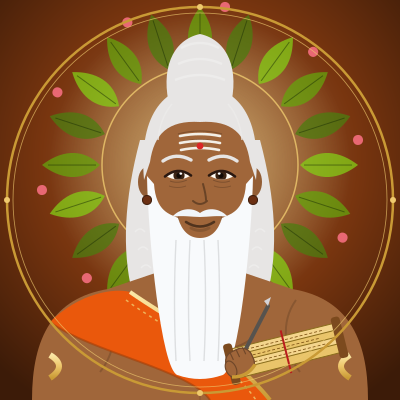
The young sons of the sages saw Sita weeping and ran to tell Valmiki. Through the power of his penance, the sage already knew everything. He came to her and said kindly: “You are the daughter-in-law of King Dasharatha and the dear daughter of King Janaka. I know that you are without any fault. Do not be afraid. The holy women of the ashram will care for you like a daughter.” He led her to them, and there she lived with honour.
Some time later, sages led by Chyavana came to Rama for help. A cruel rakshasa named Lavana, son of Madhu, was troubling everyone near the Yamuna. He owned a trident given by Lord Shiva, and while he held it nobody could defeat him. Shatrughna asked to go. Rama crowned him king of that land and gave him the divine arrow with which Vishnu had once slain the demons Madhu and Kaitabha.
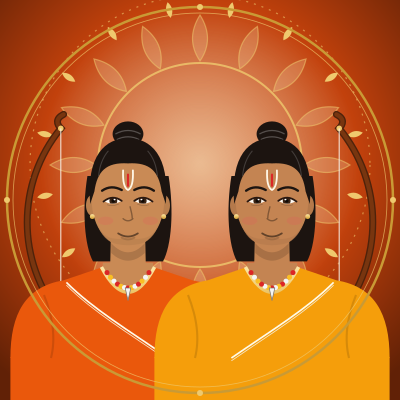
On his way, Shatrughna stopped for a night at Valmiki’s ashram. That very night Sita gave birth to twin sons. Valmiki came at once and performed the rites of protection. For the elder he used the top of the sacred kusha grass and so named him Kusha; for the younger he used the lower part, called lava, and named him Lava. Shatrughna heard the joyful news at midnight and rejoiced.
Shatrughna went on and waited at the gate of Lavana’s city. When Lavana came back from the forest without his trident, Shatrughna challenged him and struck him down with Vishnu’s arrow. On that land Shatrughna built a beautiful new city called Madhura, which we know today as Mathura. Years later, on a visit to Ayodhya, he stopped again at the ashram and listened in wonder as young voices sang the story of Rama.
The Song at the Ashvamedha and Sita’s Return to the Earth
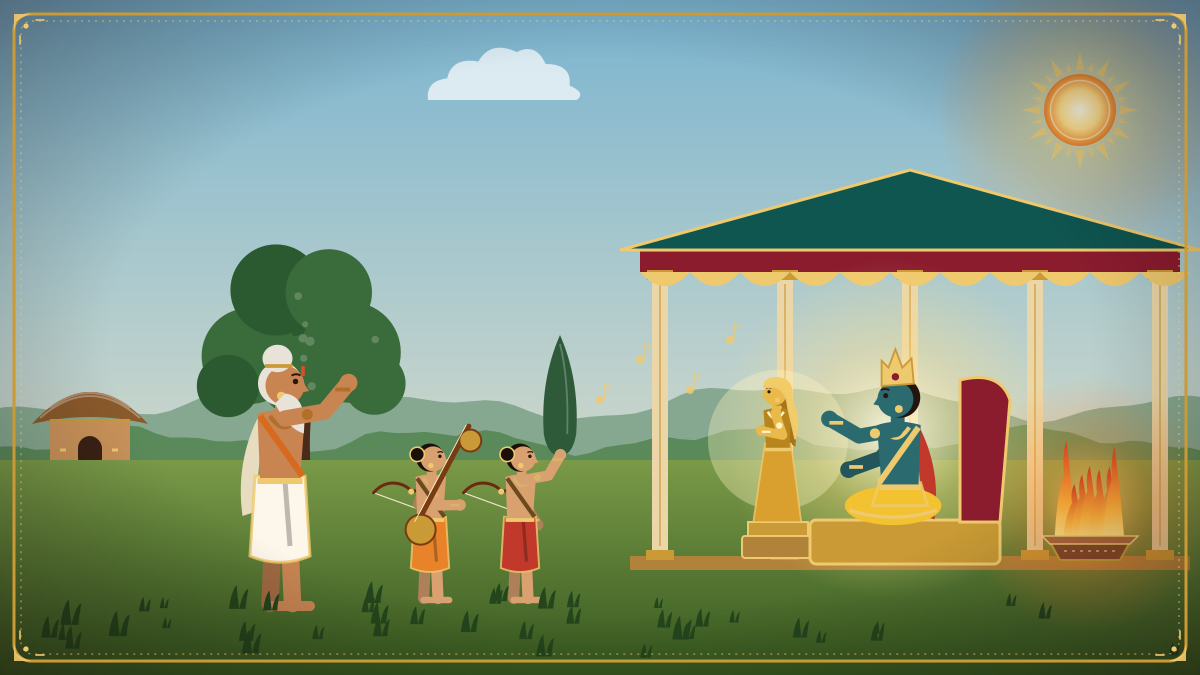
Years went by. Rama decided to perform the great Ashvamedha sacrifice in the Naimisha forest on the bank of the Gomati river. Kings and sages came from everywhere, with Sugriva and Vibhishana to help. Rama had never taken another wife, so a golden image of Sita sat beside him in all the rituals.
Valmiki came with his disciples, among them Lava and Kusha, to whom he had taught the whole Ramayana. “Sing it everywhere,” he told them. “Sing twenty chapters a day, sweetly, with the music. Accept no gifts. And if anyone asks whose sons you are, say only that you are Valmiki’s disciples.”
The twins sang so sweetly that everyone listened spellbound. Rama called them to the assembly, and people whispered that the boys looked exactly like Rama. Rama offered them eighteen thousand gold coins, but they refused: “We live in the forest on fruits and roots. What would we do with gold?” From the song itself Rama understood that these were Sita’s sons.
Rama sent messengers to Valmiki: if Sita was pure, let her come before the assembly and declare it. The next day Valmiki came, and Sita walked behind him with folded hands and lowered eyes. Valmiki said: “Rama, here is Sita, always faithful to you. These twins are your sons. I have never spoken a lie. If Sita has any fault, may my thousands of years of penance bear no fruit.”
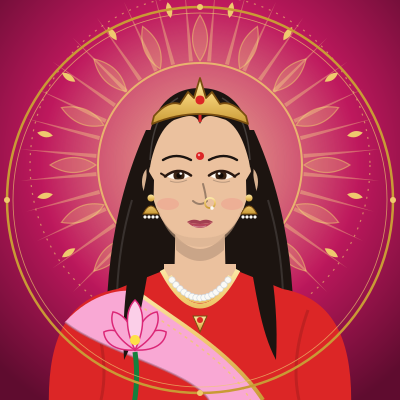
Rama said he knew Sita was pure, but the people too must be satisfied. Then Sita, dressed in ochre, stood before everyone. “If I have never thought of anyone but Rama, even in my mind,” she said, “may Mother Earth give me a place.” At once a heavenly throne rose from the ground, carried by mighty nagas. The Earth Goddess took Sita in her arms and seated her there, and the throne sank back into the earth as flowers rained from the sky.
Time Comes for Rama
Rama’s grief was so great that he begged the Earth to give Sita back, until Brahma came and comforted him, reminding him of who he truly was. Rama took his sons home to Ayodhya. In time the three queen mothers passed away, and Rama ruled for many thousands of years, while Bharata and Lakshmana won new kingdoms for their own sons.
One day an ascetic came to the palace gate and asked to speak with Rama alone. He made a condition: anyone who saw or heard their talk must be put to death by Rama. Rama agreed and placed Lakshmana at the door. The ascetic was Kala, Time himself, sent by Brahma. “Your work on earth is done,” he said. “Stay longer if you wish, or return to your own abode as Vishnu.” Rama chose to return.
Just then the fiery Sage Durvasa arrived and demanded to see Rama at once, threatening to curse Rama, his brothers, their children and the whole kingdom. Lakshmana thought, “Better that I alone should die than all of them,” and went in. Rama served Durvasa, then remembered his promise and was crushed with sorrow. Vashishtha advised that for a noble person, being given up is equal to death. So Rama gave up Lakshmana, who went straight to the Sarayu, sat in yoga and was carried to heaven by Indra.
Rama could not bear to stay without Lakshmana. He wished to crown Bharata, but Bharata refused and asked that Rama’s sons be made kings. So Kusha was crowned at Kushavati in southern Kosala and Lava at Shravasti in the north, and Shatrughna’s two sons received Madhura and Vidisha. When the vanaras, bears and rakshasas came, Rama asked Vibhishana to rule Lanka, Hanuman to live as long as his story is told, and Jambavan, Mainda and Dvivida to remain on earth as well.
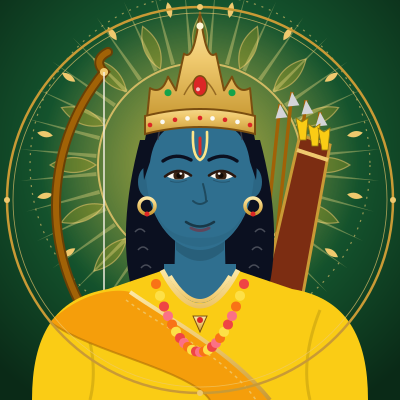
Then Rama walked out of Ayodhya towards the Sarayu, holding sacred kusha grass, silent and calm. Bharata and Shatrughna walked with him, and behind them came the people of Ayodhya, even the birds and animals. At the river Brahma and the gods appeared in the sky. Rama entered the water with his brothers and returned to his own glory as Vishnu, and all who followed him reached the heavenly worlds. So ends Valmiki’s Ramayana, a story that lives on wherever it is told with love.
Key moments
- Agastya tells the story of Ravana, Kumbhakarna and Vibhishana and their boons
- Baby Hanuman leaps at the sun and receives the gods’ blessings
- Hanuman asks to live as long as Rama’s story is told
- Lakshmana leaves Sita near Valmiki’s ashram by the Ganga
- Lava and Kusha are born on the night Shatrughna stays at the ashram
- Shatrughna defeats Lavana and founds Madhura (Mathura)
- The twins sing the Ramayana at Rama’s Ashvamedha
- Sita enters the Earth; Lakshmana and Rama leave the world at the Sarayu
What this kanda teaches us
Sita faced a great injustice without losing her dignity or her love, and her truth was finally declared before the whole world. Rama’s life shows that duty can bring deep pain even to the best of people. And as Rama promised Hanuman, his story lives on as long as people tell and hear it with love.
Did you know?
- Shiva gave Ravana his name: when Kailasa pressed down on him and his cry made the three worlds tremble, Shiva called him Ravana, “the one who made the worlds cry out.”
- Long before he carried Sita away, Ravana was cursed by Nalakubara, Kubera’s son: if he ever forced a woman against her will, his head would break into pieces. This curse kept Sita safe in Lanka.
- Vali once caught Ravana and carried him tucked under his arm while he offered his prayers at all four oceans. Afterwards the two became friends before the sacred fire.
- When Valmiki declared Sita’s purity at the Ashvamedha, he introduced himself as the tenth son of Pracheta and swore that he had never spoken a lie.