Spring at Lake Pampa
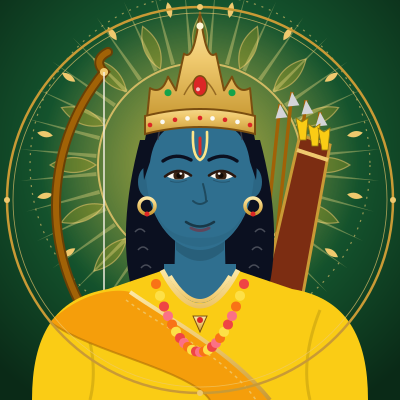
Here the Kishkindha Kanda, the fourth book of the Ramayana, begins. Lake Pampa was beautiful, with clear water, lotuses of many colours and birds singing everywhere. It was spring, and the trees around the lake were covered in blossoms. But all this beauty only made Rama’s sorrow deeper. The cool breeze and the song of the koel reminded him of Sita at every step.
“If Sita were here,” Rama said, “how happy she would be to see this lake. How shall I face King Janaka without her? How can I return to Ayodhya alone?” The tears ran down his face. The prince who had faced Khara and fourteen thousand rakshasas without fear was now helpless before the pain of separation.
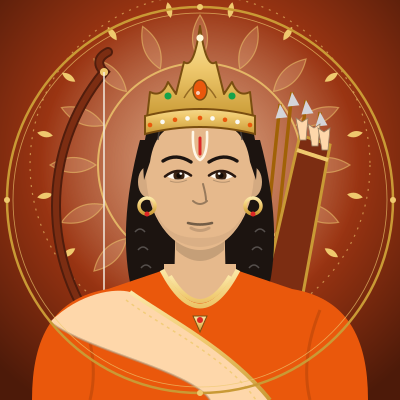
Lakshmana spoke to him with love. “Brother, give up this grief. Sorrow takes away a person’s strength and enthusiasm, but with effort nothing is impossible. Wherever Ravana hides, even in the deepest underworld, we will find him and bring Sita back.” Hearing these brave words, Rama took heart and wiped away his tears.
Meanwhile, on Rishyamuka mountain, Sugriva saw two strong young men carrying bows. He was afraid that Vali had sent them to kill him, and he fled with his four ministers to another peak. Hanuman calmed him: “Vali cannot come here because of Sage Matanga’s curse. You are a king; a king must not be so easily shaken.” Then Sugriva sent Hanuman to find out who the strangers were.
Hanuman Meets the Princes
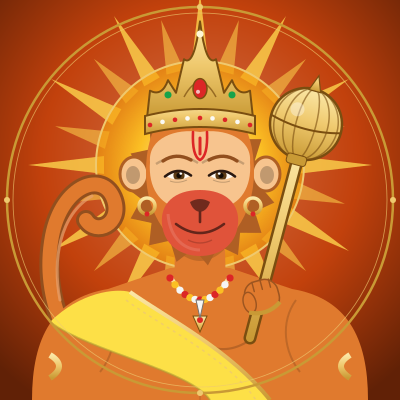
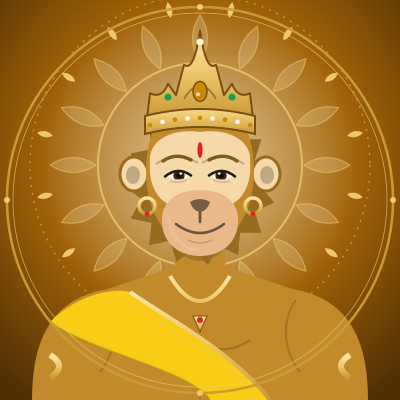
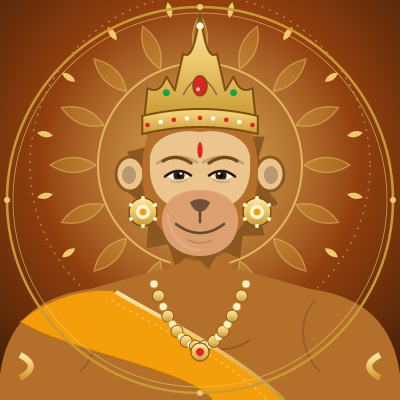
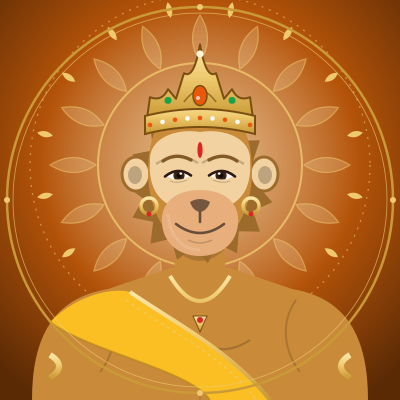
Hanuman took the form of a wandering ascetic and came to the brothers. He bowed and said sweetly, “You look like royal sages or gods, yet you carry bows and wear bark garments. Why have you come to this forest? I am Hanuman, a minister of the vanara king Sugriva and the son of the Wind god. Sugriva, the righteous one, wishes to be your friend.”
Rama turned to Lakshmana in wonder. “No one could speak like this without knowing the Rig Veda, the Yajur Veda and the Sama Veda. He has surely studied grammar well, for in all his speech there is not a single wrong word. His words are neither too long nor too short, and his voice is pleasing. Even an enemy with a raised sword would be softened. Speak to him kindly, Lakshmana.”
Lakshmana told Hanuman everything: King Dasharatha, the exile, the taking of Sita, and Kabandha’s advice. “The one who was once the refuge of the whole world now comes to Sugriva for shelter,” he said, and his eyes filled with tears. Hanuman replied, “Sugriva too has been driven out by his brother Vali, who has taken his wife. He will surely help you search for Sita.”
Then Hanuman took his own vanara form again. He lifted both brothers onto his back and carried them up the mountain to the place where Sugriva was waiting. The meeting with this humble, wise and devoted messenger would become one of the most precious bonds of Rama’s life. And the friendship that would change everything was about to begin.
Friendship with Sugriva
Rama and Sugriva become friends before a sacred fire, Rama ends the reign of Vali and crowns Sugriva, the rainy season passes on Prasravana mountain, and the vanara armies set out in four directions to search for Sita.
Friendship Before the Fire
In the last chapter Hanuman carried Rama and Lakshmana on his back to the peak where Sugriva was waiting. Now the vanara prince came forward to meet them. Hanuman made a fire by rubbing two pieces of wood together, and Rama and Sugriva walked around the sacred fire, making it the witness of their friendship. “From today you are my dear friend,” said Rama. “Your joy and sorrow will be my joy and sorrow.”
Sugriva broke a leafy branch of a sala tree and spread it for Rama to sit on, and Hanuman did the same for Lakshmana. Sugriva said, “I know that you are searching for Sita. Some time ago I was sitting here with my ministers when I saw a rakshasa carrying a lady through the sky. She was crying, ‘Rama! Lakshmana!’ and she dropped her upper cloth with some ornaments wrapped in it.”
He had it brought at once. When Rama saw the cloth and the jewels, he pressed them to his heart and wept aloud. He asked Lakshmana, “Do you recognise these?” Lakshmana answered, “I do not recognise the armlets or the earrings. But I know these anklets well, for I bowed at her feet every day.” These words show how deeply Lakshmana respected Sita, his elder brother’s wife.
Rama’s grief turned to anger, and he asked where Ravana lived. Sugriva said, “I do not know where that wicked rakshasa lives, but I promise you that I will find Sita and bring her back. Please do not grieve.” Comforted by his new friend, Rama wiped his eyes. He said, “Tell me your sorrow too, my friend. I will remove it.”
Sugriva then told Rama that his elder brother Vali had driven him out of the kingdom of Kishkindha and taken his wife Ruma. Out of fear of Vali, he was living on Rishyamuka mountain with his four ministers. Rama promised, “I will kill Vali, who has wronged you. My arrows never miss.” Sugriva and his ministers shouted with joy.
Sugriva’s Story
Vali and Sugriva were once loving brothers. Vali, the elder, ruled Kishkindha, and Sugriva served him with devotion. One night an asura named Mayavi, the son of Maya and elder brother of Dundubhi, came to the gate of Kishkindha and challenged Vali to fight. Vali rushed out, and Sugriva followed him out of love. Seeing the two brothers, the asura ran away and entered a deep cave.
Vali said, “Sugriva, wait here at the mouth of the cave until I kill him and come back.” Then he went in. Sugriva waited faithfully for a whole year. At last foam and blood flowed out of the cave, and he heard the roars of asuras but not his brother’s voice. Sure that Vali had been killed, he closed the mouth of the cave with a rock as big as a mountain, offered water for his brother and returned home sadly.
The ministers made Sugriva king. But Vali had not died. He killed Mayavi, came out of the cave and found the way blocked. He was furious. He thought that Sugriva had shut him in on purpose to take the throne. Vali would not listen to any explanation. He drove Sugriva out of the kingdom with only the clothes he wore and took his wife Ruma for himself.
Vali chased him through every corner of the earth, but there was one place he could not enter: Rishyamuka. Long before, Vali had killed a powerful asura named Dundubhi, who had the shape of a buffalo, and thrown his body a whole yojana away. Drops of blood fell on the ashram of Sage Matanga, who cursed him: “If Vali ever comes within this forest, he will die.” So Sugriva lived there safely.
Sugriva added, “Vali is very strong. Every morning he goes from the western ocean to the eastern ocean and from the southern to the northern, offering prayers at each. Here lies the dry skeleton of Dundubhi that he threw so far, and here stand seven great sala trees; Vali can strip all their leaves with one shake.” He wanted to be sure that Rama could truly defeat such a mighty enemy.
Rama Shows His Strength
Rama smiled. With just the big toe of his foot, he kicked the huge skeleton of Dundubhi, and it flew ten yojanas away. Sugriva said politely, “When Vali threw it, the body was fresh and heavy. Now it is dry and light.” Rama understood that his friend still had doubts, and he did not mind.
He took a single arrow and shot it at the seven sala trees. The arrow pierced all seven trees, went through the mountain behind them and into the earth, and then came back to Rama’s quiver. Sugriva fell at Rama’s feet in wonder. “With you as my friend, I fear no one,” he said. “Today, I am sure, Vali will fall.”
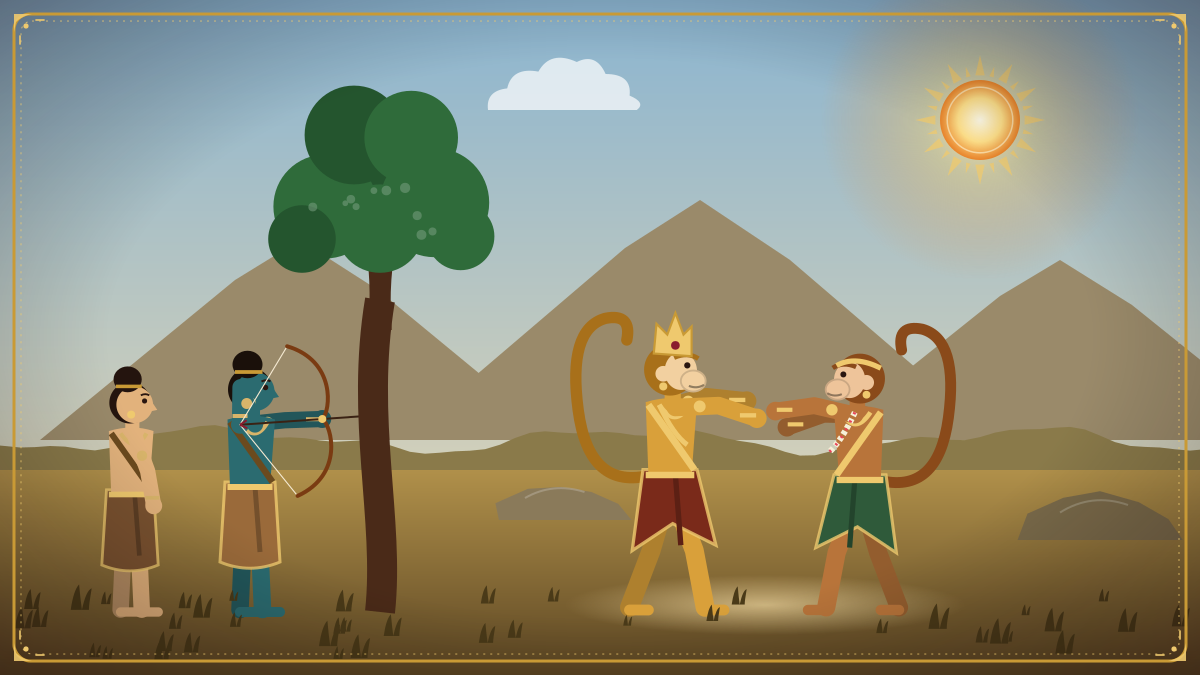
They went to Kishkindha, and Sugriva roared a challenge at the city gate. Vali rushed out in anger, and the two brothers fought fiercely. Rama stood ready with his bow, hidden among the trees. But the two brothers looked so alike in shape, size, ornaments and movements that Rama could not tell which was which. Afraid of killing his friend by mistake, he did not shoot.
Sugriva was badly beaten and ran back to Rishyamuka, hurt and upset. “Why did you not shoot?” he asked. Rama explained the reason gently. Then Lakshmana took a flowering gajapushpi creeper and placed it like a garland around Sugriva’s neck, so that Rama could recognise him in the fight. With this sign, Sugriva went back to Kishkindha to challenge Vali once more.
The Fall of Vali
When Vali heard Sugriva’s roar again, he jumped up in anger. His wife Tara, wise and loving, held him back. “Do not go now,” she said. “Sugriva was beaten just today, so he must have strong help. Our son Angada heard from our spies that Rama and Lakshmana have become his friends. Make peace with your brother, make him the crown prince and live together lovingly.”
But Vali would not listen. “I will not hurt Sugriva’s life; I will only humble his pride,” he said. “And Rama knows dharma. Why would he do wrong?” Tara walked around him praying for his safety and went back inside with the other women. Vali went out, and the brothers fought again like two mountains crashing together.
When Sugriva began to grow weak, Rama aimed carefully and shot a powerful arrow. It struck Vali in the chest, and the mighty vanara king fell like a great tree cut at the root. Even as he lay dying, the golden necklace that Indra had given him kept his life and his glow from leaving him at once.
Rama and Lakshmana came near. Vali spoke harsh words to Rama: “I was not fighting you. You struck me while hidden. What kind of dharma is this? If you had asked me, I would have brought Sita back to you in a single day and dragged Ravana here with a rope around his neck.”
Rama answered calmly. “This whole earth, with its forests and mountains, belongs to the family of Ikshvaku, and Bharata rules it with dharma. We act as his servants. You have taken Ruma, the wife of your younger brother, while he is still alive. She is like your daughter-in-law. For this wrong, the punishment is death. I have also given my word to my friend Sugriva.” Hearing this, Vali’s anger left him, and he accepted that Rama was right.
Tara’s Grief and a New King
Vali joined his hands and said to Rama, “Forgive me for my harsh words. Please take care of my son Angada, and do not let Sugriva blame Tara for anything.” Then he called Sugriva. “Brother, fate kept us apart. Look after Angada as your own son. Listen to Tara’s advice, for she understands even the most subtle matters, and her words always come true.”
Vali took off the golden necklace that Indra had given him and placed it around Sugriva’s neck. He told Angada to obey Sugriva and to serve him faithfully. Then the great Vali breathed his last. Tara ran out with Angada and fell beside her husband, weeping. Hanuman spoke kind words to comfort her.
Seeing his brother dead, Sugriva was overcome with sorrow. He had wanted the kingdom, but now he felt only grief and regret, and he even wished to die. Rama comforted everyone. “This is the way of the world,” he said. “Now do what must be done.” Angada and Sugriva performed Vali’s funeral rites on the bank of a river with great honour.
Sugriva was crowned king of Kishkindha, and at Rama’s wish, Angada was made the crown prince. Ruma came back to Sugriva. Rama himself did not enter the city, because he had promised to live in the forest for fourteen years and not enter any town or village. He blessed the new king from outside.
Rama said to Sugriva, “It is now the month of Shravana, the beginning of the rains. For four months it will be difficult to search. Go home and rest; when autumn comes, begin the search.” Rama and Lakshmana went to stay in a cave on Prasravana mountain, near Kishkindha, to spend the long rainy season.
The Rains, Lakshmana’s Anger and the Search Parties
The rains came with dark clouds, lightning and thunder. Rivers flooded and the whole forest turned green. But for Rama each day without Sita felt endless. Every cloud and every flash of lightning reminded him of her. Lakshmana stayed beside him, comforting him and keeping his hope alive through the long wet months.
At last the skies cleared and bright autumn arrived. But Sugriva, now a king after long hardship, was enjoying his comforts and seemed to forget his promise. Wise Hanuman reminded him, and Sugriva ordered his commander Nila to gather the vanaras. Yet Rama, seeing the autumn pass, grew sad and angry. He sent Lakshmana to Kishkindha with a message: “Remind Sugriva that the path by which Vali went is still open.”
Lakshmana went to Kishkindha in a blazing temper and twanged his bowstring so loudly that the whole city shook. The vanaras were terrified. Wise Tara came out to meet him and spoke gently: “Sugriva has not forgotten. He has already called the vanaras from all over the earth. Please forgive him.” Her calm words softened Lakshmana. Sugriva bowed and humbly asked for forgiveness, and Lakshmana forgave him.
Sugriva went with Lakshmana to Rama, and soon vanaras and bears arrived from mountains, forests and seashores, in numbers too large to count. Sugriva divided them into four search parties: one to the east under Vinata, one to the west under Sushena, Tara’s father, one to the north under Shatabali, and one to the south under Angada, with Hanuman, Jambavan, Nila and other great heroes. Each party was given one month.
Sugriva trusted Hanuman most of all. Rama too felt sure that Hanuman would succeed, so he gave him his own ring, engraved with the name Rama, as a sign for Sita. Hanuman touched it to his head, bowed at Rama’s feet and set off with the southern party. Thousands of vanaras spread out across the earth, and the great search for Sita had begun.
Sampati and Jambavan
The Search in the South
In the last chapter four search parties left Kishkindha. As the month ended, the parties from the east, the west and the north came back to Sugriva with sad faces. They had searched every forest, river and mountain, but no one had seen Sita. Now everyone’s hopes rested on the southern party led by Angada, with Hanuman and old Jambavan.
The southern party searched the Vindhya mountains carefully, cave by cave and forest by forest. The land was rough, and the vanaras grew hungry and very thirsty. Then they saw birds coming out of a large cave with wet wings. “There must be water inside,” said Hanuman. Holding one another’s hands, they went into the dark cave called Rikshabila.
After walking a long way in darkness, they came into a shining place. There were golden trees, clear ponds full of lotuses and beautiful palaces. They learnt that the great builder Maya had made this place for the apsara Hema. It was now guarded by a holy woman named Swayamprabha, the daughter of Merusavarni, who sat there in bark garments, glowing with the power of her penance.
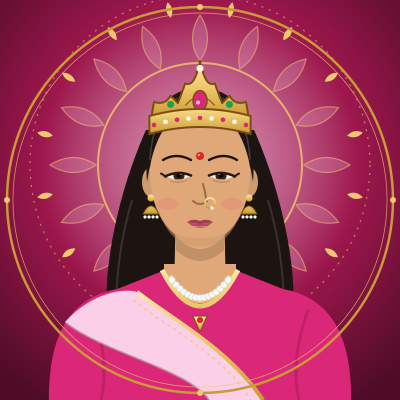
Swayamprabha welcomed them kindly and gave them food and water. Hanuman told her about Rama and the search for Sita. The vanaras then asked how they could get out, for they had lost their way. She said, “No one who enters here leaves alive, but I will help you because you are serving Rama. Close your eyes.” They closed their eyes, and in a moment they found themselves outside, on the shore of the great ocean.
Swayamprabha returned to her cave. The vanaras looked at the endless waves of the ocean and then at one another. They realised with dismay that the month given by Sugriva was already over, and they still had no news of Sita. Behind them lay the forests they had searched; in front of them there was only water as far as the eye could see. Not one of them knew what to do next.
Angada’s Despair
Angada sat down on the shore with a heavy heart. “The month is over and we have not found Sita,” he said. “Sugriva is strict. If we return without news, he will surely punish us. It is better to die here.” Many vanaras agreed with him and began to weep.
Hanuman tried to change Angada’s mind. He reminded him that Sugriva was kind to him, that his mother Tara and the whole kingdom looked to him, and that losing hope was not right for a prince. But Angada was too sad to be comforted. He was sure that Sugriva did not truly love him and would punish him.
Angada decided to fast until death. He spread kusha grass on the ground and sat down on it, and the other vanaras sat down around him in the same way. They talked sadly about everything that had happened: Kaikeyi’s boons, the exile, Sita being taken, and how brave Jatayu had given his life trying to save her.
Just then an enormous old vulture without wings crawled out of a cave on the mountain above them. Seeing so many vanaras sitting still, he was pleased, thinking that food had come to him. The vanaras were frightened. Angada sighed, “Brave Jatayu died serving Rama, and we too will die here in his service.” When the old bird heard Jatayu’s name, everything changed.
Sampati
“Who speaks of the death of my brother Jatayu?” asked the old bird. “I am Sampati, his elder brother. Tell me how he died.” The vanaras helped him down from the mountain, and Angada told him the whole story of Rama, Sita and Jatayu’s brave fight with Ravana. Sampati wept and offered water for his younger brother.
Then Sampati told his own story. Long ago, he and Jatayu had flown up towards the sun in a contest to see who could fly higher. Near the sun, Jatayu began to faint from the heat. To protect him, Sampati spread his own wings over his brother. His wings were burnt, and he fell down onto this mountain. Since then he had lived here, unable to fly.
“I have no wings and no strength,” said Sampati, “but I can help Rama with my words. I saw Ravana carrying a beautiful young woman through the sky. She was crying ‘Rama! Lakshmana!’ and throwing off her ornaments. My son Suparshva also saw them. Lanka is a hundred yojanas from here, across this ocean. Sita is there, in Ravana’s palace, guarded by rakshasis.”
“We birds of Garuda’s family can see very far,” he said. “From here I can see Ravana and I can see Sita. Cross the ocean and you will find her.” The vanaras were overjoyed. They jumped up, hugged one another and gave up all thought of fasting. After so many weeks of searching, at last they knew where Sita was.
Even as he spoke, Sampati’s new wings began to grow. Long ago a sage named Nishakara had told him, “When you help the messengers of Rama, your wings will grow again.” Now that promise came true. Joyful and strong once more, Sampati flew up from the mountain and disappeared into the sky.
Who Can Cross the Ocean?
The vanaras ran to the shore with fresh hope. But when they looked at the ocean, full of huge waves and great sea creatures, they fell silent. A hundred yojanas! Who could cross it? Angada asked each hero how far he could leap. Gaja said ten yojanas, Gavaksha said twenty, and others spoke of thirty, forty, fifty, sixty, seventy and even eighty yojanas.
Old Jambavan, the wise king of the bears, said, “Once I was very strong. When Lord Vishnu measured the worlds with three steps at King Bali’s sacrifice, I went around him. But now I am old, and my strength is not what it was. I can leap ninety yojanas, but that is not enough.” The vanaras respected his honesty, for the old hero did not pretend to be stronger than he was.
Angada said, “I can leap a hundred yojanas, but I am not sure I can come back.” Jambavan replied, “You are our leader, and a leader should not be sent; you are the root of this whole mission. There is one among us who can surely do it.” Then he turned to Hanuman, who had been sitting quietly apart from the others.
Through all this talk, Hanuman had said nothing at all. While the others counted how far they could leap, he sat calmly by himself. He knew his duty well, but he was not thinking about his own strength. Jambavan, who knew him well and understood his true power, decided that this was the moment to remind him who he truly was.
Jambavan Awakens Hanuman
“Hanuman,” said Jambavan, “why do you sit silent? You are as mighty and as swift as Garuda, the king of birds. Listen to your story. Your mother Anjana was once an apsara named Punjikasthala. Because of a curse she was born as a vanara, and she became the wife of the vanara chief Kesari. The Wind god blessed her, and you were born as his son, with his strength and speed.”
“When you were a little child, you saw the rising sun and thought it was a ripe fruit. You leapt into the sky to catch it. Indra struck you with his thunderbolt, and you fell onto a mountain and your jaw, called hanu, was broken. That is how you got the name Hanuman. Your father the Wind god became angry and stopped blowing, and all living beings began to suffer.”
“To please the Wind god, the gods gave you great boons. Brahma blessed you that no weapon could kill you in battle. Indra blessed you that you would die only when you yourself wished. You are the son of the Wind, equal to him in speed. Rise, Hanuman! Cross this ocean and save us all.”
As Jambavan spoke, Hanuman’s strength awoke. His body began to grow, larger and larger, and he shone with power. The vanaras cheered with joy. Hanuman bowed to the elders and said, “I am the son of the Wind. I can circle Mount Meru again and again without resting. I will cross this ocean, I will see Sita, and I will come back.”
Hanuman climbed Mahendra mountain to take off. Under the weight of his feet, the mountain shook, streams of water burst out of its rocks and animals ran from their caves in fear. Standing on the peak, he turned his mind towards Lanka and prepared for the greatest leap ever made.
Key moments
- Rama and Sugriva become friends with a sacred fire as witness
- Lakshmana recognises only Sita’s anklets
- Sugriva tells how Vali drove him out and took his wife
- One arrow from Rama pierces seven sala trees
- A flowering creeper helps Rama tell the brothers apart
- Vali falls; Sugriva is crowned and Angada made crown prince
- Rama spends the rainy season on Prasravana mountain
- Four search parties set out; Hanuman carries Rama’s ring
What this kanda teaches us
Rama’s friendship with Sugriva shows that true friends share each other’s sorrows and keep their promises. Vali’s story warns us that taking what belongs to another, even a brother, brings ruin. And when Sugriva forgot his promise in comfort, it was wise advisers like Hanuman and Tara who brought him back to the right path.
Did you know?
- When Sugriva showed Sita’s ornaments, Lakshmana said he did not know her armlets or earrings, but he knew her anklets because he bowed at her feet every day.
- Rama’s single arrow pierced seven sala trees and the mountain behind them, went into the earth and then returned to his quiver.
- As Vali was dying, he gave Sugriva the golden necklace that Indra had given him.
- Sugriva knew every region of the earth because Vali had chased him in all directions; only Rishyamuka was safe because of Sage Matanga’s curse.