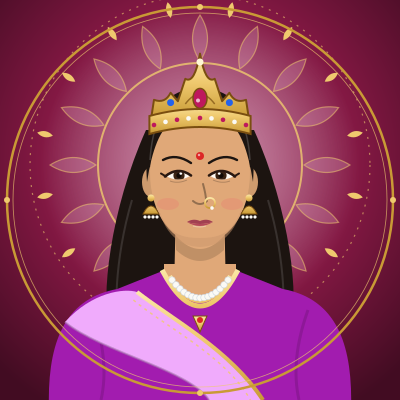
Kaikeyi was the princess of the Kekaya kingdom and the youngest and most beloved of King Dasharatha’s three chief queens. She was the mother of Bharata. For years she loved Rama like her own son, but in one night, misled by her maid Manthara, she demanded two boons that sent Rama into the forest for fourteen years and brought great sorrow to Ayodhya. Valmiki tells her story honestly, and also shows how Rama never stopped treating her with respect.
Princess of Kekaya
Kaikeyi was the daughter of King Ashvapati, ruler of the Kekaya country in the north-west. Her brother was Prince Yudhajit. She married Dasharatha and came to Ayodhya with her old maid Manthara, who had lived with her in her father’s home since she was a child.
Kaikeyi was beautiful, spirited and brave. Of all his queens, Dasharatha loved her most, and he often stayed in her palace. When the divine payasa was shared out after the yajna, Kaikeyi received a portion, and she gave birth to Bharata, a noble and righteous prince who would later become famous for his love for Rama.
After the weddings of the four princes, Kaikeyi’s brother Yudhajit took Bharata, together with Shatrughna, to stay with their grandfather in Kekaya. They were still there when the great storm broke over Ayodhya, which is why Bharata knew nothing of his mother’s plan.
The battle and the two boons
Long before Rama was born, the gods were at war with the asuras, and Dasharatha went to help Indra against a powerful asura named Shambara. Kaikeyi went with him. In the fierce fighting the king was badly wounded and lost consciousness. Kaikeyi carried him away from the battlefield and saved his life.
Grateful, Dasharatha offered her two boons, two wishes he promised to grant whenever she asked. Kaikeyi said she would ask for them later. For many years the promise lay forgotten. Kaikeyi had once told the story to her maid Manthara, never imagining what would come of it.
Love for Rama
Through Rama’s childhood and youth, Kaikeyi loved him dearly. Rama, too, served her with the same respect he showed his own mother. When Manthara came rushing in with the news that Rama would be crowned the next morning, Kaikeyi was delighted. She gave Manthara a precious ornament as a reward for the happy news.
“Rama is as dear to me as Bharata,” she said. “He serves me even more than he serves Kaushalya. If the kingdom is his, it is Bharata’s too.” In these words we see the good Kaikeyi, before her mind was turned.
At first Kaikeyi even argued against Manthara. She reminded the maid that Rama was the eldest son, learned and truthful, and that by right the throne was his. “After Rama has ruled for a hundred years,” she said, “Bharata too may receive the kingdom of his forefathers.” Only when Manthara kept pressing did her heart begin to waver.
One dark night
But Manthara threw the ornament away and kept talking. She warned that once Rama was king, Kaushalya would rule the palace, Kaikeyi would become her servant, and Bharata might be sent away or even killed. Slowly, fear and jealousy entered Kaikeyi’s heart. Manthara reminded her of the two boons and told her exactly what to ask.
Kaikeyi took off her ornaments, put on a soiled garment and lay on the bare floor of the “chamber of anger”. When Dasharatha came, full of joy, and found her there, he promised to do anything to make her happy, swearing by Rama himself. Then Kaikeyi asked for her boons: Bharata must be crowned, and Rama must live in the Dandaka forest for fourteen years, dressed as a hermit.
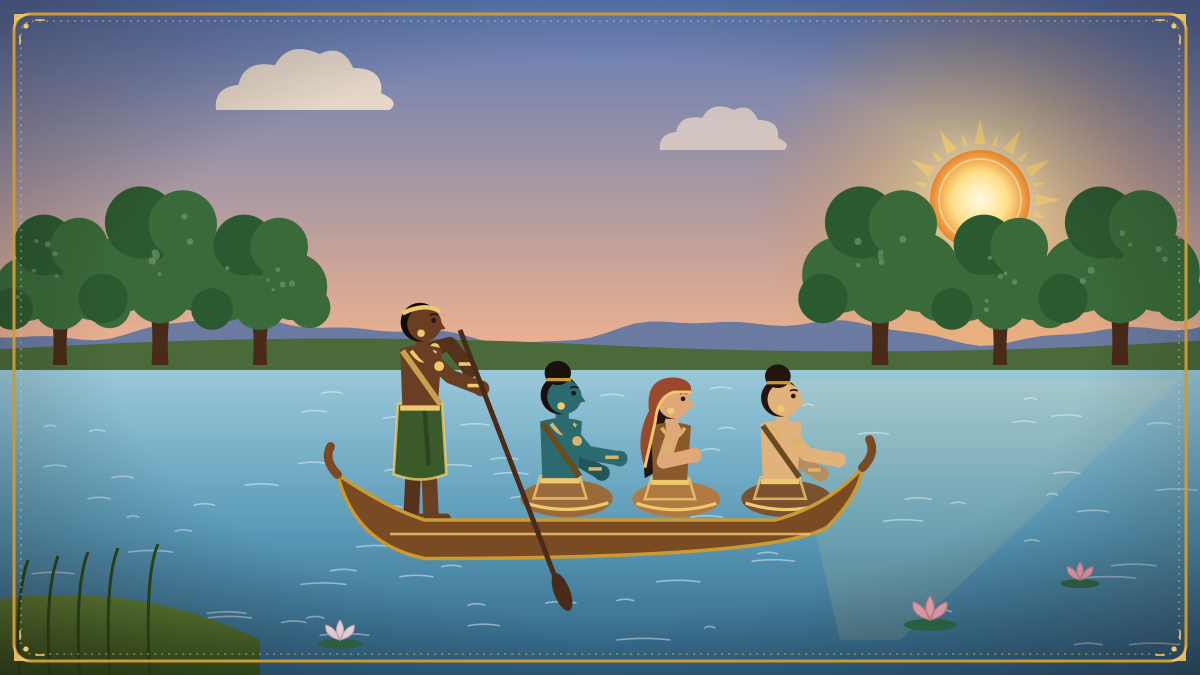
The king begged her all night, bowing at her feet. Kaikeyi held firm. In the morning she sent for Rama and told him herself. Rama calmly agreed and said he would leave that very day. When the time came, Kaikeyi brought out the bark garments of forest hermits. Even Vashishtha scolded her when he saw that Sita, too, was being given bark clothes to wear.
The charioteer Sumantra was so upset that he told Kaikeyi a hard story about her own mother, who had once placed her stubborn wish above her husband’s life. Still Kaikeyi did not change. Rama, Sita and Lakshmana left, and Dasharatha, who had already said that he rejected Kaikeyi, died of grief six nights later.
Bharata’s anger
Kaikeyi had done all this for Bharata. But when he returned from Kekaya and she happily told him that the kingdom was now his, Bharata was horrified. He wept for his father and for Rama and spoke to his mother in great anger, saying that she had destroyed the family and that he would never take the throne.
Bharata went to Chitrakuta to bring Rama home, and Kaikeyi went with the other queens. Rama received all his mothers with respect. He would not break his father’s word, but he told Bharata not to be angry with Kaikeyi and to look after her. Rama had said even earlier that Kaikeyi’s sudden change of heart must be the work of fate, for she had always loved him.
Bharata ruled from Nandigram as Rama’s servant, keeping Rama’s sandals on the throne. Kaikeyi lived those fourteen years in Ayodhya, watching her own son refuse the very kingdom she had won for him.
Forgiveness and return
After Ravana’s fall, Dasharatha appeared from heaven. Rama asked him to take back his rejection of Kaikeyi and Bharata, and the king agreed. When Rama came home, Kaikeyi went out with Kaushalya and Sumitra to meet him at Nandigram, and Rama bowed to her just as he bowed to his own mother.
Kaikeyi is not a simple figure. She was brave and loving, yet in one night of fear she caused great suffering. Her story reminds devotees how easily wrong advice can poison a good heart, and how Rama answered even this wrong with patience and respect.
Did you know?
- Kaikeyi won her two boons by carrying the wounded Dasharatha to safety in a battle of the gods against the asura Shambara.
- When she first heard of Rama’s coronation, Kaikeyi was delighted and rewarded Manthara with a precious ornament.
- Manthara advised the exile of fourteen years so that in that time Bharata would become firmly rooted as king.
- At Rama’s request, Dasharatha came down from heaven and took back his rejection of Kaikeyi.
What we learn from Kaikeyi
Kaikeyi’s story warns us to be careful about whose words we let into our hearts, for fear and jealousy can lead even a loving person to do great harm. It also shows, through Rama, that forgiveness and respect can heal what anger never can.
Kaikeyi in the story
Read the kandas where Kaikeyi plays a part.