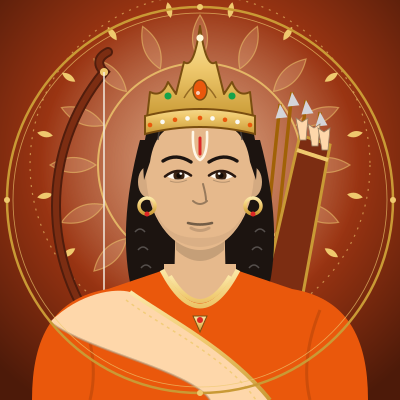
Lakshmana was the son of King Dasharatha and Queen Sumitra, and the twin brother of Shatrughna. From childhood he was so devoted to his elder brother Rama that Valmiki calls him Rama’s second life-breath, living outside his body. When Rama was exiled, Lakshmana gave up the comforts of the palace without a second thought and served Rama and Sita for fourteen years in the forest. Brave, quick to anger at injustice, but always obedient to Rama, he is the model of a loyal brother.
Birth and childhood
When King Dasharatha performed the putrakameshti yajna, he shared the divine payasa among his three queens. Sumitra received two portions, and so she gave birth to twin sons, Lakshmana and Shatrughna. Because he was Sumitra’s son, Lakshmana is often called Saumitri.
From his earliest years Lakshmana loved Rama more than his own life, just as Shatrughna loved Bharata. Valmiki says that Rama would not sleep without him and would not eat a good meal unless Lakshmana shared it. When Rama rode out to hunt, Lakshmana rode behind him with his bow, guarding him.
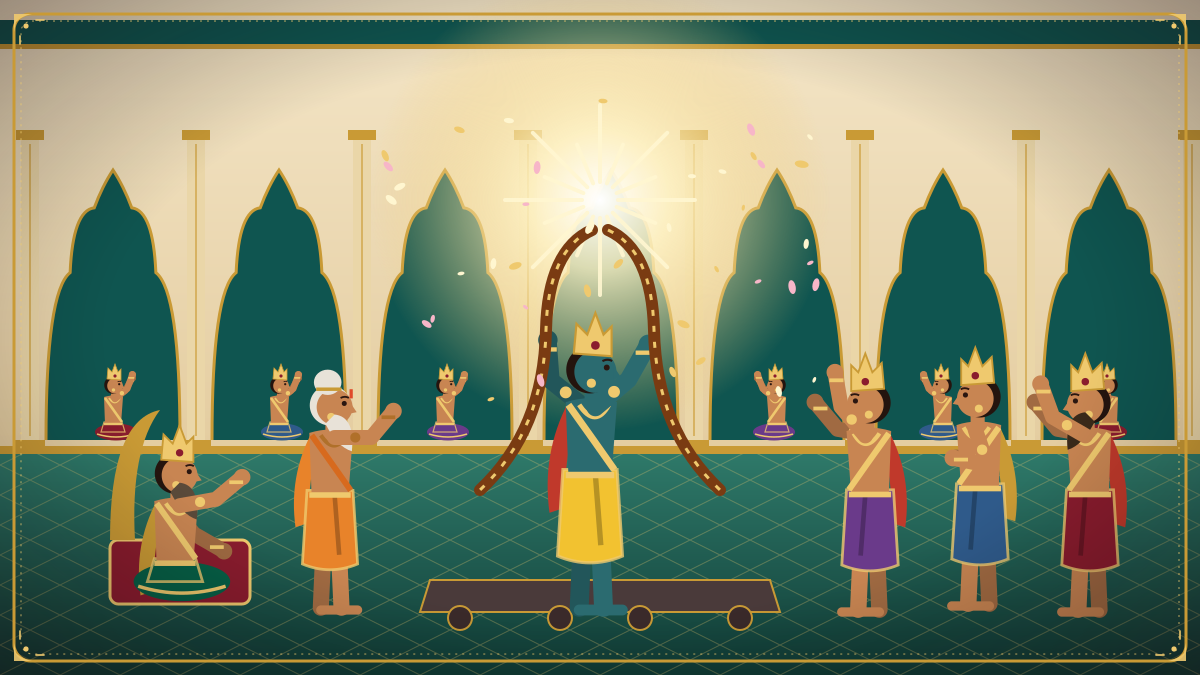
When the sage Vishvamitra took Rama to protect his sacrifice, Lakshmana went too. He learned the mantras Bala and Atibala alongside Rama, helped fight the rakshasas, and kept watch beside the sacrifice for six days and nights. In Mithila, when Rama married Sita, Lakshmana married her younger sister Urmila.
Following Rama into exile
When Kaikeyi’s boons sent Rama to the forest, Lakshmana burned with anger. He said the old king had been misled, and offered to take the kingdom by force for Rama. Rama calmly explained that keeping their father’s word was dharma, and that what had happened was the work of fate, not a reason for hatred. Lakshmana lowered his head and obeyed.
Then he begged to go with Rama. He said he would walk ahead of Rama and Sita with his bow, carry the spade and basket, and gather roots and fruits for them. Rama agreed. His mother Sumitra blessed him with famous words: “Think of Rama as your father Dasharatha, think of Sita as me, and think of the forest as Ayodhya. Go happily, my son.”
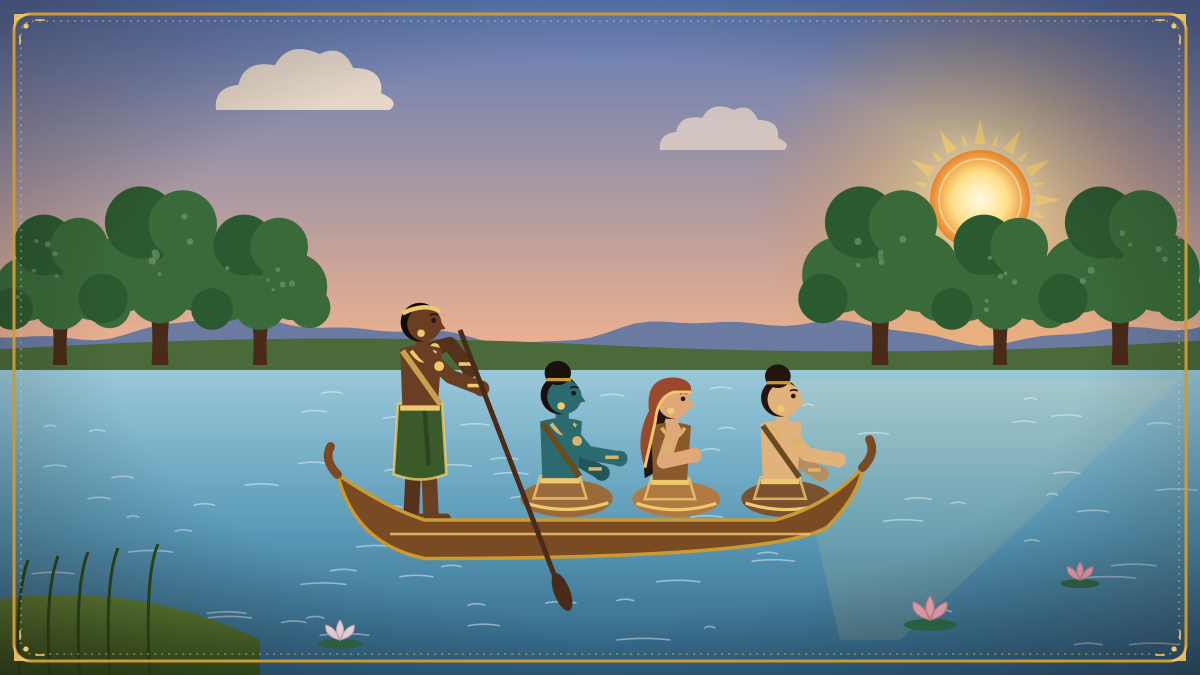
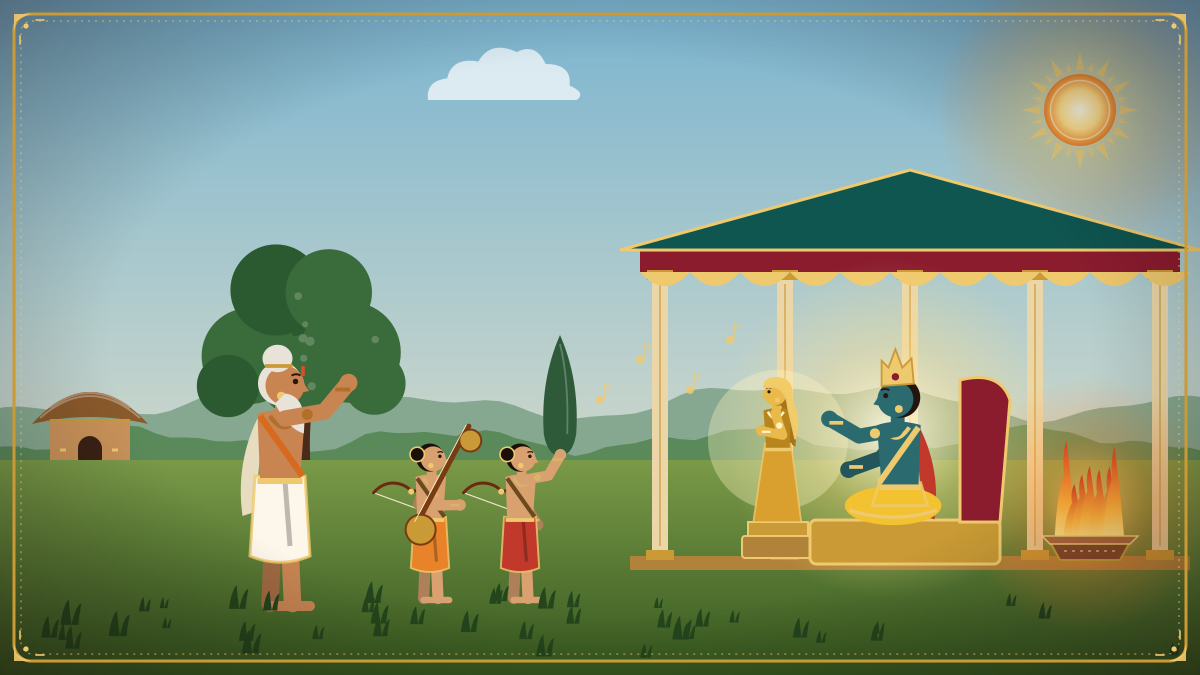
On the first night by the Ganga, while Rama and Sita slept on a bed of grass, Lakshmana stayed awake with his bow, keeping watch with the forest chief Guha. Guha offered to guard them so that he could rest, but Lakshmana said he could not sleep while his brother lay on the bare ground. At Chitrakuta he built a hut of leaves for them with his own hands.
Guardian in the forest
When Bharata came to Chitrakuta with a great crowd, Lakshmana climbed a tall sal tree, saw the army’s banners and thought Bharata had come to attack them. He seized his bow, ready to fight. Rama gently corrected him: Bharata loved them and had surely come with a good heart. Lakshmana felt ashamed of his suspicion, and soon he saw Bharata fall weeping at Rama’s feet.
In the Dandaka forest Lakshmana fought beside Rama against the rakshasa Viradha and helped protect the sages. At Panchavati he built another hut for them. When Ravana’s sister Shurpanakha rushed at Sita, Lakshmana, at Rama’s command, cut off her nose and ears. Later, when Khara’s army came, he took Sita to safety in a mountain cave while Rama fought.
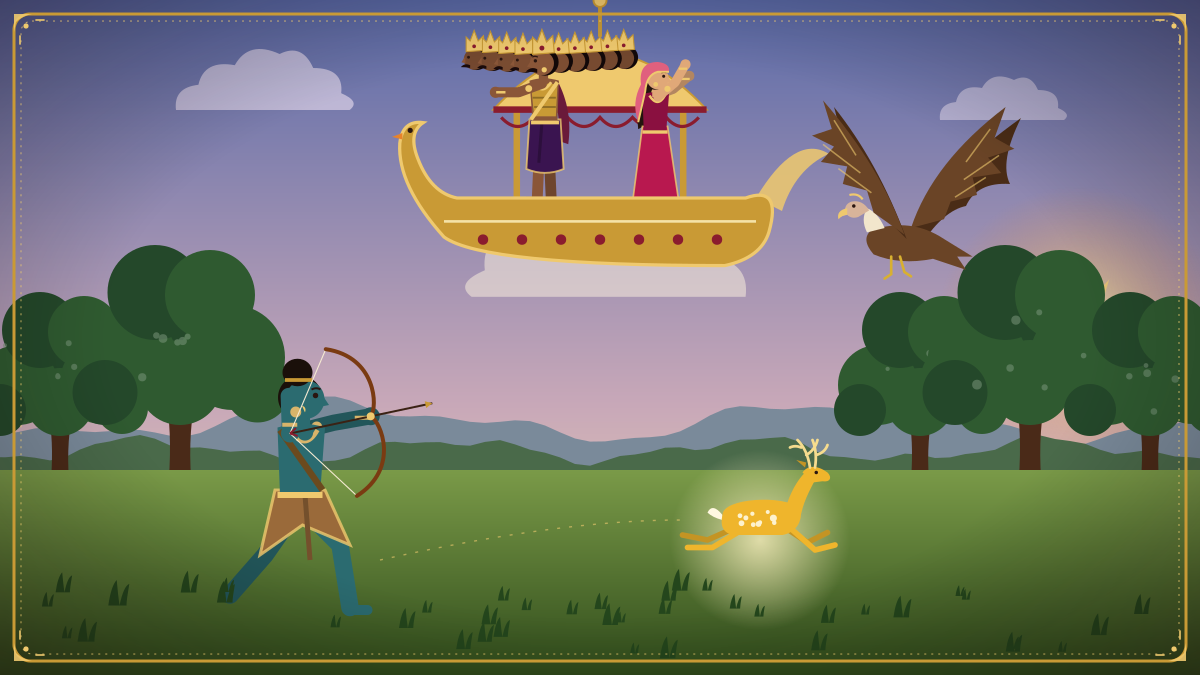
Then came the golden deer. Lakshmana warned Rama that it was surely the rakshasa Maricha in disguise, but Rama went after it. When a cry in Rama’s voice was heard, Lakshmana knew it was a trick and refused to leave Sita. But Sita, frantic with fear, accused him of terrible things. Deeply hurt, he asked the forest gods to protect her and went to find Rama. While he was gone, Ravana took Sita away.
Searching for Sita
When Rama found the hut empty, his grief turned into a rage so great that he threatened to destroy the whole world. Lakshmana held him back with calm, wise words: one person had done this wrong, so they should find that person, not punish the whole world. Rama listened, and together they went on searching, meeting the dying Jatayu, then Kabandha and Shabari.
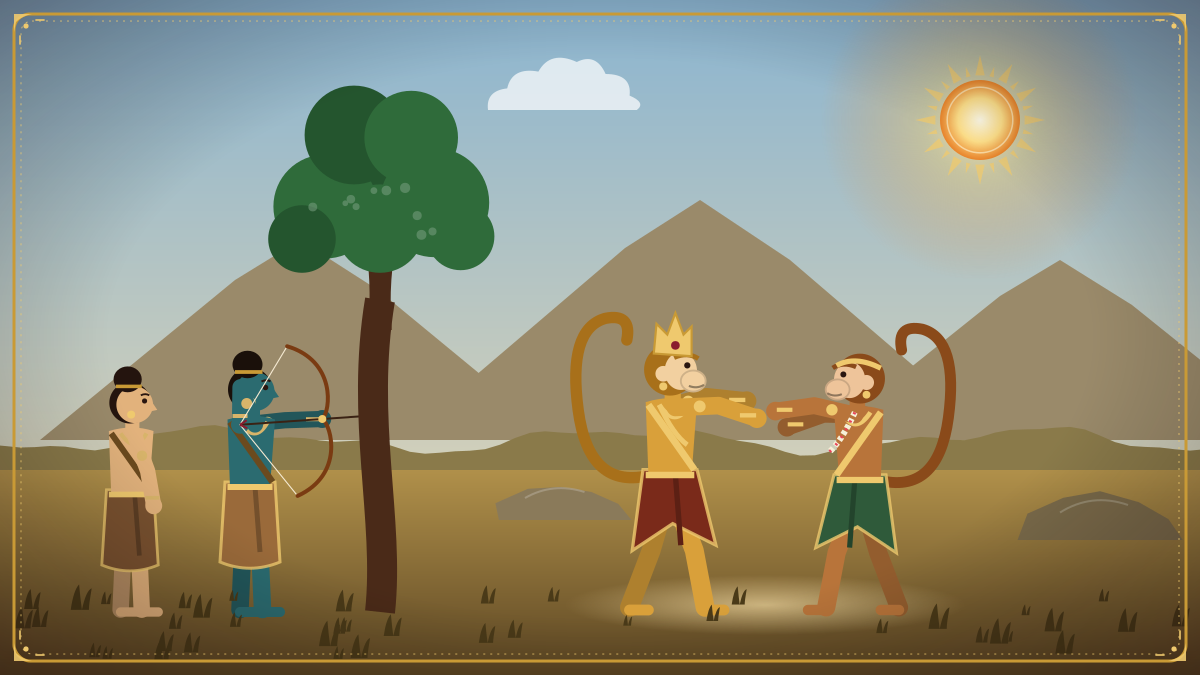
On Mount Rishyamuka the vanara Sugriva showed them the ornaments Sita had dropped from the sky. Rama asked Lakshmana if he knew them. Lakshmana answered that he did not recognise her armlets or her earrings, but he knew her anklets well, because every day he had bowed at Sita’s feet. To him she was like a mother.
After Sugriva became king, the rainy season passed and he seemed to forget his promise to help find Sita. Rama sent Lakshmana to Kishkindha. Lakshmana went in anger, twanging his bowstring so that the whole city trembled. Tara, the widow of Vali, came out and calmed him with gentle words, and Sugriva quickly sent his armies out to search.
Hero of the war of Lanka
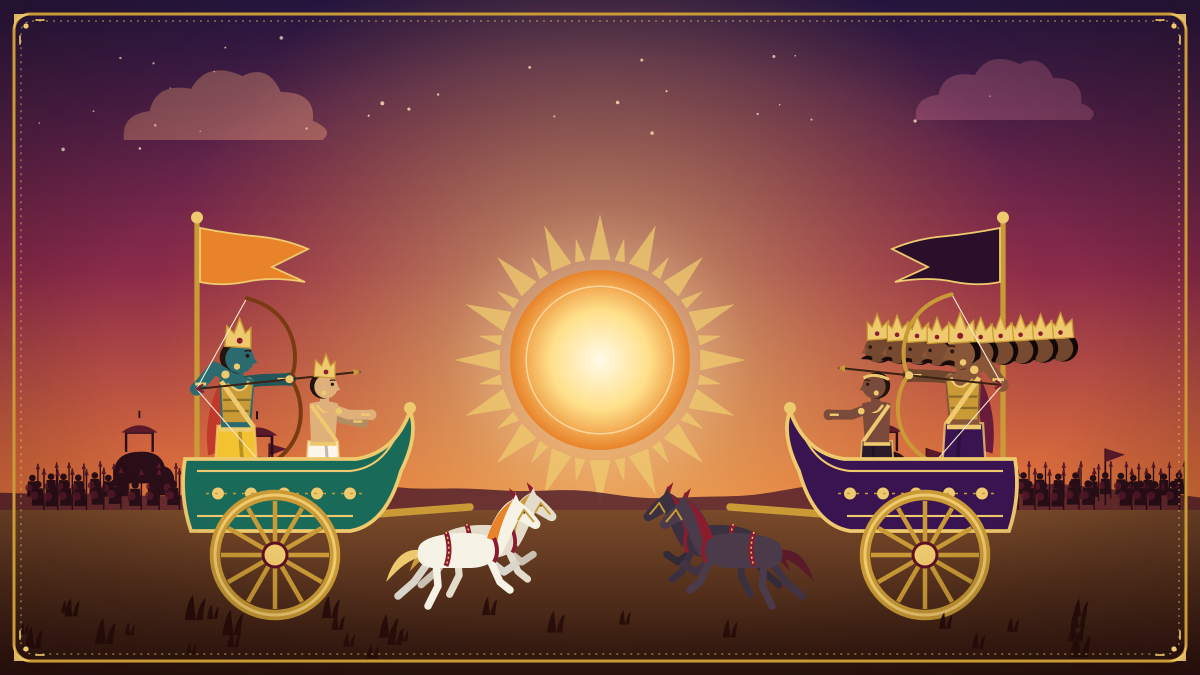
In Lanka, Lakshmana fought in the front line. Twice Ravana’s son Indrajit struck the two brothers down: once with his serpent arrows, from which the great eagle Garuda freed them, and once with the Brahmastra, which felled almost the whole army until Hanuman brought healing herbs from the Himalayas. Lakshmana also killed Ravana’s mighty son Atikaya.
In another battle Ravana hurled a mighty spear at Lakshmana, and it struck him in the chest. Lakshmana fell, and Rama was overcome with grief. The vanara physician Sushena sent Hanuman to bring healing herbs from a distant mountain. Hanuman carried back the whole peak, and the herbs restored Lakshmana to life and strength.
Indrajit could make himself invisible and was the hardest of all to defeat. When Vibhishana revealed that he was performing a secret sacrifice at the Nikumbhila shrine to become unbeatable, Rama sent Lakshmana to stop him. Lakshmana fought him in a long, fierce battle. At last he fitted Indra’s weapon to his bow and said, “If Rama, son of Dasharatha, is devoted to dharma and true to his word, may this arrow slay Indrajit.” The arrow struck, and Indrajit fell.
Rama embraced his brother with joy, and Sushena healed his wounds. After Ravana’s death, Rama sent Lakshmana to crown Vibhishana king of Lanka, because Rama had vowed not to enter any town during his exile.
Later life and his end
Back in Ayodhya, Rama wished to make Lakshmana crown prince, but Lakshmana refused, and Bharata took that place. Lakshmana served Rama as faithfully in the palace as he had in the forest. The hardest task of his life came when Rama ordered him to take Sita, who was expecting a child, to the forest near Valmiki’s ashram. Lakshmana obeyed with tears and told her the truth on the bank of the Ganga.
Lakshmana and Urmila had two sons, Angada and Chandraketu, and Rama later made them kings of two cities in the land of Karupatha. In Rama’s last years Kala, Time himself, came to speak with Rama alone, and Rama ordered that anyone who disturbed them must die. Lakshmana stood guard at the door.
Then the short-tempered sage Durvasa arrived and demanded to see Rama at once, threatening to curse the whole family. To save them, Lakshmana went in, knowing it would cost him his life. On Vashishtha’s advice Rama gave him up, since for a good man being abandoned is equal to death. Lakshmana went straight to the Sarayu river, sat in yoga and stopped his breath, and Indra and the gods took him to heaven.
Character and qualities
Lakshmana is remembered above all for his devotion. For fourteen years he gave up sleep, comfort and his own family life so that Rama and Sita would be safe. He never asked for anything for himself; even the title of crown prince he refused.
He was also honest and fiery. He spoke up loudly against injustice, and sometimes his anger flared too quickly, as it did against Bharata at Chitrakuta. Yet he always listened when Rama corrected him, and his anger was never for himself, only for those he loved. Even when Sita spoke cruel words to him, he did not answer cruelly, but asked the gods to protect her.
Did you know?
- Lakshmana and Shatrughna were twins, because their mother Sumitra received two portions of the divine payasa.
- Valmiki calls Lakshmana Rama’s second life-breath, living outside his body.
- Lakshmana recognised only Sita’s anklets, because he had bowed at her feet every day and had never looked closely at her other ornaments.
- It was Lakshmana, on Rama’s instruction, who performed the coronation of Vibhishana as king of Lanka.
What we learn from Lakshmana
Lakshmana teaches that real love shows itself in service. He was strong enough to face any warrior, yet humble enough to accept correction, and he placed his brother’s welfare before his own comfort and even his own life.
Lakshmana in the story
Read the kandas where Lakshmana plays a part.