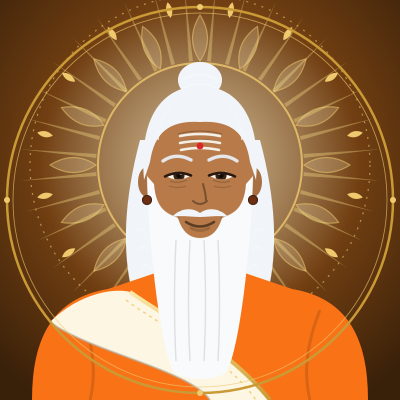
Vashishtha was the family guru and chief priest of the Ikshvaku kings of Ayodhya, the line into which Rama was born. One of the greatest sages, he guided King Dasharatha in every important matter, named the four princes, and in the end placed the crown on Rama’s head. Calm, wise and full of spiritual power, he stood beside the royal family through joy and sorrow alike.
Guru of the Ikshvaku line
For generations Vashishtha served as the purohita, the family priest and guide, of the kings descended from Ikshvaku. He was born of Lord Brahma himself and knew the history of the family from its very beginning. Kings of this family sought his advice before every great decision, and his word carried great weight in the royal court.
When King Dasharatha longed for a son, he spoke first with Vashishtha and the other priests before beginning his great sacrifice, and Vashishtha helped arrange everything. The sage Rishyashringa then performed the putrakameshti yajna, which brought the sacred payasa from the fire. In time the four princes were born, and when eleven days had passed, Vashishtha performed their naming ceremony: Rama, Bharata, Lakshmana and Shatrughna.
Vashishtha watched the princes grow up and saw that they learned the Vedas, archery and the duties of royal life. Rama especially won the hearts of all, and the old guru loved him dearly.
Vashishtha and Vishvamitra
Long before Rama’s birth, Vishvamitra was a mighty king. One day, while travelling the earth with his army, he came to Vashishtha’s ashram. Vashishtha welcomed him warmly and, with the help of his wish-fulfilling cow Shabala, fed the king and his entire army with every kind of food.
Vishvamitra wanted the wonderful cow and offered great wealth for her, but Vashishtha would not give her up. When the king tried to take her by force, Shabala brought forth warriors who drove back his army. Later Vishvamitra returned with divine weapons, but Vashishtha simply held up his Brahma-danda, his sacred staff, and it swallowed every weapon, even the Brahmastra.
Vishvamitra cried, “Shame on a warrior’s strength! The spiritual power of a brahmin is the true strength.” He gave up his kingdom and performed fierce penance for thousands of years. In the end Vashishtha himself greeted him as a brahmarshi, and the two great sages were at peace. This story was told to Rama at Mithila by Shatananda, King Janaka’s priest.
Sending Rama with Vishvamitra
When Rama was not yet sixteen, Vishvamitra came to Ayodhya and asked Dasharatha to send Rama to protect his sacrifice from the rakshasas. The old king could not bear to part with his son and refused, and Vishvamitra grew angry. It was Vashishtha who calmed everyone.
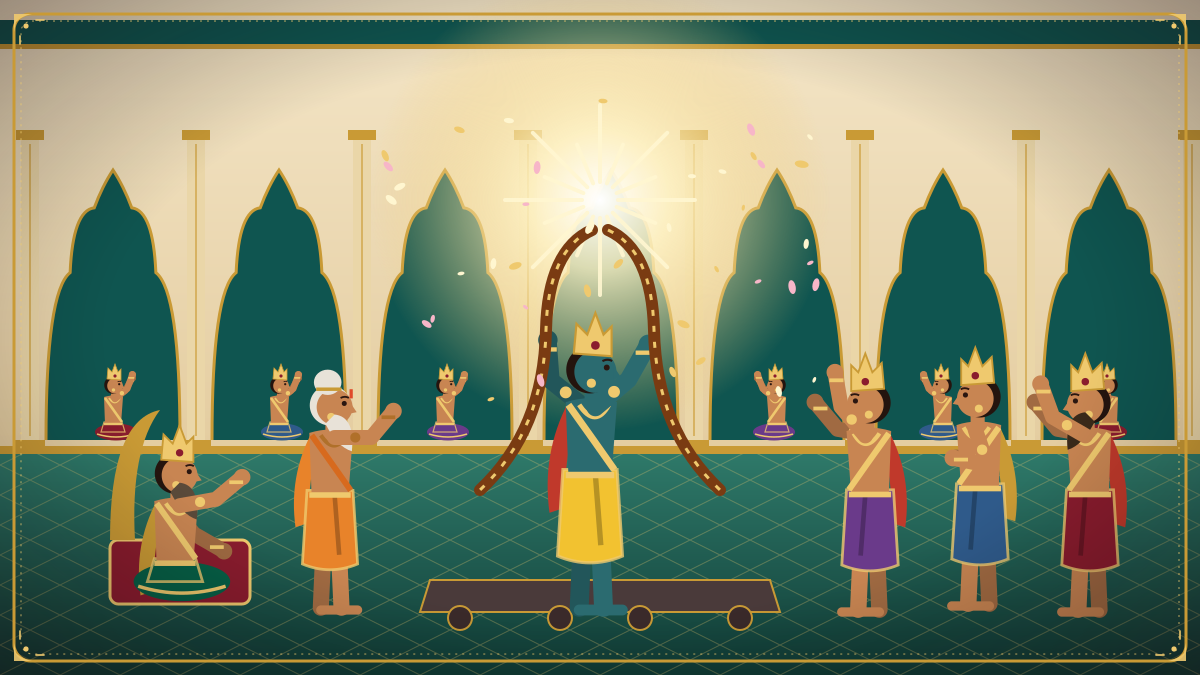
He reminded Dasharatha that a king of the Ikshvaku line must never break his word, and that Vishvamitra knew every divine weapon and could protect Rama perfectly. Comforted, Dasharatha sent Rama and Lakshmana. This journey led Rama to Mithila, to Shiva’s bow and to Sita. At the wedding, Vashishtha proudly recited the family line of the Ikshvakus before King Janaka and performed the marriage rites.
Then Vishvamitra and Vashishtha together asked Janaka to give the daughters of his younger brother Kushadhvaja, Mandavi and Shrutakirti, as brides for Bharata and Shatrughna, and Janaka gladly agreed. So all four brothers were married on the same day, with Vashishtha guiding every rite with care.
Through Ayodhya’s darkest days
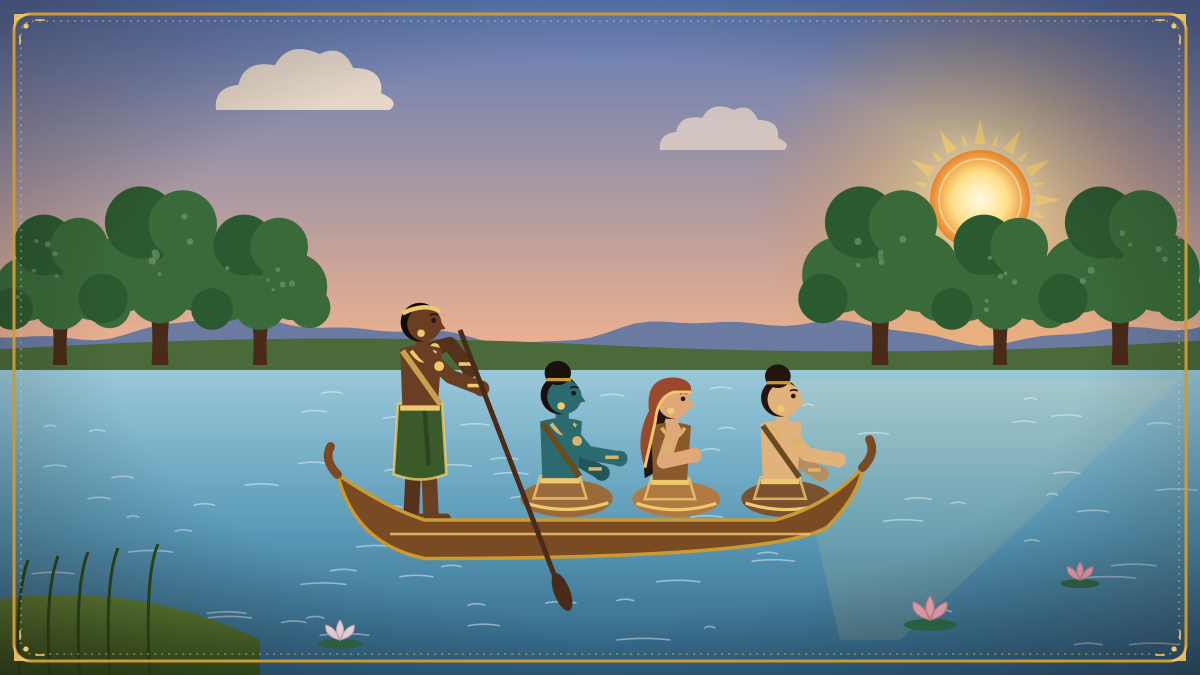
When Dasharatha decided to make Rama the crown prince, he asked Vashishtha to prepare the ceremony, and the sage went to Rama’s palace to guide Rama and Sita in the fast before the anointing. But the next morning, Kaikeyi’s two boons turned everything upside down.
When Kaikeyi handed Sita bark garments to wear, Vashishtha’s anger flashed. He rebuked Kaikeyi sharply, saying that Sita need not dress as a hermit, for she was Rama’s other self and had done nothing wrong.
After Dasharatha’s death, Vashishtha held the kingdom together. He sent swift messengers to bring Bharata home from Kekaya and told them not to reveal the sad news on the way. When Bharata refused the throne, Vashishtha went with him to Chitrakuta and urged Rama, as his guru, to return, but he respected Rama’s firm resolve to keep his father’s word.
At Chitrakuta Vashishtha told Rama the long line of his ancestors, from Brahma and Ikshvaku down to Dasharatha, and reminded him that in this family the eldest son always became king. He also said that a person has three gurus — father, mother and teacher — and asked Rama to listen to him as his teacher. Rama answered with great respect that his father’s command, given while he lived, could not be set aside.
The coronation of Rama
Fourteen years later Rama returned to Ayodhya, and the long wait was over. Vashishtha seated Rama and Sita on a throne set with jewels. Then, together with the sages Vamadeva, Jabali, Kashyapa, Katyayana, Suyajna, Gautama and Vijaya, he anointed Rama with pure, fragrant waters brought from the seas and the sacred rivers.
Vashishtha remained Rama’s guide during his long and happy reign. He took part in the great sacrifices of the king and advised him in matters of dharma, just as he had advised Rama’s father and the kings before him.
At the very end, when Rama decided to leave the world, it was Vashishtha who told him to look at the people of Ayodhya lying on the ground in grief and to honour their wish. Rama then allowed all who wished to follow him to go with him to the Sarayu.
A story from the Uttara Kanda and his character
The Uttara Kanda tells an old story about Vashishtha. King Nimi, a son of Ikshvaku, began a sacrifice with another priest while Vashishtha was away. Feeling wronged, Vashishtha cursed Nimi to lose his body, and Nimi cursed him in return. Vashishtha then left his body and was born again from the energy of the gods Mitra and Varuna.
Vashishtha shows the ideal of a guru: deep learning, perfect self-control and loyalty to the royal family across generations. He could be fierce against injustice, as when he rebuked Kaikeyi, yet he never forced his will on anyone. His power was so great that even divine weapons could not touch him, but he used it only to protect dharma.
Did you know?
- Vashishtha performed the naming ceremony of Rama and his three brothers after the first eleven days of their life.
- Vashishtha’s sacred staff, the Brahma-danda, swallowed every weapon Vishvamitra hurled at him, even the Brahmastra.
- The Uttara Kanda says Vashishtha was born a second time from the gods Mitra and Varuna.
- Before leaving for the forest, Rama gave rich gifts to Suyajna, Vashishtha’s son.
What we learn from Vashishtha
Vashishtha teaches that true strength is spiritual strength, built through self-control and penance. A good guide speaks the truth, protects what is right and stays loyal through good times and bad.
Vashishtha in the story
Read the kandas where Vashishtha plays a part.