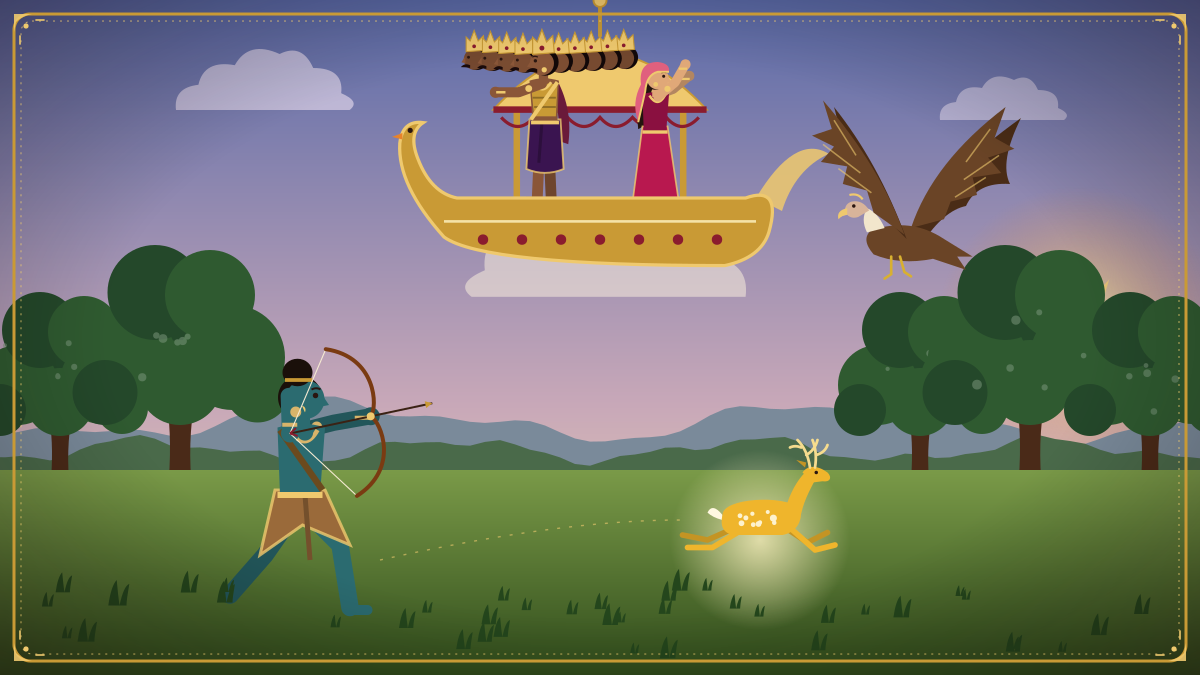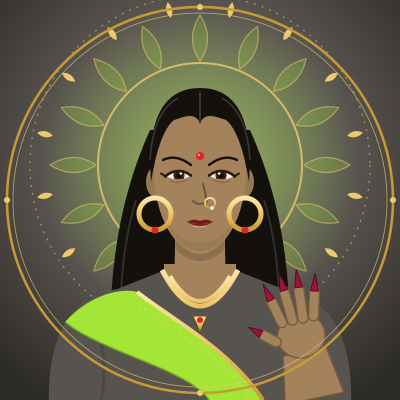
Shurpanakha was the only sister of Ravana, Kumbhakarna and Vibhishana, the daughter of the sage Vishrava and Kaikasi. She lived in the Dandaka forest with her cousin Khara and his rakshasa army. When she saw Rama at Panchavati and tried to win him, and then attacked Sita, Lakshmana wounded her. Her anger set off two great events: Rama’s battle with Khara’s army, and her journey to Lanka, where she persuaded Ravana to carry away Sita.
Birth and family
Shurpanakha was the third child of Kaikasi, born after Ravana and Kumbhakarna and before Vibhishana. Her name means “the one with nails like winnowing baskets.” She grew up in Lanka while her brothers rose to power, and she was married to Vidyujjihva, a prince of the Kalakeya danavas.
The Uttara Kanda tells that during his wars of conquest, Ravana fought the Kalakeyas, and in that battle Vidyujjihva was killed by him. Shurpanakha came to her brother weeping and blamed him for her husband’s death.
Ravana admitted that he had killed Vidyujjihva in the heat of battle, without thinking of his sister. He felt sorry for her loss and wished to give her a place where she could live in honour and comfort.
To comfort her, Ravana sent her to live in the Dandaka forest with Khara, the son of their mother’s sister, whom she called her brother. He gave them an army of fourteen thousand rakshasas, led by Khara and Dushana, and Shurpanakha lived there freely, roaming the forest as she wished.
At Panchavati
Years later, Rama, Sita and Lakshmana built a hut of leaves at Panchavati, beside the river Godavari. One day Shurpanakha, wandering in the forest, saw Rama sitting outside the hut. He was young, handsome and shining, and she wanted him at once for her husband.
She told him who she was, the sister of Ravana and of Khara, and asked him to leave Sita and marry her. She even said cruel things about Sita and threatened her. Rama smiled and replied in jest, “I am already married. My younger brother Lakshmana is here without his wife. Go to him.”
Lakshmana also answered in jest. “I am only my brother’s servant,” he said. “Why would you wish to be a servant’s wife? Go back to Rama.” Shurpanakha did not understand that they were joking, and she turned again to Rama.
Valmiki draws a sharp contrast in this scene: Rama was gentle, handsome and calm, while Shurpanakha was fierce and harsh in speech, used to taking whatever she wanted. She could not imagine being refused, and her desire quickly turned to anger.
The attack and its result
Believing that Sita stood in her way, Shurpanakha rushed at her in fury to harm her. Rama stopped her at once and said to Lakshmana, “We should not joke with such a cruel being. See, Sita is in danger. Punish this rakshasi.” Lakshmana drew his sword and cut off her nose and ears.
Weeping and bleeding, Shurpanakha ran to Khara in Janasthana. Khara first sent fourteen rakshasas to kill the brothers, and Rama destroyed them all. Then Khara, Dushana and the general Trishira marched with the whole army of fourteen thousand.
Rama sent Lakshmana with Sita to a safe cave and faced the army alone. In a fierce battle Rama killed them all, including Khara, Dushana and Trishira. The sages of the forest blessed him, for the rakshasas who had troubled them for so long were gone.
One rakshasa, Akampana, escaped from the battle and carried the news to Lanka first. But it was Shurpanakha’s own visit to her brother that turned the news into a plan for revenge.
In Ravana’s court
Shurpanakha flew to Lanka and appeared before Ravana as he sat in his court. She scolded him sharply. “You are lost in pleasures,” she said, “and you do not even know what is happening in your own kingdom. A king who does not watch over his land with spies and care is soon abandoned by his people, just as a dried-up river is abandoned.”
Then she told him that Rama alone had destroyed Khara and his army. She praised Sita’s beauty without end and said, “She would be a wife worthy of you. Carry her away and take revenge for your sister and for Janasthana.”
Ravana asked her who Rama was and how he looked. She described him as young, strong and handsome, with long arms and large eyes, wearing bark garments like a hermit, yet so swift in battle that she had seen only his bow moving and the rakshasas falling.
Her words stirred Ravana’s desire and pride. Though Maricha had already warned him once, Ravana now made up his mind to carry away Sita. This was the beginning of the chain of events that led to the war of Lanka.
Her place in the story
After her speech in Lanka, Valmiki does not mention Shurpanakha again. Her part in the Ramayana is short, but it is the spark that lights the whole fire of the war.
Through her story we also learn how the rakshasas of the forest had troubled the sages of Dandaka for years. Rama had promised to protect those sages, and his battle with Khara’s army, which began with Shurpanakha’s anger, also fulfilled that promise.
Her story shows how anger and wounded pride can spread like flame. She did not seek peace or accept what had happened; she sought revenge. In the end the revenge she started brought ruin on her brothers and on the whole city of Lanka.
Did you know?
- Shurpanakha’s husband Vidyujjihva was killed by her own brother Ravana during his war against the Kalakeyas.
- Ravana sent her to live in the Dandaka forest with her cousin Khara and an army of fourteen thousand rakshasas.
- Rama defeated Khara, Dushana, Trishira and their whole army alone, while Lakshmana guarded Sita in a cave.
- In Ravana’s court, Shurpanakha gave him a lesson on how a careless king loses his people.
What we learn from Shurpanakha
Shurpanakha’s story shows how desire, anger and the wish for revenge can lead to great destruction. One person’s unchecked feelings can harm a whole family. It is wiser to calm our anger than to stir up others with it.
Shurpanakha in the story
Read the kandas where Shurpanakha plays a part.