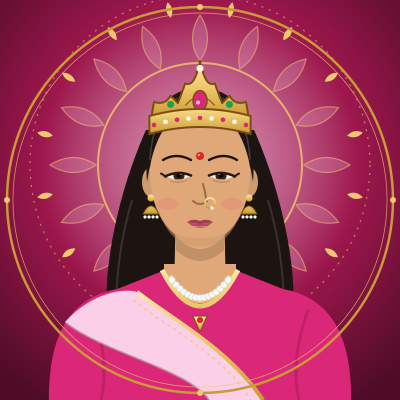
Tara was the queen of Kishkindha, the wife of King Vali and the mother of Prince Angada. Valmiki describes her as wise, clear-sighted and good at understanding what lies ahead. She warned Vali not to fight Sugriva after he became Rama’s friend, but Vali did not listen. After Vali’s death she mourned him with great love, and later, as Sugriva’s queen, she calmed the angry Lakshmana with gentle, sensible words.
Family
Tara was the daughter of Sushena, a respected vanara chief who also knew healing herbs. She became the chief queen of Vali, the mighty king of Kishkindha, and their son was Angada, a brave young prince. Vali himself said that Tara could understand hidden matters and read the signs of what was coming, and that whatever she advised always proved right.
In the royal family of Kishkindha she was known not only for her beauty but for her intelligence and good sense. Her words were respected by vanara chiefs, and later even by Rama and Lakshmana.
Her name Tara means “star”. Like a star that shows travellers the way at night, she often showed the people around her the right path, even when they were too proud or too angry to see it themselves.
Her warning to Vali
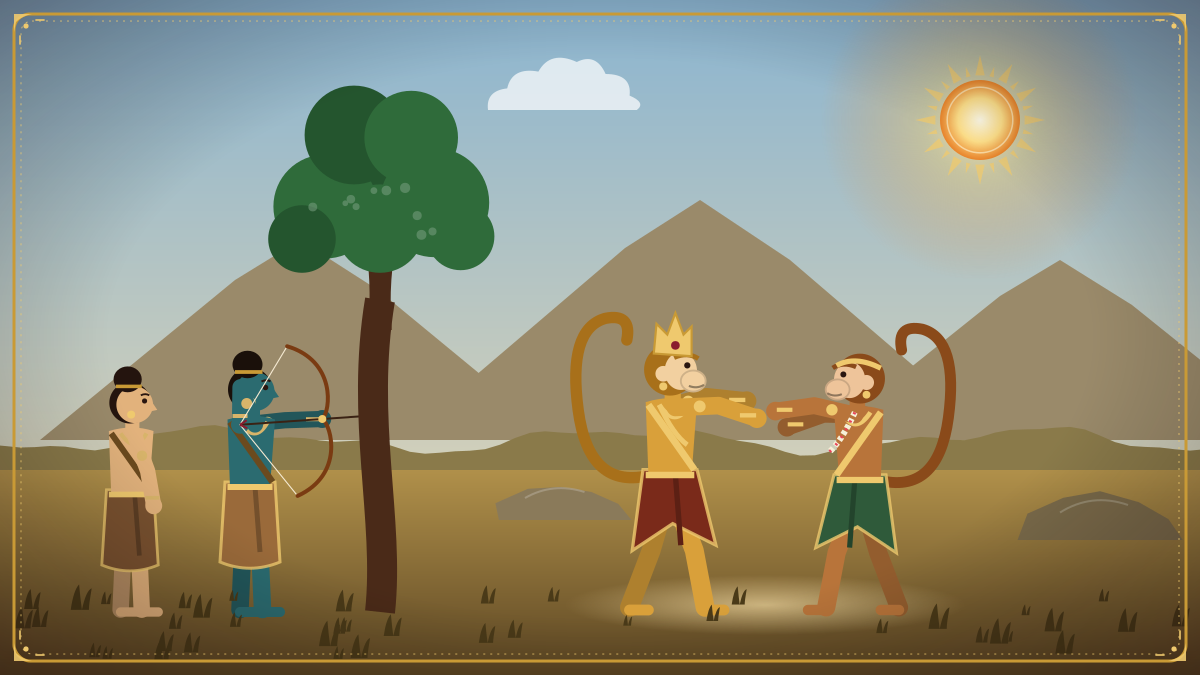
When Sugriva came back to challenge Vali a second time, soon after being badly beaten, Tara sensed danger. Why would a beaten warrior come back so boldly unless he had a powerful helper? Angada’s spies had told her that Sugriva had made friends with Rama and Lakshmana, the princes of Ayodhya.
Tara begged Vali not to go out. She praised Rama as a great warrior and a refuge for the good, and told Vali to make peace with his younger brother, make him the young prince, and live in harmony. Vali said he could not bear such a challenge, but promised her that he would only humble Sugriva and not kill him. With a heavy heart, Tara said prayers for his safety and let him go.
Tara’s advice was wise and full of love, and it came from careful thought, not fear. Had Vali listened, the brothers might have been reunited in peace. Valmiki shows here how a great king’s pride can make him deaf even to the voice of someone who truly wishes him well.
Her lament
When Tara heard that Vali had fallen, she ran to the battlefield with Angada. The frightened vanaras advised her to flee and save the prince, but she said that without her husband she cared for nothing. She sat by Vali, took his head in her lap and wept, speaking of his greatness and of her loneliness.
Hanuman gently comforted her and spoke of crowning Angada. Tara answered with dignity that the kingdom was not on her mind. Sugriva, Angada’s uncle (his father’s younger brother), was now the nearest relative, she said, and it was for him to do what was needed for the family and the kingdom. Her only wish at that moment was to stay beside her husband.
Later, in her grief, she asked Rama to kill her with the same arrow, so that she could be with Vali. Rama consoled her gently, telling her that this was the way of destiny, and that her son would have a good future. Tara gathered her strength and took part in Vali’s last rites with dignity.
Calming Lakshmana
After Sugriva became king, Tara became his queen. When the rainy season ended and Sugriva delayed the search for Sita, Lakshmana came to Kishkindha in great anger, twanging his bowstring. The vanaras were frightened, and Sugriva sent Tara to speak to him first.
Tara met Lakshmana calmly and respectfully. She admitted that Sugriva had forgotten himself in the comfort of his new life, but said that he was truly devoted to Rama and had already sent messengers to call countless vanaras. She asked Lakshmana to forgive him.
To help Lakshmana understand, Tara reminded him that even the great sage Vishvamitra, while living with the apsara Ghritachi, had passed ten years thinking it was only a single day. If even great sages forget time in such comfort, she said, an ordinary vanara could be forgiven for a short delay.
Her sensible words cooled Lakshmana’s anger, and he went in to meet Sugriva. Sugriva then humbly begged Rama’s pardon, and Lakshmana, now calm, apologised for his own harsh words.
Character and qualities
Tara shows how wisdom can be a true strength. She saw danger before others did, spoke honestly to her husband, and always tried to bring peace between people.
She loved Vali deeply and grieved for him openly, yet she did not let sorrow make her bitter. She cared for her son’s future and helped the kingdom of Kishkindha keep its promise to Rama.
In the whole Kishkindha story, Tara is the one who speaks the most sense at the most difficult moments: before the fight, at her husband’s death and when Lakshmana’s anger threatened the friendship with Rama. In each case her words pointed towards dharma and peace.
Did you know?
- Tara was the daughter of Sushena, a vanara chief who also knew healing herbs.
- Vali himself said that Tara could understand hidden matters and read the signs of the future.
- In her grief Tara asked Rama to kill her with the same arrow that had struck Vali.
- When Lakshmana came to Kishkindha in anger, Sugriva sent Tara to speak to him first, and her words calmed him.
What we learn from Tara
Tara teaches the value of wise advice given with love, and the importance of listening to it. She also shows that gentle, sensible words can calm anger and bring peace where force would only cause harm.
Tara in the story
Read the kandas where Tara plays a part.