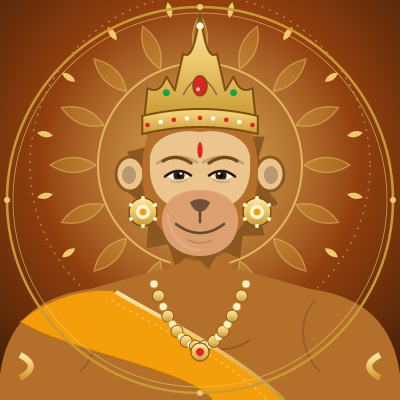
Vali was the king of Kishkindha and the elder brother of Sugriva, a vanara of enormous strength born from the power of Indra. He defeated mighty asuras and even held Ravana captive. But after a misunderstanding with Sugriva, he drove his younger brother away and took his wife. Rama killed Vali to keep his promise to Sugriva. In his last moments Vali spoke with Rama, accepted his words, and lovingly entrusted his son Angada to Sugriva.
Birth and strength
Vali was born from the power of Indra, the king of the gods, and was raised as the son of Riksharaja, the king of the vanaras. Indra gave him a golden garland that brought him victory in battle. After his father, Vali became king of Kishkindha, and Sugriva served him as a loving younger brother.
Sugriva later described to Rama how tireless Vali was. Before sunrise he would go from the western ocean to the eastern, and from the southern ocean to the northern, offering water to the sun, without ever feeling tired. He could climb mountain peaks, lift huge rocks and toss them like balls, and break the strongest trees with ease.
Vali’s strength was famous across the world. The Uttara Kanda tells that Ravana once came to challenge him while Vali was offering his prayers at the ocean. Vali caught Ravana, held him under his arm, and carried him over the four oceans while finishing his prayers. Then he let him go, and Ravana, humbled, made friends with him.
Dundubhi and the curse of Matanga
An asura named Dundubhi, who had the shape of a huge buffalo, was very proud of his strength. First he challenged the Ocean, but the Ocean sent him to the Himalaya mountain. The Himalaya said that he was not a warrior, and told Dundubhi to go and fight Vali, the king of Kishkindha.
So Dundubhi came to Kishkindha and challenged Vali. Vali fought and killed him, and in his pride threw the huge body far away. Drops of blood fell on the hermitage of the sage Matanga near the Rishyamuka hill.
The sage was angry and cursed whoever had done this: if he ever entered that place, he would die. So Vali could never go to Rishyamuka. Later this hill became the safe home of Sugriva, and the dry bones of Dundubhi still lay there when Rama came.
The quarrel with Sugriva
Another time Dundubhi’s relative, the asura Mayavi, challenged Vali at night. Vali chased him into a deep cave and told Sugriva to wait outside. After a year Sugriva saw blood flowing out and, thinking his brother was dead, closed the cave with a rock. When Vali came out victorious and found Sugriva ruling, he believed he had been betrayed.
Vali would not listen to Sugriva’s explanation. He drove him out of Kishkindha and kept Sugriva’s wife Ruma with himself. This was the great wrong that later brought his fall, because a younger brother’s wife should be honoured like a daughter.
The last fight
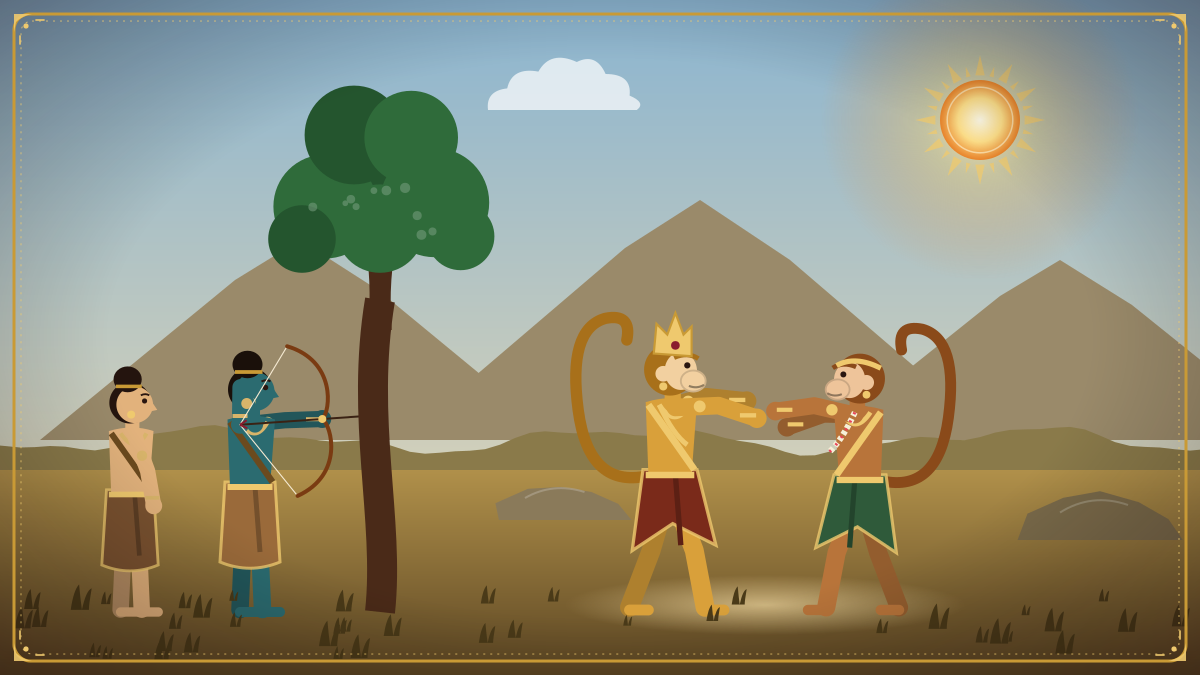
After making friends with Rama, Sugriva challenged Vali. In the first fight Vali beat him badly, because Rama could not tell the two brothers apart. When Sugriva roared at the gate again, Vali’s wife Tara warned him. She had heard that Sugriva had made friends with Rama of Ayodhya, and she begged Vali to make peace with his brother and make him the young prince.
Vali did not listen. He promised Tara he would not kill Sugriva, only humble him, and went out. As the brothers fought, Sugriva now wearing a garland of flowers as a mark, Rama shot an arrow from behind the trees, and Vali fell to the ground.
Words with Rama, and the end
Lying wounded, Vali spoke harshly to Rama. He asked why Rama, a prince famous for righteousness, had struck him while he was fighting someone else. Rama answered calmly. The whole land, he said, was ruled by Bharata, and it was the duty of Ikshvaku princes to punish wrongdoing. Vali had taken his younger brother’s wife, which was a grave sin, and Rama had also promised to help Sugriva.
Rama added that a person who has done wrong and receives punishment from the ruler is freed from that sin, and goes to a good world after death. Hearing Rama’s calm and reasoned words, Vali’s anger melted away. He folded his hands and spoke to Rama humbly.
Vali accepted Rama’s words and asked forgiveness for his harsh speech. His worry now was for his son. He asked Rama to protect Angada and Tara. He gave his golden garland to Sugriva, asked him to care for Angada like a son, and gave Angada loving advice to serve Sugriva well. Then Vali died.
Tara and Angada wept bitterly. Sugriva too was overcome with grief and regret. He said that he no longer wanted the kingdom and wished to die with his brother. Rama comforted them all and reminded them that what was destined could not be changed. Sugriva then performed his brother’s last rites with royal honour, and Angada lit his father’s funeral fire.
Character and qualities
Vali was brave, strong and generous to his people, a mighty king whom even Ravana feared. But anger and pride clouded his judgement. He did not trust his loving younger brother, and he did a great wrong by taking Sugriva’s wife.
Yet at the end he showed nobility. He listened to Rama, accepted his fault, and his last thoughts were not of revenge but of the welfare of his son, his wife and his brother.
Valmiki does not hide either Vali’s greatness or his faults. He lets Vali speak his complaint against Rama in full, and he lets Rama answer. Readers are left to think about duty, justice and the cost of pride, and to feel sympathy for a great king who fell because he would not listen.
Did you know?
- The Uttara Kanda tells that Vali once held Ravana under his arm and carried him over the four oceans while finishing his prayers.
- Vali could never enter the Rishyamuka hill because of the curse of the sage Matanga.
- Before he died, Vali gave his golden garland from Indra to his brother Sugriva.
- The bones of the asura Dundubhi, killed by Vali, still lay near Rishyamuka when Rama arrived, and Rama kicked them far away.
What we learn from Vali
Vali’s story teaches that great strength without self-control can lead to great mistakes. Anger and suspicion can break even the bond between brothers, but accepting one’s fault, even at the very end, is a noble act.
Vali in the story
Read the kandas where Vali plays a part.