Jambavan was the king of the bears (rikshas), a very old and wise warrior who fought for Rama. Valmiki tells that Brahma himself created him. He went south with Angada and Hanuman in the search for Sita, and it was Jambavan who reminded Hanuman of his forgotten strength, so that Hanuman could leap across the ocean. In the war of Lanka he led the bears and gave wise counsel at the most difficult moments.
Born from Brahma
In the Bala Kanda, when the gods were asked to create mighty helpers for Rama, Brahma said that he had already created Jambavan long before. Jambavan had sprung from Brahma’s mouth when he yawned. So Jambavan was older than all the other leaders of Rama’s army.
He was the king of the bears and lived near the vanaras of Kishkindha. He came with a great army of bears when Sugriva called all his forces together to search for Sita.
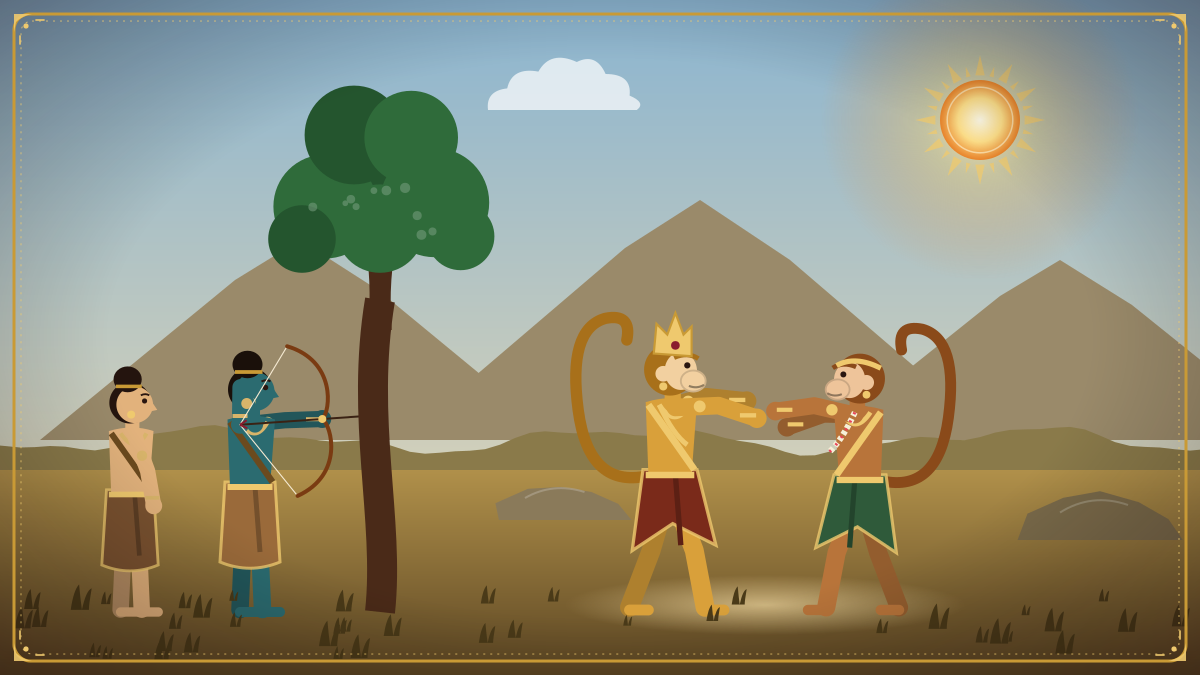
Sugriva placed Jambavan in the southern search party, beside the young prince Angada and Hanuman. It was a wise choice. The young leader needed the strength of Hanuman, but he also needed the patience and experience of an elder, and Jambavan gave the party both courage and good sense on its long and difficult journey.
Memories of ancient times
Jambavan had seen many ages of the world. At the southern ocean he told the vanaras that when he was young, Vishnu took his three great steps over the world as Trivikrama, and Jambavan went around him with respect many times.
Now, he said, he was old and his strength was less. He could still jump ninety yojanas, but not a hundred. He did not boast; he simply told the truth about what he could and could not do.
When Angada, the leader, offered to go himself, Jambavan gently stopped him. A leader, he said, is like the root of the group; he should send others and not risk himself. It was the kind of advice only an experienced elder could give, and it turned everyone’s eyes towards Hanuman.
Reminding Hanuman
When no one in the southern party could be sure of crossing the hundred yojanas of ocean to Lanka, Jambavan saw Hanuman sitting quietly apart. He went to him and said, “Why do you sit silent? You are equal to Sugriva, and even to Rama and Lakshmana, in strength and courage.”
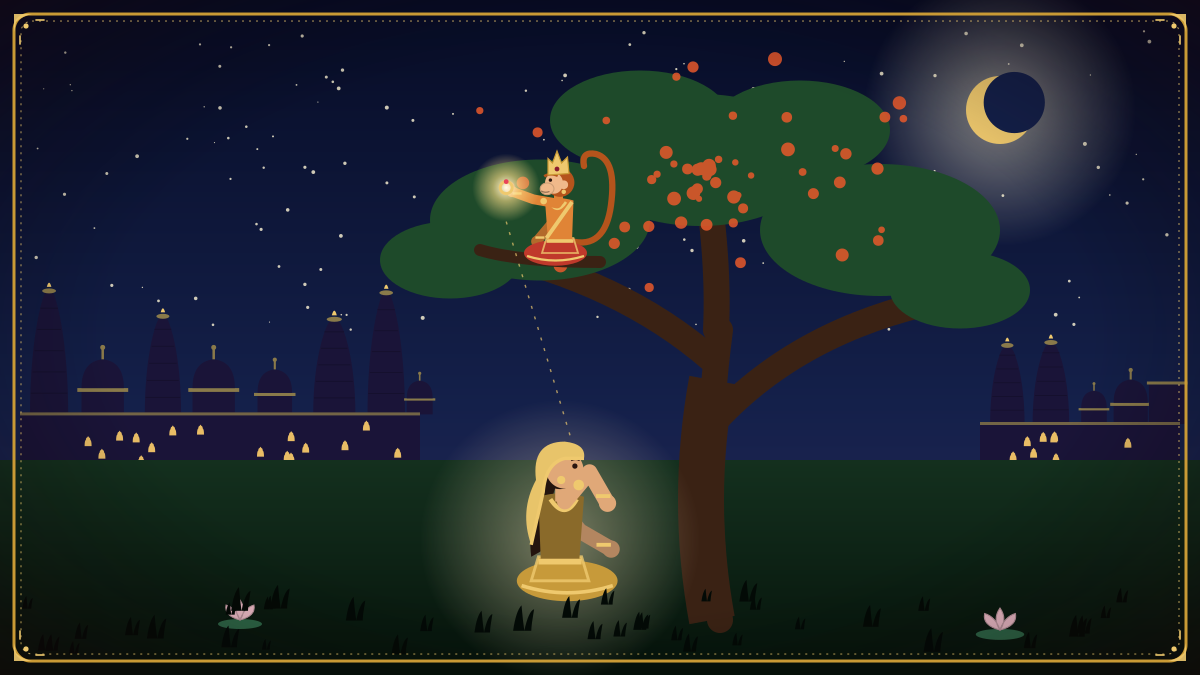
Then he told Hanuman the story of his birth: how his mother Anjana had been an apsara, how Vayu blessed her with a son, how as a child Hanuman had leapt towards the sun thinking it a fruit, and how the gods blessed him. “Rise, great vanara,” he said, “cross this ocean.” Hearing this, Hanuman remembered his strength, grew huge, and got ready for his great leap.
When Hanuman came back from Lanka, it was Jambavan who first asked him to tell everything in detail: how he had seen Sita, how she was, and what Ravana had done. And when Angada wanted the vanaras to storm Lanka at once, Jambavan advised that they should do only what they had been asked to do, and leave it to Rama to win Sita back.
Role in the war of Lanka
In the war Jambavan led the bears and fought bravely. One night Indrajit struck Rama, Lakshmana and much of the vanara army with the Brahmastra. Vibhishana went searching the battlefield and found Jambavan lying wounded, unable even to open his eyes. Jambavan recognised his voice and asked, “Is Hanuman alive?”
Vibhishana was surprised that he had not first asked about Rama. Jambavan explained that if Hanuman lived, the whole army would live, even if it seemed dead. Then he told Hanuman to fly to the Himalayas and bring the mountain of healing herbs.
Jambavan described the place exactly: a mountain covered with herbs, between the Rishabha peak and Mount Kailasa. There, he said, glowed four great herbs: one that brings back life, one that draws out arrows, one that restores the body’s colour and one that joins broken bones. Hanuman flew there and, unable to find the herbs one by one, brought back the whole peak. Its fragrance alone healed Rama, Lakshmana and the army.
Later life and character
After the victory Jambavan came to Ayodhya with the vanara chiefs, and he was one of those who helped bring holy water for Rama’s coronation. Rama honoured him with gifts.
Jambavan was the elder of the army: patient, humble and full of experience. He did not need to do every great deed himself. His gift was to see the strength in others, encourage it, and give the right advice at the right time.
Again and again in the story, Jambavan is the voice of experience. On the seashore he knew who should make the leap. After the leap he knew the vanaras should not go beyond their orders. And on the darkest night of the war he knew that the whole army’s hope rested on Hanuman. Without his calm wisdom, the story could have turned out very differently.
Did you know?
- In the Bala Kanda Brahma says that Jambavan sprang from his mouth when he yawned.
- Jambavan told the vanaras that when Vishnu took his three great steps as Trivikrama, he went around him with respect many times.
- Even in his old age Jambavan said he could still leap ninety yojanas, but not a hundred.
- Lying wounded after Indrajit’s Brahmastra, Jambavan’s first question was, “Is Hanuman alive?”
What we learn from Jambavan
Jambavan teaches the value of elders who encourage others. A wise word at the right moment can awaken someone’s hidden strength, and helping another person rise is itself a great act of service.
Jambavan in the story
Read the kandas where Jambavan plays a part.