Ghatotkacha was the son of Bhima, the second Pandava, and Hidimbi, the rakshasi of the forest. That made him Kunti’s grandson and the nephew of Yudhishthira, Arjuna, Nakula and Sahadeva. From his mother he had the powers of the rakshasas: he could fly, change his size, vanish from sight and create illusions. From his father he had enormous strength and a deep love for the family. He came whenever the Pandavas remembered him, as he had promised, carried them over the Himalayan mountains during their exile, and fought for them throughout the Kurukshetra war. On the fourteenth night his fierce attack forced Karna to use the one weapon he had been saving to kill Arjuna. By giving his life, Ghatotkacha protected his uncle and helped the Pandavas win the war.
Birth in the forest
After Bhima killed the rakshasa Hidimba, his sister Hidimbi married Bhima with Kunti’s blessing. Their son was born in the forest. Like other rakshasa children, he grew to full youth very soon after he was born. He was huge and strong, with fierce eyes and a deep voice, and he was skilled with every weapon.
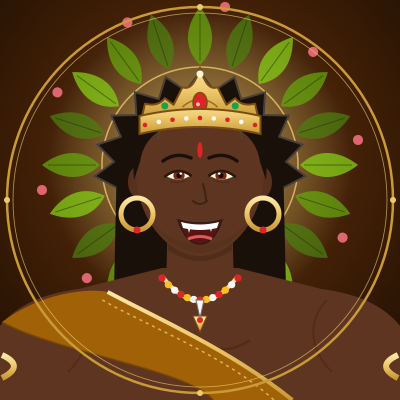
His head was round and smooth, without hair, like a pot. A pot is called ghata and hairless is utkacha, so his parents named him Ghatotkacha. His body was frightening to look at, but his heart was full of love for his father’s family.
Vyasa adds that Ghatotkacha was born for a special purpose. Indra, king of the gods, had arranged his birth so that one day he could stand against the Shakti, the divine weapon that Karna would receive from Indra himself. This hidden purpose would be fulfilled many years later on the battlefield of Kurukshetra.
A promise to his family
Though he was a rakshasa by birth, Ghatotkacha loved the Pandavas from the start, and they loved him. When the time came for Bhima to return to his brothers, Ghatotkacha bowed at the feet of his grandmother Kunti, his father and his uncles, and humbly asked what he could do for them.
Then he made a promise: “Whenever there is work for me, just remember me, and I will come to you at once.” With these words he took leave of the Pandavas and went away to the north with his mother.
He grew into a mighty leader among the rakshasas, but he never forgot his promise. Soon afterwards the Pandavas went on to Ekachakra and later to Draupadi’s swayamvara, and many years passed before they needed him. Yet they knew that in any hard time they had only to think of him, and he would come.
Over the Himalayan mountains
During the twelve years of forest exile, the Pandavas travelled with the sage Lomasha and with Draupadi to the holy places of the Himalayas, heading towards the Gandhamadana mountain. On the way a fierce storm struck, with wind, dust and rain. Draupadi, worn out by the hard path, fainted. Yudhishthira was so worried that he thought of sending her back, but Bhima said there was no need: if he called his son Ghatotkacha, the rakshasa would carry them all through the sky.
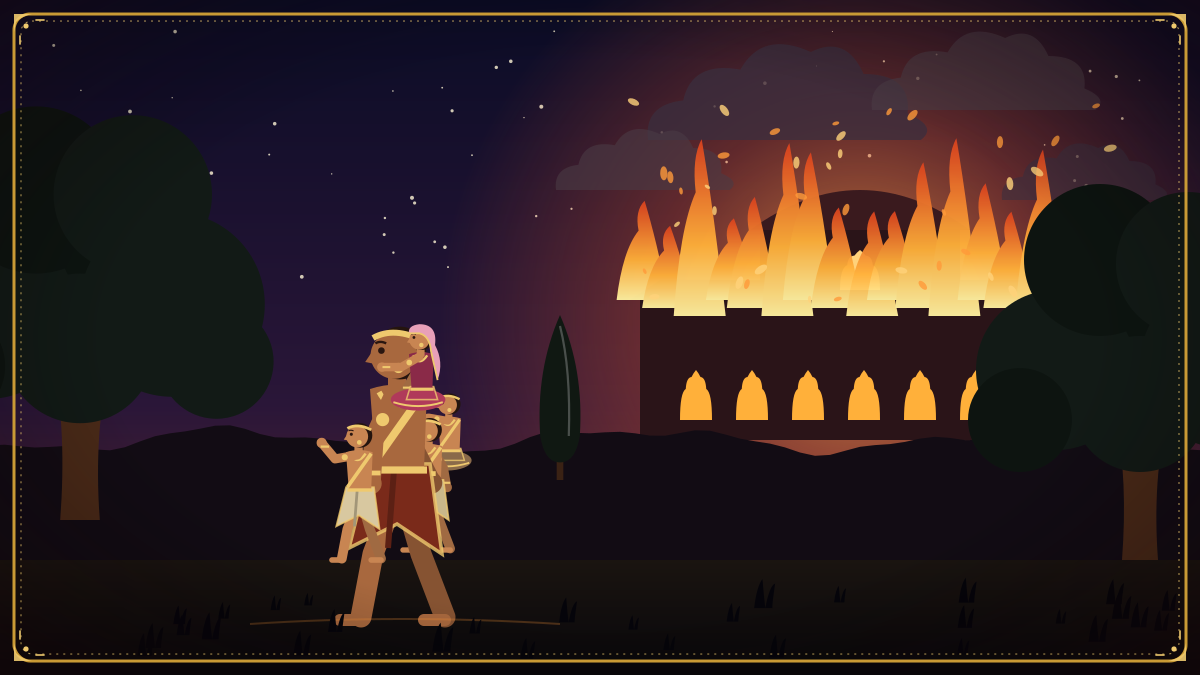
Bhima remembered his son, and Ghatotkacha appeared at once with many rakshasa companions. He bowed to the Pandavas, the brahmins and the sage Lomasha, and asked what he should do. At Yudhishthira’s word he lifted Draupadi and carried her, while his companions carried the Pandavas and the brahmins through the sky.
They flew over mountains, rivers and forests, and the Pandavas saw many lands and holy places from the sky. The sage Lomasha travelled by his own spiritual power. At last the rakshasas gently set everyone down at Badari, the holy hermitage of Nara and Narayana, beside a great jujube tree. Then Ghatotkacha took leave and went home. The Pandavas were deeply grateful to the son who had kept his word without a moment’s delay.
In the great war
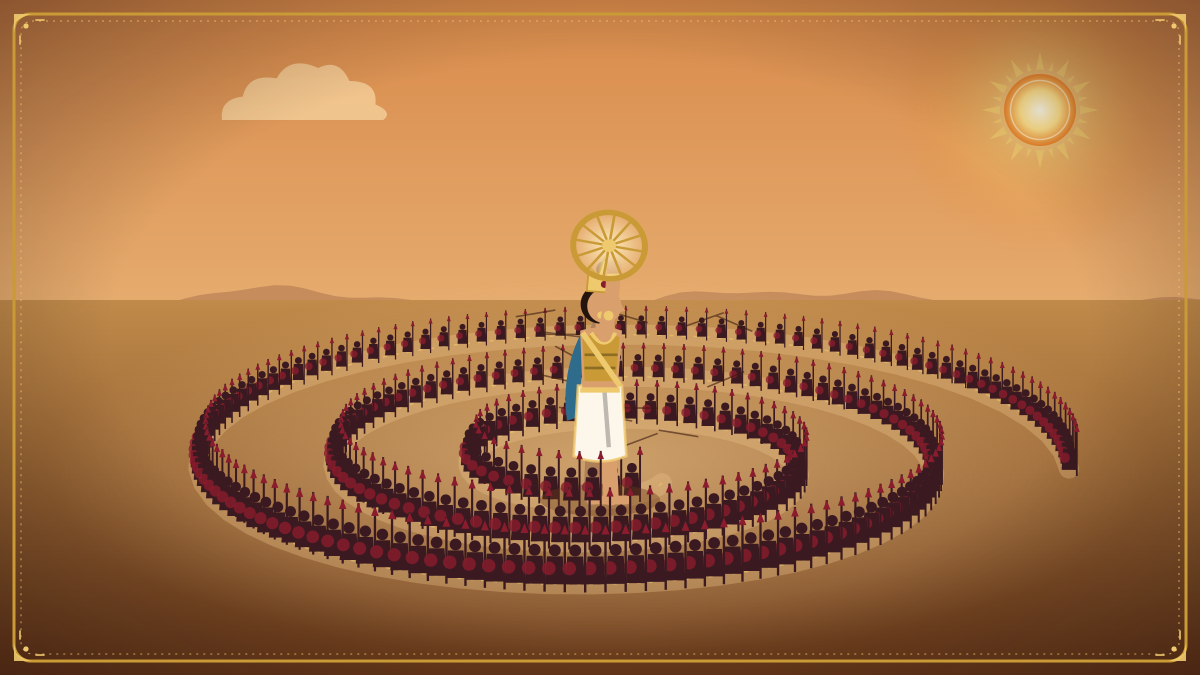
When the war was declared, Ghatotkacha came to Kurukshetra with his rakshasa army to fight on his father’s side. He fought on many days of the war. His huge chariot, his terrible roar and his illusions spread fear among the Kaurava soldiers, and he faced great warriors such as Ashwatthama and Bhagadatta.
When Arjuna’s son Iravan was killed on the eighth day, Ghatotkacha roared in grief and anger. He attacked so fiercely that Duryodhana himself had to face him, and Bhishma had to send the veteran king Bhagadatta to rescue Duryodhana.
Ghatotkacha’s own son Anjanaparvan also fought for the Pandavas, and in the night battle of the fourteenth day he fell to Ashwatthama. So three generations of Bhima’s family, father, son and grandson, gave their strength to the Pandava cause, and Ghatotkacha, though he had grown up far from his father, stood with the Pandavas in every crisis.
The fourteenth night
On the fourteenth day Arjuna killed Jayadratha, and in their anger and grief the Kauravas did not stop fighting at sunset. Thousands of torches and lamps were lit on chariots and elephants, and the battle went on deep into the night. For the first time in the war the armies fought in the dark, and the power of rakshasas grows much greater in the dark.
Karna was then destroying the Pandava army, and Arjuna wanted to go against him. But Krishna said that only Ghatotkacha could face Karna at that hour, and he called him. Ghatotkacha bowed to Krishna and Arjuna and went into battle gladly.
That night Ghatotkacha killed the rakshasas Alambusha and Alayudha, who fought for Duryodhana. Alayudha had come to take revenge on Bhima for killing his kinsmen Baka, Kirmira and Hidimba, but Ghatotkacha stood in his way and protected his father. He also fought a long duel with Ashwatthama. Then he faced Karna. He flew into the sky, vanished and appeared again, grew huge and then tiny, and rained down arrows, rocks, trees and weapons from the darkness. Karna fought back with great skill and cut down many of his illusions, but the rakshasa came again and again, and the Kaurava soldiers began to flee in terror.
Frightened, Duryodhana and the Kaurava warriors begged Karna, “Kill this rakshasa with Indra’s Shakti, or none of us will see the morning.” Karna was caught in a hard choice, for he had been saving that weapon for Arjuna alone. But he saw his own army breaking apart around him, and he was wounded himself.
The Shakti and Krishna’s words
Karna had received the Shakti from Indra in exchange for his divine armour and earrings, and it could be used only once. Now, pressed by his own side, he hurled it at Ghatotkacha. Struck, Ghatotkacha made his body enormous as he fell and came down on a part of the Kaurava army, so that even in death he served his family. The weapon then returned to Indra. The Kauravas shouted with joy, while the Pandava army fell silent.
The Pandavas wept for him. But Krishna was filled with joy and embraced Arjuna. Surprised, Arjuna asked why he was happy at such a sad moment. Krishna explained that as long as Karna had that weapon, Arjuna’s life had been in danger, and now Karna was like any other warrior. That was why Krishna had kept Arjuna away from Karna all this time, and why he had sent Ghatotkacha into the fight.
Later Satyaki asked why Karna had not used the Shakti on Arjuna earlier. Krishna replied that every night Duryodhana and Karna planned to use it on Arjuna the next morning, but each day Krishna clouded Karna’s mind so that he forgot. Krishna had protected Arjuna again and again, and on the fourteenth night Ghatotkacha’s sacrifice finally took the danger away.
Krishna also said that Ghatotkacha, as a rakshasa, did not respect sacrifices and holy men, and that if Karna had not killed him, he himself would one day have had to. In this way, said Krishna, Ghatotkacha’s death served both the Pandavas and dharma.
Yudhishthira was still overcome with grief for Bhima’s son, who had helped them so many times. Then Vyasa appeared and comforted him, saying that victory was near and within five days the earth would be his. Ghatotkacha is remembered as the son who came every time he was called and gave everything for his family.
Did you know?
- Ghatotkacha’s name comes from ‘ghata’, a pot, because his head was round and smooth like one.
- He was Bhima’s eldest son, born in the forest even before the Pandavas married Draupadi.
- During the forest exile, Ghatotkacha and his companions carried Draupadi and the Pandavas through the air over the Himalayan mountains.
- Karna’s Vasavi Shakti, the one-time weapon he had saved for Arjuna, was finally used on Ghatotkacha, and this saved Arjuna’s life.
What we learn from Ghatotkacha
Ghatotkacha teaches us loyalty and selfless service. He kept his promise to come whenever he was remembered, and in the end he gave his life so that others could live. His story shows that great strength is best used to protect those we love.
Ghatotkacha in the story
Read the chapters where Ghatotkacha plays a part.