Dushasana was the second son of King Dhritarashtra and Queen Gandhari, and the younger brother of Duryodhana. Of all the hundred Kaurava brothers, he was the one closest to Duryodhana, and he did whatever his elder brother wanted, right or wrong. Together with Karna and their uncle Shakuni, he formed Duryodhana’s inner circle of advisers. He was a strong warrior who led large divisions in the war, but he is remembered most for one shameful act: dragging Queen Draupadi into the royal court and trying to pull away her garment in front of everyone. That act made Bhima take a fearful vow against him, and it became one of the deepest causes of the Kurukshetra war.
Second of the hundred
Dushasana was born from the same blessing of Vyasa as all his brothers. When Gandhari’s lump of flesh was divided into a hundred and one parts and kept in pots of ghee, Duryodhana came out first and Dushasana second. Among his many younger brothers were Vikarna, Vivimshati and Durmukha, and their only sister was Duhshala. Their father’s younger brother Pandu was the father of the Pandavas, so the five Pandavas were Dushasana’s first cousins, and Shakuni, their mother’s brother, was his maternal uncle.
Growing up right after Duryodhana, Dushasana stood in his shadow and followed him in everything. Whatever Duryodhana felt, Dushasana felt too, including his jealousy of the Pandavas. The epic often names the four of them together: Duryodhana, Karna, Shakuni and Dushasana, the friends who met in secret to plan against the sons of Pandu.
He was part of these plans from the house of lac onwards. He never asked whether something was right. His only rule was to please his elder brother, and Duryodhana trusted him so much that he once wished to hand the kingdom over to him.
The shameful act in the court
In the game of dice, Yudhishthira lost everything, even Draupadi. Duryodhana sent an attendant to bring her to the court, but she sent back a question: had Yudhishthira lost himself first, before he staked her? Angry at the delay, Duryodhana told Dushasana to bring her by force.
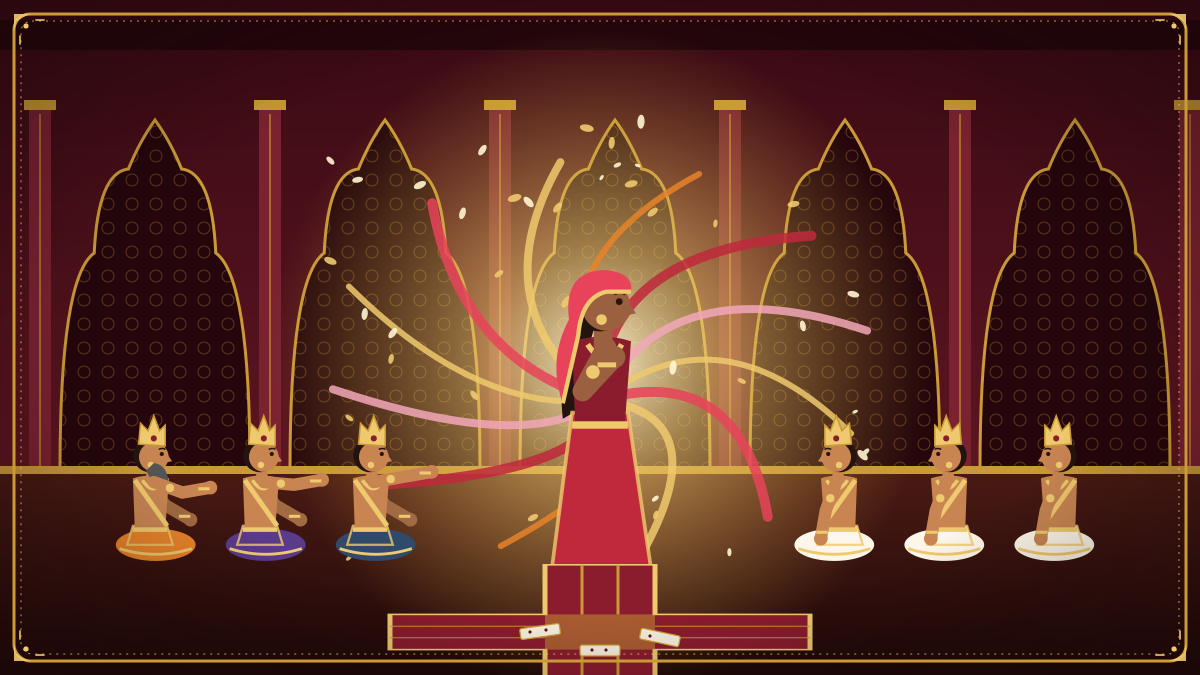
Dushasana went to her rooms. Draupadi was wearing a single garment and tried to run to the women of the palace, but he caught her by her long hair and dragged her into the hall in front of all the elders. When she begged him not to bring her before the assembly in such a state, he answered harshly that whether she wore one garment or none, she had been won at dice and was now a servant of the Kauravas. She cried out that this was against all dharma, but Bhishma, Drona and the others sat silent. Only Vikarna among the Kauravas spoke up for her, and he was shouted down.
Then Karna told Dushasana to take away the garments of the Pandavas and of Draupadi. The Pandavas took off their upper cloths themselves. Dushasana seized Draupadi’s garment and began to pull it away. Draupadi prayed to Shri Krishna, and by divine grace a new cloth appeared each time one was pulled away. A great heap of cloth piled up, and at last Dushasana grew tired and sat down in shame.
Seeing this, Bhima stood up, trembling with anger, and swore a terrible oath before everyone: that one day on the battlefield he would take Dushasana’s life in revenge for this insult. The assembly shuddered to hear it.
Mocking the Pandavas
Frightened by evil omens, Dhritarashtra gave Draupadi boons, and she won back her husbands’ freedom. But soon a second game was played, and the Pandavas lost again. They had to go to the forest for twelve years and live a thirteenth year in hiding.
As the Pandavas put on deerskins to leave, Dushasana danced around them with joy. He said that Duryodhana’s rule had now begun and that the Pandavas were as useless as sesame seeds with no oil in them. He told Draupadi to choose a new husband from among the Kauravas, and he mocked Bhima by calling him an ox.
Bhima replied that Dushasana was speaking boldly only because he had won by trickery, and he repeated his vow. Arjuna, Nakula and Sahadeva also made vows against their enemies. The Pandavas left in silence, but they never forgot.
During the years of exile
When Duryodhana went to the Dvaita forest to show off his wealth before the Pandavas, Dushasana went with him. When the Gandharvas captured Duryodhana and the Pandavas rescued him, Duryodhana was so ashamed that he decided to fast unto death.
He called Dushasana and told him to become king in his place and rule well. Dushasana wept, held his brother’s feet and said that this could never happen; he would never rule without Duryodhana. With Karna and Shakuni he begged Duryodhana to give up the fast.
In the thirteenth year, Dushasana joined the Kauravas in the raid on King Virata’s cattle, and he was among the warriors defeated by Arjuna. When Krishna later came to Hastinapur as a messenger of peace, Dushasana was one of those who plotted with Duryodhana, Karna and Shakuni to take Krishna prisoner. Satyaki discovered the plan, and Krishna showed his divine form in the court.
In the war
In the war Dushasana fought with bow and mace and led large divisions of the Kaurava army. At the very start, Duryodhana gave him a special charge: to keep the chariots ready to guard Bhishma at all times, for protecting the grandsire was the Kauravas’ first duty. On the tenth day he was among the warriors who guarded Bhishma and fought Arjuna fiercely. On the thirteenth day the young Abhimanyu defeated him in the Chakravyuha, and Dushasana fainted in his chariot and had to be carried away by his charioteer.
Later that same day, when Abhimanyu was surrounded and left alone, Dushasana’s son fought him with the mace. Both fell to the ground, but Dushasana’s son rose first and struck the young hero’s last blow.
On the fourteenth day Dushasana stood at the front of Drona’s formation with a large force of elephants to stop Arjuna. Arjuna broke through, and Dushasana fled to Drona. Drona scolded him, asking where his courage had gone, he who had spoken so boldly in the dice hall, and told him to make peace with the Pandavas if he feared them so much. Shamed, Dushasana went back to fight. Satyaki too defeated him that day, but did not kill him, remembering that Bhima had vowed to do so.
Bhima keeps his vow
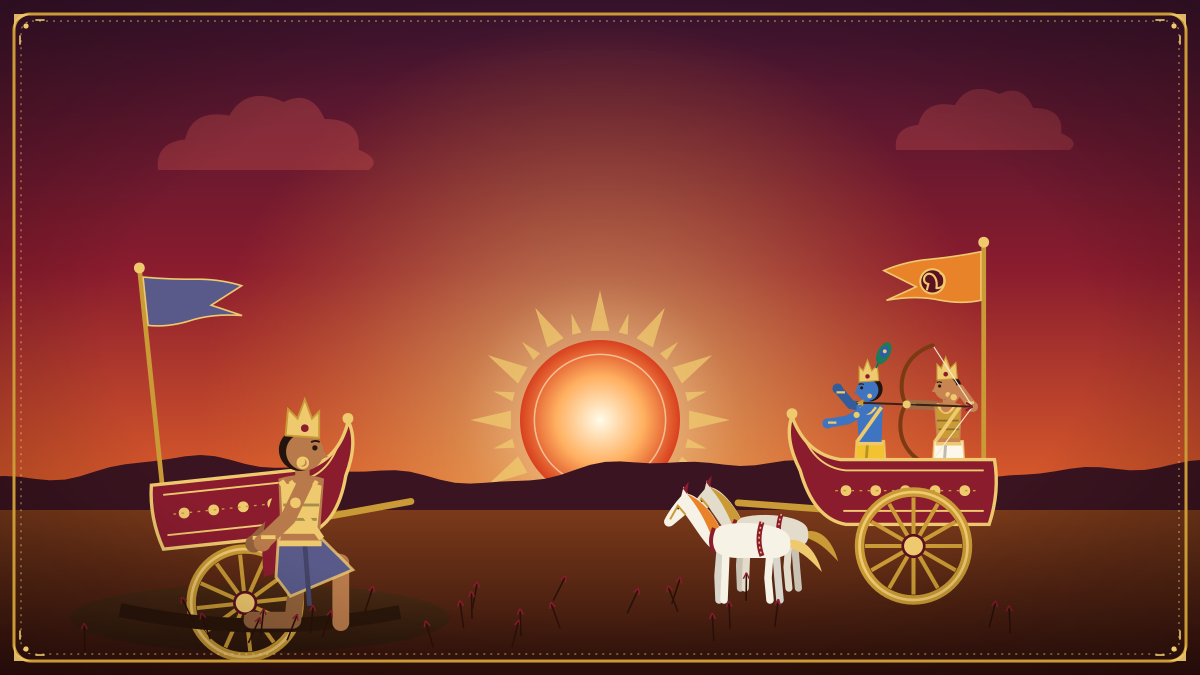
On the seventeenth day of the war, while Karna was commander, Dushasana met Bhima on the battlefield. He fought bravely, cut Bhima’s bow and wounded him with arrows. But Bhima hurled his mace, which threw Dushasana from his chariot to the ground.
Then Bhima reminded him of the day he had dragged Draupadi by her hair and mocked the Pandavas, and before the whole army he fulfilled his fearful oath and took Dushasana’s life. The Kaurava warriors who saw it were struck with terror and fled. Bhima declared that his vow against Dushasana was complete, and that only Duryodhana remained. Even Karna was shaken by the sight, and Shalya, his charioteer, had to encourage him to keep fighting. Soon afterwards Bhima also killed several more of Dushasana’s brothers who rushed at him.
When the war was over, Gandhari wept for all her sons, Dushasana among them, and she rebuked Bhima for the manner of his revenge. Bhima humbly explained that he had done it only to keep his vow and to break the pride of his enemies. Gandhari, in her grief, asked why he had not spared even one of her hundred sons to be a support for two blind old parents.
Gandhari’s sorrow showed the bitter end of the path Dushasana had chosen. A life spent helping his brother do wrong brought grief to his own mother and ruin to his whole family.
Did you know?
- The hundred Kauravas and their sister Duhshala were born from a hundred and one pots of ghee, prepared by the sage Vyasa.
- When Duryodhana wanted to give up his life in the forest, he asked Dushasana to rule in his place, but Dushasana refused with tears.
- Dushasana was the second of the hundred Kauravas, born right after his elder brother Duryodhana.
- Bhima had vowed in the dice hall to defeat all the sons of Dhritarashtra, and by the end of the war he had kept that vow.
What we learn from Dushasana
Dushasana teaches us that blind loyalty is not a virtue. Following someone in doing wrong makes us just as guilty as they are. We should love and respect our elders, but we must also have the courage to say no when something is wrong.
Dushasana in the story
Read the chapters where Dushasana plays a part.