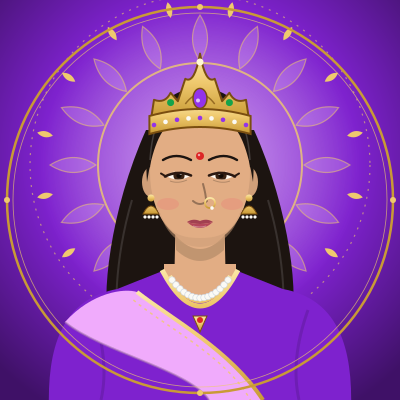
Mandodari was the chief queen of Ravana, the king of Lanka. She was the daughter of Maya, the wonderful builder of the danavas, and the heavenly apsara Hema. She was the mother of Meghanada, the great warrior later called Indrajit. Valmiki shows her only a few times, but each time with dignity: as a beautiful queen whom Hanuman at first mistook for Sita, and as a wise and grieving wife who understood, at the end, why Ravana had fallen.
Daughter of Maya
In the Uttara Kanda, Maya tells his own story to Ravana. He was a danava, famous for his skill in building and in magic. The gods once gave him the apsara Hema as his wife, and he built a golden city for her. They lived there happily and had two sons, Mayavi and Dundubhi, and a lovely daughter, Mandodari.
Later Hema went away for the work of the gods. Maya was left alone with his daughter, and he began to look for a worthy husband for her. As he wandered in a forest with Mandodari, he met the young Dashagriva, the rakshasa who was soon to be called Ravana.
Mandodari’s brothers have their own place in the Ramayana. Both Dundubhi, who took the form of a giant buffalo, and Mayavi later fought against the vanara king Vali in Kishkindha, and both were killed by him. So her family was connected with the vanaras long before the war of Lanka.
Her father Maya was the same great builder who had made wonderful cities and palaces for the danavas. Mandodari grew up among beauty and skill, and she was known for her loveliness and her noble bearing, fit to be the wife of a king.
Marriage to Ravana
Maya asked the stranger who he was. Learning that he was the son of the sage Vishrava and grandson of the sage Pulastya, Maya was pleased, for he came from a family of great learning. He offered him Mandodari in marriage, and the wedding was held before the sacred fire.
Maya also gave Ravana a wonderful spear as a gift. Mandodari came to Lanka as the chief queen of the rakshasa king. In time she gave birth to a son who, the moment he was born, roared like a thundering cloud, and so he was named Meghanada. Later, when he defeated Indra, he came to be called Indrajit.
Ravana later brought many other wives to Lanka, some won in his wars, but Mandodari always remained the first among them, the honoured chief queen of the golden city. She shared in all the glory of his reign.
The queen whom Hanuman saw
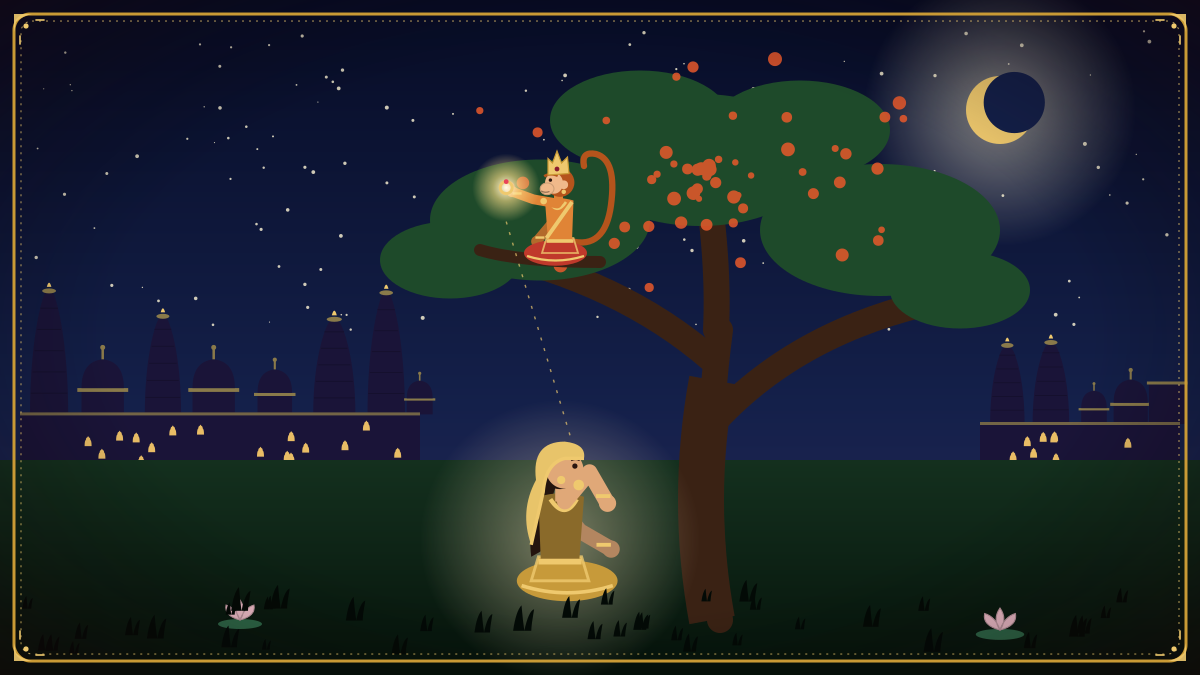
When Hanuman searched Lanka by night for Sita, he entered Ravana’s splendid palace. There he saw the king asleep among his many wives, and apart from them, on a beautiful couch, a queen lovelier than all the rest, shining with jewels. This was Mandodari.
For a moment Hanuman’s heart leapt. He thought, “This must be Sita!” and in his joy he jumped about and showed his happiness like a playful monkey. Then he stopped and thought carefully. Sita, separated from Rama, would never sleep peacefully in another man’s palace, wear fine ornaments, eat or drink. This could not be her.
So Hanuman left the palace and went on searching until he found Sita in the Ashoka grove, thin and sorrowful, but faithful to Rama. Valmiki uses Mandodari’s beauty to show, by contrast, the purity and sadness of Sita.
Losses in the war
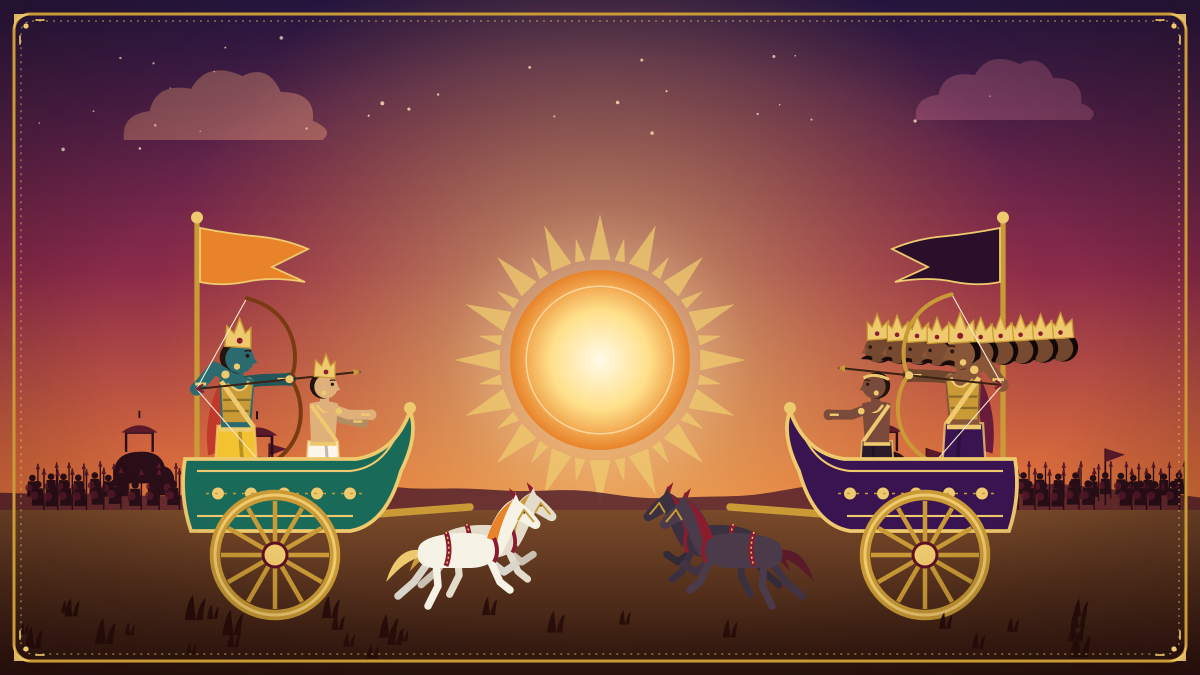
As Rama’s army laid siege to Lanka, Mandodari’s world began to fall apart. Ravana’s brother Kumbhakarna was killed, then several of Ravana’s sons, and finally her own son Indrajit fell to Lakshmana’s arrow. The palace was filled with weeping.
Ravana himself, wild with grief at Indrajit’s death, even raised his sword to kill Sita, until his wise minister Suparshva stopped him. Then he went out to his last battle. Mandodari could only wait, as so many wives and mothers of Lanka were waiting.
When news came that Ravana had fallen to Rama’s arrow, the women of the palace rushed out to the battlefield. Among them was Mandodari, the chief queen, who had lost both her son and her husband in this war.
Mandodari’s lament
Seeing Ravana lying on the ground, Mandodari wept and spoke. “You, who made the gods afraid, how have you been killed by a man?” Then she understood: Rama was no ordinary man. She said she had felt this ever since he had killed Khara and the fourteen thousand rakshasas of Janasthana alone. Rama, she said, was the eternal Lord Vishnu himself.
She remembered her husband’s glory and wept over the jewels and crowns that now lay in the dust. “You, whose anger frightened the three worlds,” she said, “now lie here silent.” Her grief was the grief of the whole city.
She also named the true cause of Ravana’s fall. “Long ago you conquered your senses by penance,” she said, “but now your senses have taken their revenge.” She praised Sita as a woman of great virtue, greater than Arundhati and Rohini, and said that it was for her sake, and for his own wrong desire, that Ravana had brought ruin on himself and on Lanka.
The other queens gathered around her and lifted her up. Then Rama asked Vibhishana to perform his brother’s funeral rites with full honour, and Mandodari and the women of the palace returned to the city. Valmiki tells nothing more of her life after that day.
Her character
Mandodari stands for the quiet dignity of a queen who did not choose the war but suffered its results. In her lament, she is clear-sighted and honest: she loves her husband, yet she does not pretend that he was right.
Her words are one of the clearest explanations in the Ramayana of why Ravana fell. It was not weakness of arms but weakness of self-control. In this way Mandodari, though she belonged to the side of Lanka, speaks the truth of dharma.
She also reminds us of the many who suffer in a war they did not start. The wives, mothers and children of Lanka lost their loved ones because of one king’s wrong choice. Mandodari’s tears are their tears too, and Valmiki gives them a voice through her.
Did you know?
- Mandodari’s brothers, Mayavi and Dundubhi, were both killed by the vanara king Vali in Kishkindha.
- When Hanuman first saw Mandodari sleeping in the palace, he thought for a moment that she was Sita.
- Her father Maya gave Ravana a powerful spear as a wedding gift.
- In her lament she said that Ravana had once conquered his senses by penance, but in the end his senses had conquered him.
What we learn from Mandodari
Mandodari teaches that true love is honest. She grieved deeply for Ravana, yet she could see that his own uncontrolled desire had destroyed him. Wisdom means seeing the truth even about those we love most.
Mandodari in the story
Read the kandas where Mandodari plays a part.