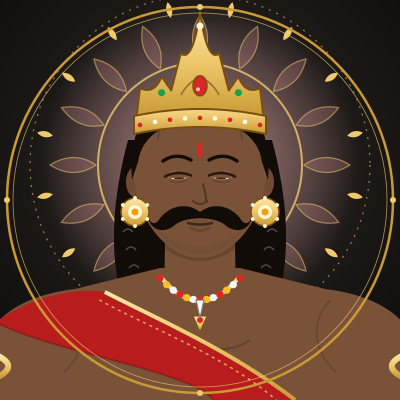
Kumbhakarna was the second son of the sage Vishrava and Kaikasi, younger brother of Ravana and elder brother of Vibhishana and Shurpanakha. He was so enormous that the vanaras thought a mountain had come walking onto the battlefield. Because of a boon, or as another account in Valmiki says, a curse, he slept for months at a time. When woken for the war, he told Ravana honestly that he had done wrong, yet he went out to fight for his brother and fell to Rama’s arrows.
Birth and penance
Kumbhakarna was born to Kaikasi after Ravana. Even as a child he was huge and fearfully strong. When his elder brother Dashagriva set out to win Brahma’s favour, Kumbhakarna went with him and with their youngest brother Vibhishana to the forest of Gokarna, and he too performed a long and hard penance.
The gods were worried. They said to Brahma, “If this giant receives a boon, he will swallow the three worlds.” Brahma then called the goddess Sarasvati, the goddess of speech, and asked her to sit on Kumbhakarna’s tongue and guide his words.
When Brahma appeared and asked him to choose a boon, Kumbhakarna said, “I wish to sleep for many years.” Brahma said, “So be it.” Only afterwards did Kumbhakarna realise that the words had not been his own, and he was sad, but the boon could not be taken back.
The sleeping giant
In the Yuddha Kanda, Vibhishana tells Rama another account of the same sleep. As a boy, Kumbhakarna devoured many creatures and frightened the world. Indra struck him with his thunderbolt, and in return Kumbhakarna tore a tusk from Indra’s elephant Airavata and struck Indra with it.
The gods complained to Brahma, and Brahma declared that Kumbhakarna would sleep like the dead. Ravana pleaded for his brother, and so Brahma softened his word: Kumbhakarna would sleep for six months and then wake for one single day, when he would eat and drink his fill.
Ravana arranged a wonderful home for him, a vast hall, so that he could sleep in peace. Ravana also gave him a wife, Vajrajvala, a granddaughter of the asura king Virochana, and in time they had two sons, Kumbha and Nikumbha.
The honest brother
When Rama’s army arrived at the ocean, Ravana held a great council. Kumbhakarna happened to be awake, and he did not flatter his brother. “You should have asked our advice before you carried away Sita,” he said. “A king who acts first and thinks afterwards falls into trouble. What you did was wrong.”
Yet he added, “Still, you are my brother and my king. I will fight for you and destroy your enemies.” Then he went back to sleep. Some of Ravana’s ministers praised the war, but Kumbhakarna had spoken the truth, even though he did not walk away from his brother as Vibhishana later did.
In the councils of those days Vibhishana pleaded that Sita be returned, and Ravana’s son Indrajit mocked him for being afraid. The council ended in anger. Kumbhakarna and Vibhishana had both seen the danger clearly, but they chose very different paths: one stayed loyal to his brother, the other stayed loyal to dharma.
Woken for war
After his first battle with Rama, in which Rama defeated him and then let him go home to rest, Ravana was shaken. He ordered that Kumbhakarna be woken, though his time of waking had not yet come. The rakshasas beat drums, blew conches, shouted, and even drove elephants over his body, and they piled mountains of food and drink beside him.
At last Kumbhakarna woke, yawning and hungry. When he had eaten, he went to Ravana. Hearing what had happened, he scolded his brother once more and explained the duties of a good king, who listens to wise counsel and acts at the right time.
Ravana grew angry, and Kumbhakarna, seeing his brother’s distress, comforted him. “Do not grieve,” he said. “I will go and end this war for you.” He put on his armour, took up his huge iron spear and marched out of Lanka.
When Rama saw this giant coming towards the army, he asked Vibhishana in amazement who he was. Vibhishana told him the whole story of Kumbhakarna’s strength and sleep, and advised that the vanaras be told it was only a huge machine, so that they would not lose heart.
The last battle
When the vanaras saw Kumbhakarna, as tall as a mountain, they were terrified and began to run away. Angada called them back and shamed them into fighting, but Kumbhakarna swept through the army like a storm.
The vanara heroes did not give up easily. Hanuman struck him with a mountain peak, Nila and others hurled great rocks, and Angada fought him face to face. But Kumbhakarna shook them off one by one, and even wounded Angada and Hanuman.
Kumbhakarna struck Sugriva with a great rock, and while the vanara king was stunned, carried him off towards Lanka. But Sugriva came to his senses, wounded the giant and broke free, leaping back to his own army. Furious, Kumbhakarna returned to the battlefield.
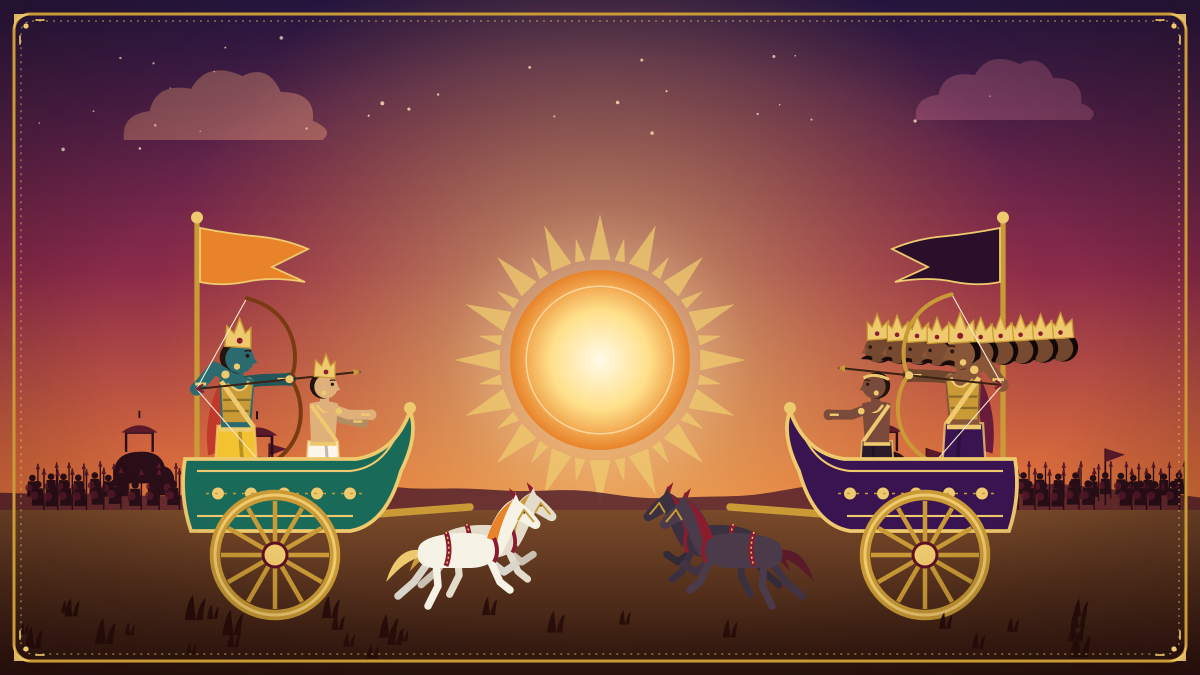
Then Rama himself faced him. With arrow after arrow, using divine weapons, Rama overcame the giant’s great strength. Finally Rama fired an arrow given by Indra, and Kumbhakarna fell. His enormous body crashed into the ocean, and the vanaras shouted for joy. In Lanka, Ravana wept bitterly for his brother.
His character
Kumbhakarna is one of the most moving rakshasas in the Ramayana. He was frightening in size and appetite, but he was not a flatterer. Twice he told Ravana to his face that taking Sita was wrong.
He was also a fearless warrior. He went out alone against an entire army, and even the greatest vanara heroes could not stop him. Only Rama’s divine weapons could overcome him.
Even so, he chose loyalty to his brother over his own judgement, and gave his life for a cause he knew was unjust. His story makes us think about the difference between loyalty and right action. His sons, Kumbha and Nikumbha, also died in the war, Kumbha fighting Sugriva and Nikumbha fighting Hanuman.
Did you know?
- According to the Uttara Kanda, the goddess Sarasvati sat on Kumbhakarna’s tongue, so that instead of a dangerous boon he asked Brahma for sleep.
- To wake him, the rakshasas beat drums, blew conches and even drove elephants over his body.
- In Ravana’s council, Kumbhakarna openly told his brother that carrying Sita away was wrong.
- Kumbhakarna’s two sons also fell in the war: Kumbha was killed by Sugriva and Nikumbha by Hanuman.
What we learn from Kumbhakarna
Kumbhakarna had the courage to tell his brother the truth, which is rare and precious. But he still fought for a wrong cause out of loyalty. His story teaches that love for family should help them do right, not help them do wrong.
Kumbhakarna in the story
Read the kandas where Kumbhakarna plays a part.