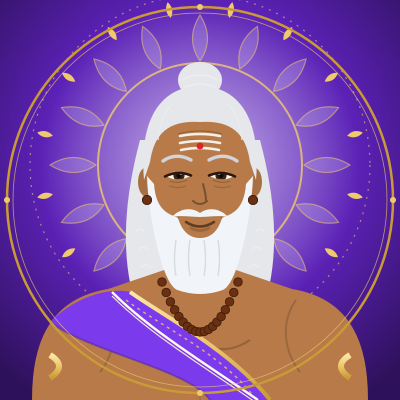
Kripacharya, also called Kripa, was the teacher of the Kuru princes at Hastinapur. He and his twin sister Kripi were the children of the sage Sharadvan, a son of the great sage Gautama and a master archer. Found as babies in a forest, they were raised by King Shantanu, who named them out of his compassion (kripa). Kripi later married Drona, so Kripa was Drona's brother-in-law and Ashwatthama's uncle. He taught the princes their first lessons in weapons, sat in the Kuru court through good days and bad, and more than once advised peace. He fought for the Kauravas, was one of only three of their warriors to survive the war, and later became the teacher of King Parikshit.
Born in a clump of reeds
The sage Gautama had a son named Sharadvan, who, the epic says, was born with arrows (shara) in his hands. Sharadvan did not care much for studying the Vedas. His heart was in dhanurveda, the science of archery, and through deep austerity he mastered every weapon.
Indra, king of the gods, grew worried about the power of this sage and sent a heavenly nymph, Janapadi, to disturb his austerity. Sharadvan was shaken for a moment, and through that moment, by the will of destiny, twin children, a boy and a girl, came into being in a clump of reeds.
Sharadvan left his hermitage and went away to continue his austerity elsewhere. Behind him he left his bow, his arrows and his deerskin beside the two babies.
Raised by Shantanu's compassion
One day a soldier of King Shantanu, out hunting with the king, came upon the twins lying among the reeds. Seeing the bow, the arrows and the deerskin, he understood that they were the children of a brahmin skilled in weapons, and he took them to the king.
Shantanu was moved with pity. He took the babies to his palace and raised them as his own. Because he had brought them up out of kripa, compassion, he named the boy Kripa and the girl Kripi.
Through his powers, Sharadvan learned where his children were. He came to the palace, told Kripa about his family and his gotra, and taught him dhanurveda in all its four branches, along with many other sciences. So Kripa became a great teacher of weapons.
First teacher of the princes
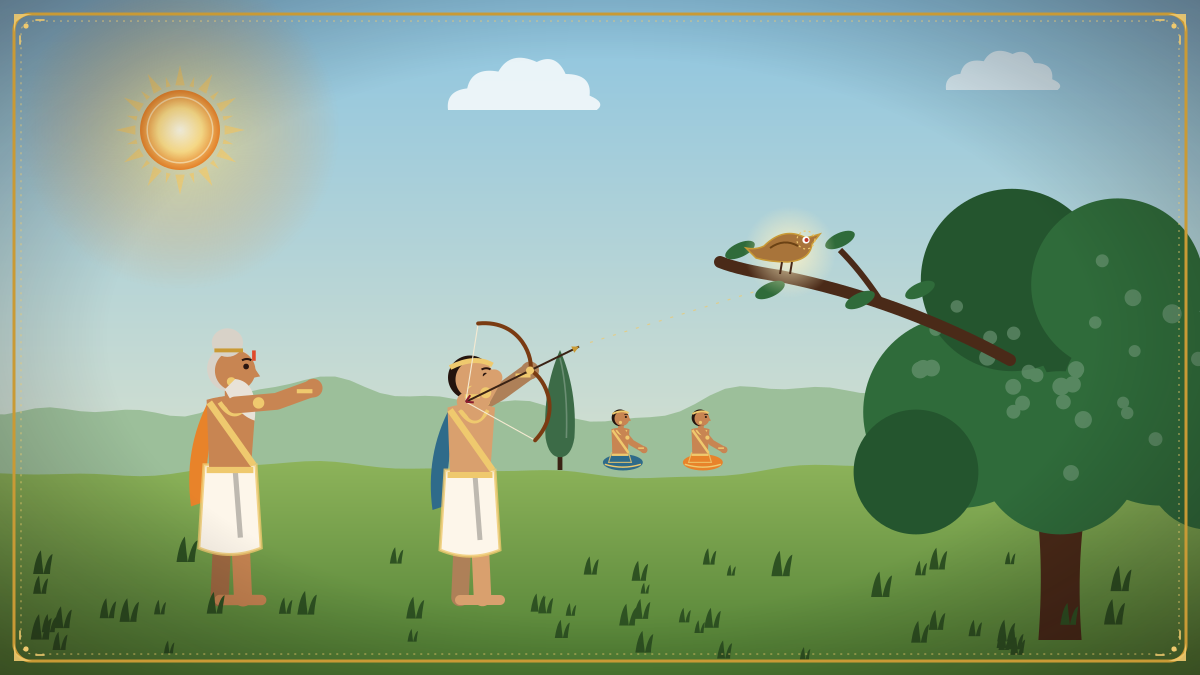
Bhishma chose Kripa to teach the young Kuru princes, and the Pandavas, the Kauravas, the Vrishnis and princes from other lands learned the first lessons of weapons from him. That is why he is respectfully called Kripacharya, the teacher Kripa. All through his life the Kuru elders, Bhishma, Dhritarashtra and Vidura, treated him with honour.
When Drona came to Hastinapur, he lived quietly in Kripa's house, for Kripi had married Drona and their son Ashwatthama was Kripa's nephew. Kripa welcomed him gladly, and after Bhishma appointed Drona as the chief teacher, Kripa remained a respected teacher and elder at court.
At the great tournament where the princes showed their skills, Karna stepped forward and challenged Arjuna to single combat. Kripa, who knew the rules of such contests, said, “Arjuna is the son of Kunti and a prince of the Kuru line. Tell us your mother, your father and your royal family. Only then can he decide whether to fight you.” Karna bowed his head in silence. Duryodhana at once crowned him king of Anga, and from that day Karna became Duryodhana's friend for life.
A steady voice in the court
Kripa stayed loyal to the throne of Hastinapur in every season. He was present in the hall during the game of dice and saw the Pandavas lose everything, a sorrow that the elders of the court were never able to undo.
When the Kauravas raided King Virata's cattle, Karna boasted that he alone would defeat Arjuna. Kripa scolded him: “Your mind is always set on cruelty and boasting. Arjuna has done great deeds alone, which you have never done. Let us all fight him together.” In that battle Arjuna defeated Kripa, but with respect, as his teacher.
On the first morning of the war, Yudhishthira came to Kripa to seek his blessing. Kripa said, “I am bound to fight for the Kauravas. But I cannot be killed in battle. Go and fight. Every morning when I rise, I will pray for your victory.”
In the great war
Kripa fought for the Kauravas through all eighteen days of the war. On the thirteenth day he was among the great warriors who surrounded young Abhimanyu in the Chakravyuha.
On the fourteenth night Karna again boasted that he alone would win the war. Kripa told him that empty words do not win battles. Karna answered with harsh insults, and Ashwatthama, angry at this insult to his uncle, raised his sword. Duryodhana and Kripa himself calmed him down.
After Karna fell on the seventeenth day, Kripa spoke to Duryodhana with great love and good sense. “Bhishma, Drona and Karna have fallen,” he said. “Our army is destroyed. The Pandavas are still willing to give you a share of the kingdom. Make peace with them now; that is the best thing for you.” But Duryodhana replied that after so many friends had died for him, he could not now ask for peace. He made Shalya his commander instead.
By the end of the eighteenth day, Shalya, Shakuni and almost every Kaurava warrior had fallen. Only three remained alive on that side: Kripa, his nephew Ashwatthama and Kritavarma of the Yadavas.
The night at the gate
The three found Duryodhana lying by the lake with his thighs broken. At Duryodhana's order, Kripa sprinkled water and anointed Ashwatthama as the last commander of the Kauravas.
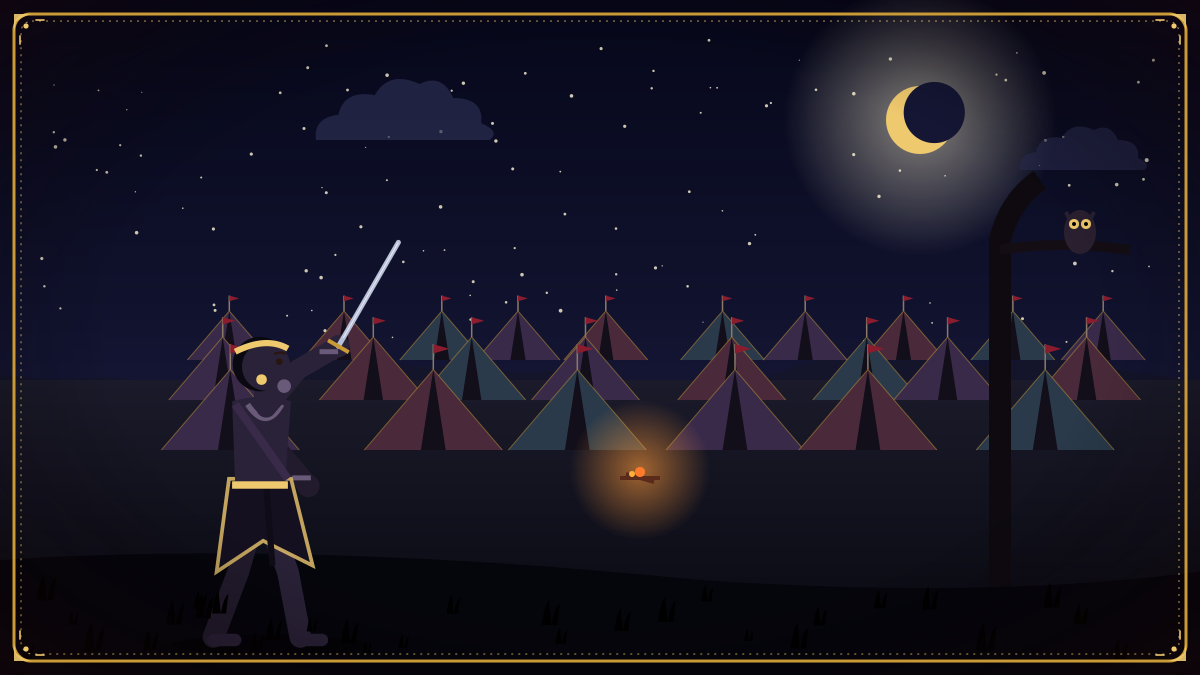
That night Ashwatthama wanted to attack the Pandava camp while everyone slept. Kripa warned him with wise words: “Success comes from both human effort and destiny. Let us go and ask Dhritarashtra, Gandhari and the wise Vidura what we should do. And to attack sleeping men is not dharma. Wait for morning; Kritavarma and I will fight beside you.” But Ashwatthama would not listen.
Unwilling to leave his nephew alone, Kripa followed him with Kritavarma. At Ashwatthama's request, the two stood at the gate of the camp while he went inside, and they struck down those who tried to flee, and set fire to the camp. It was the darkest deed of Kripa's life.
Before dawn the three went to tell Duryodhana, who died soon after. Then they parted. Meeting Dhritarashtra and Gandhari on the road, Kripa told them what had happened, and comforted Gandhari, saying that her sons had fallen fighting bravely and had gone to the worlds of heroes. After that Kripa went to Hastinapur, Kritavarma to Dwarka, and Ashwatthama to the hermitage of Vyasa.
Teacher of King Parikshit
The Pandavas did not turn against their old teacher. Yudhishthira honoured Kripa as before, and Kripa lived on in Hastinapur as a respected elder of the Kuru family.
Many years later, when the Pandavas set out on their last journey, Yudhishthira crowned young Parikshit king and placed him under the care of Kripacharya as his teacher. So the man who had taught Parikshit's great-grandfathers now guided the last heir of the Kurus.
Kripa had seen the Kuru house from the days of King Shantanu, who had found him as a baby, to the reign of Parikshit. Through all those generations he remained what Shantanu's compassion had made him: a teacher and a faithful elder of the family.
Did you know?
- Kripa’s name comes from the word kripa, “compassion”, because King Shantanu raised him out of kindness.
- Kripacharya was the first teacher of the Kuru princes, before Drona came to Hastinapur.
- After the war, Kripacharya became the teacher of young Parikshit and trained him in the use of weapons.
- Kripacharya was one of only three warriors on the Kaurava side who survived the eighteen-day war.
What we learn from Kripacharya
Kripacharya teaches us gratitude: a child saved by a king's compassion, he served that king's family all his life. He gave honest counsel and spoke for peace when it was hard to do so. Yet on the darkest night of the war he went along with a deed he knew was wrong, because he could not leave his nephew. His life reminds us that wisdom must be matched by the courage to say no until the end.
Kripacharya in the story
Read the chapters where Kripacharya plays a part.