Diwali

The festival of lights and new beginnings

Five days of lamps, prayer and family, when we welcome Goddess Lakshmi and, in Gujarat, a new year.

Retold in simple language by the Hansaben Poriya teamUpdated

  1. Dhanteras
  2. Kali Chaudas
  3. Diwali
  4. Bestu Varas
  5. Bhai Bij

About Diwali

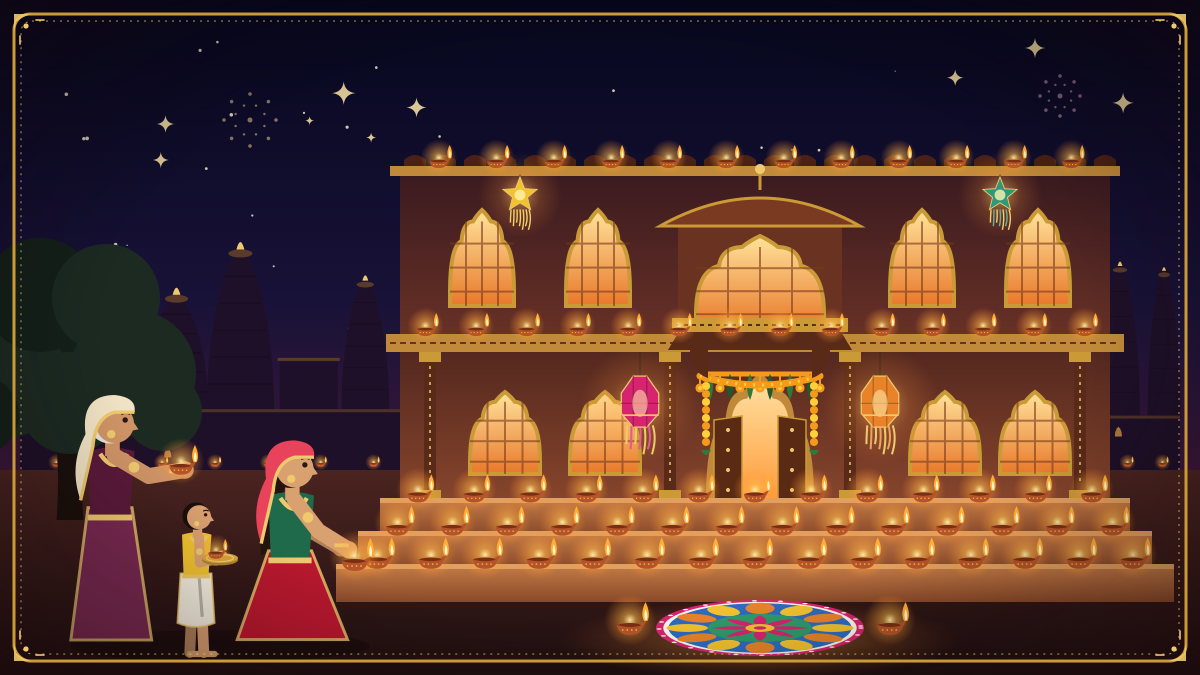
Diwali, or Deepavali, means “a row of lamps”. On the darkest night of the month, every home lights small clay diyas at the door, on the windows and along the courtyard. The little flames remind us that light always wins over darkness, goodness over evil, and knowledge over ignorance.

For most families Diwali is not one day but five, from Dhanteras to Bhai Bij. The house is cleaned and decorated, rangoli is drawn at the doorstep, sweets are made at home, and Goddess Lakshmi and Lord Ganesh are worshipped in the evening. It is a time to thank God for the year that has passed and to pray for a good year ahead.

In Gujarat, Diwali has a special place: it is the last day of the year, and the very next morning the Gujarati New Year begins. Other communities share this season too. Jains remember the nirvana of Lord Mahavira on this night, and Sikhs celebrate Bandi Chhor Divas, the return of Guru Hargobind Ji. Diwali belongs to everyone who loves light.

Diwali

The 5 days of Diwali

Aaso vad 13 → Kartak sud 2

When is Diwali?

Diwali follows the moon, so its date changes every year. It falls in the dark fortnight of the month of Ashvin, which in the Gujarati calendar is called Aaso vad. The main day of Diwali is Aaso vad Amas, the new-moon night, when there is no moonlight at all. This usually comes in October or November.

The day after Diwali is Kartak sud Ekam, the first day of the bright fortnight of Kartak. For Gujaratis this is Bestu Varas, the New Year’s day of the Vikram Samvat calendar. In parts of India where months are counted differently, the days before Diwali are said to fall in the dark half of Kartik rather than Ashvin, but the festival is the same. Check your local panchang for the exact days each year.

The 5 days of Diwali

  1. Day 1
    Tithi: Aaso vad 13

    Dhanteras

    Also called: Dhanvantari Jayanti, Dhan Teras

    The first day of Diwali, for welcoming good fortune and praying for good health.

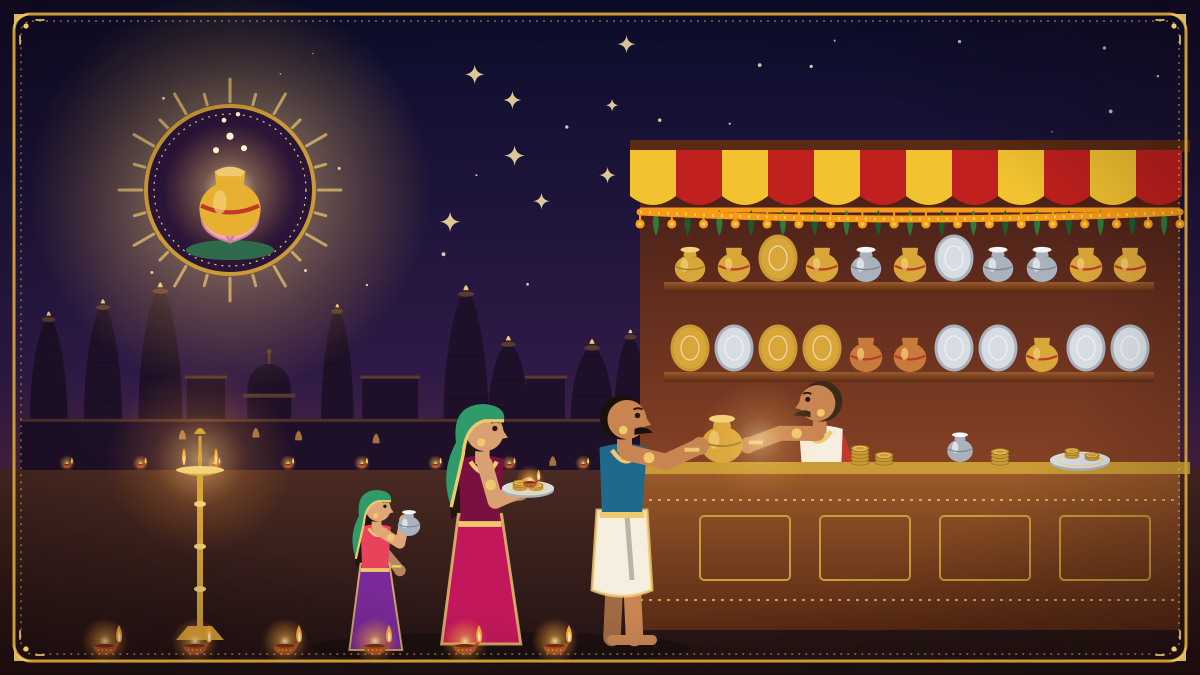
    “Dhan” means wealth and “teras” means the thirteenth day. On this day families pray to Goddess Lakshmi for a happy and prosperous home. In many Gujarati homes, silver coins are washed with milk and water and worshipped with kumkum and flowers.

    Dhanteras is also the birthday of Lord Dhanvantari, the divine physician, who rose from the churning of the ocean holding a pot of amrit. So this day reminds us that good health is the first wealth of all. By tradition, a lamp is also lit in the evening facing south, a prayer to Yamraj to keep the family safe from untimely death.

    What families do

    • Cleaning the house and decorating the doorway
    • Worshipping Lakshmiji and silver coins in the evening
    • Lighting a lamp for Yamraj facing south
    • Buying a small new utensil or coin as a sign of good luck
  2. Day 2
    Tithi: Aaso vad 14

    Kali Chaudas

    Also called: Narak Chaturdashi, Roop Chaudas, Chhoti Diwali

    A day for driving away fear and negativity, and remembering Shri Krishna’s victory over Narakasura.

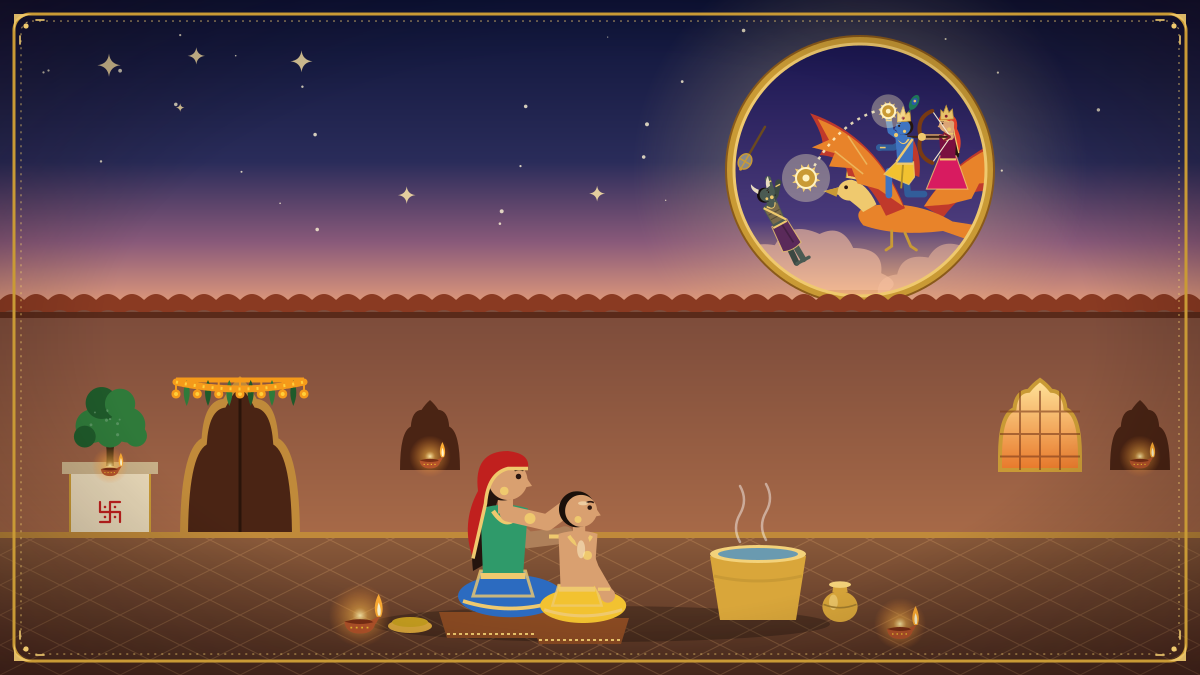
    Kali Chaudas is the day before Diwali. It is linked with the story of Shri Krishna defeating the demon Narakasura and freeing thousands of captive women. That is why it is also called Narak Chaturdashi. Many people wake before sunrise, rub oil on the body and take a bath, which is believed to wash away impurity. This is why it is also called Roop Chaudas.

    In Gujarat, this day is especially for worshipping Mahakali Mata and Hanumanji, the protectors who remove fear. Many families offer oil and sindoor to Hanumanji. In some homes, vadas are fried and placed at a crossroads in the evening. This custom, called “kakalat kadhvo”, means sending away the quarrels and troubles of the house before the new year.

    What families do

    • An early-morning oil bath
    • Prayers to Mahakali Mata and Hanumanji
    • Lighting lamps around the house in the evening
    • Placing vadas at a crossroads, in families that follow this custom
  3. Day 3
    Tithi: Aaso vad Amas

    Diwali

    Also called: Lakshmi Puja, Deepavali, Chopda Pujan

    The main night of the festival, when homes glow with lamps and Lakshmi–Ganesh are worshipped.

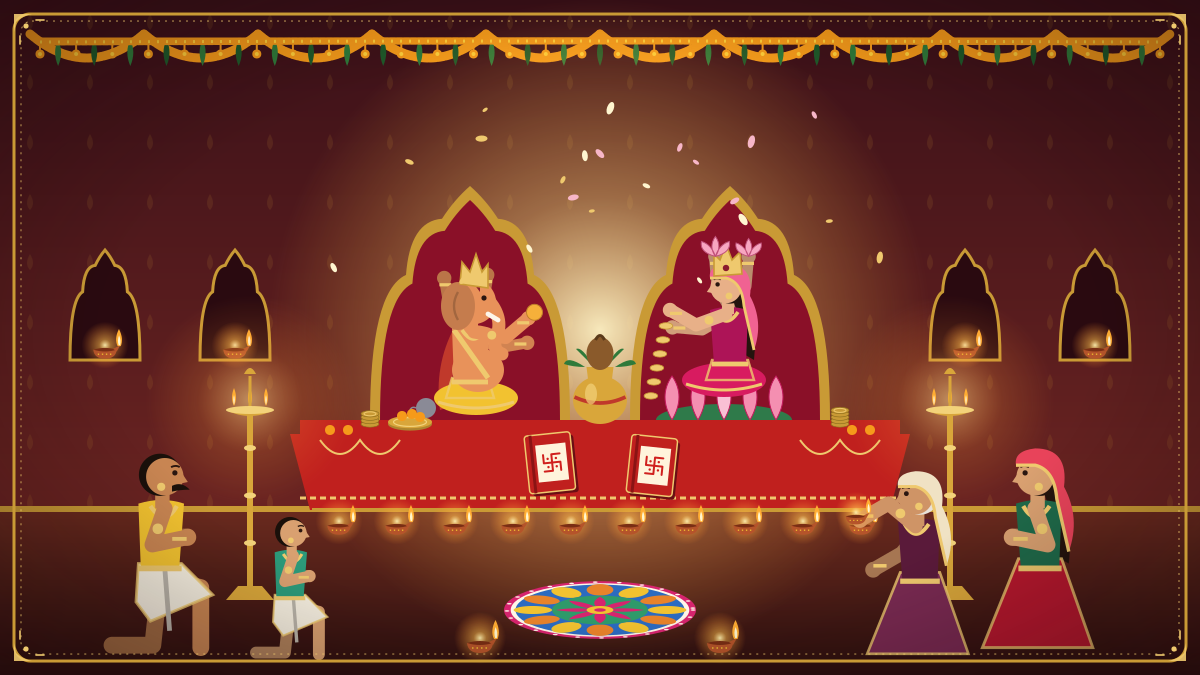
    On the new-moon night of Aaso, the whole house is lit up with diyas. In the evening, at an auspicious time, the family sits together for Lakshmi–Ganesh puja. Lord Ganesh is worshipped first, so that every work begins without obstacles, and then Goddess Lakshmi is welcomed into the home.

    For Gujarati business families this is also the evening of Chopda Pujan. The new account books for the coming year are worshipped, and “Shubh” and “Labh” are written with kumkum. People believe that Lakshmiji visits homes that are clean, bright and full of love, so lamps are kept burning late into the night.

    What families do

    • Lighting diyas at the door, windows and courtyard
    • Lakshmi–Ganesh puja in the evening
    • Chopda Pujan of new account books
    • Sharing sweets with family and neighbours
    • Keeping a lamp burning through the night
  4. Day 4
    Tithi: Kartak sud 1

    Bestu Varas

    Also called: Gujarati New Year, Nutan Varsh, Govardhan Puja, Annakut

    The Gujarati New Year, a morning of blessings, greetings and the Annakut offering.

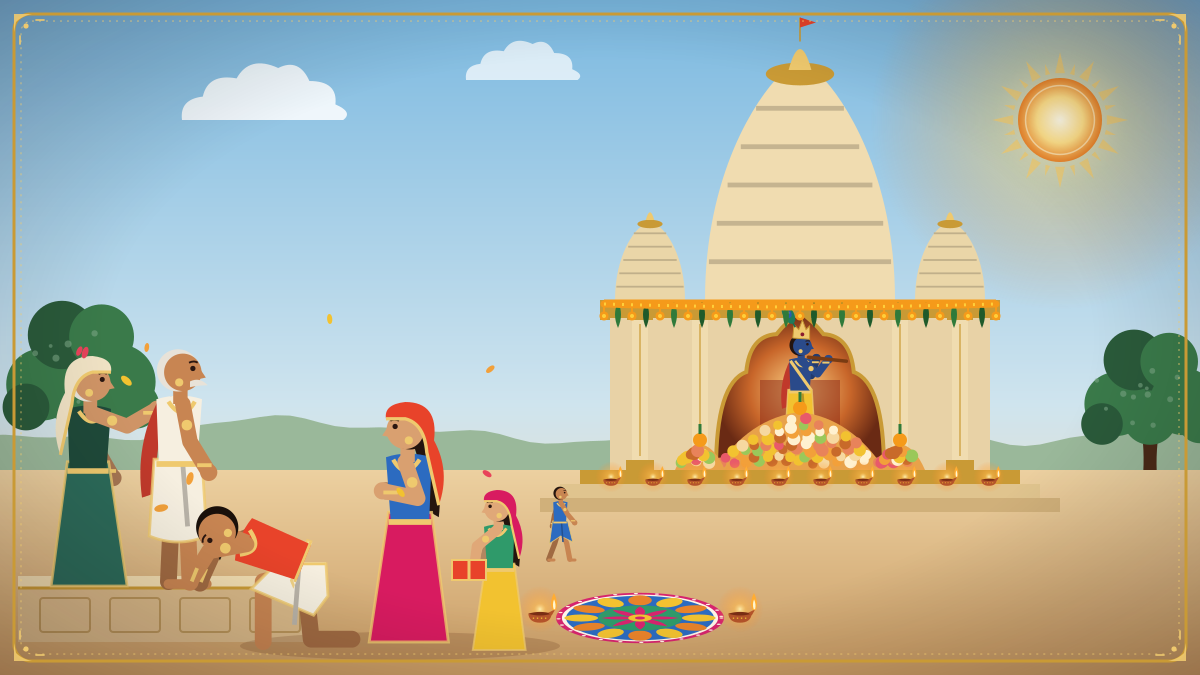
    The day after Diwali is the first day of the new year for Gujaratis. People wear new clothes, visit the temple in the morning, and touch the feet of elders to take their blessings. Everyone greets each other with “Saal Mubarak” or “Nutan Varsh Abhinandan”. It is a day to forget old bitterness and begin again with a clean heart.

    This day also remembers Shri Krishna lifting Govardhan hill to shelter the people of Vraj from heavy rain. In thanks, temples offer Annakut, a “mountain of food” with many dishes, to the Lord. It is also known as Bali Pratipada, in memory of the generous King Bali.

    What families do

    • Morning darshan at the temple
    • Taking the blessings of elders
    • Greeting everyone with “Saal Mubarak”
    • Buying a little salt at dawn, called “sabras”, as a sign of a sweet and full year
    • Annakut darshan at temples
  5. Day 5
    Tithi: Kartak sud 2

    Bhai Bij

    Also called: Bhai Dooj, Yama Dwitiya

    A day of love between brothers and sisters, the last day of the Diwali festival.

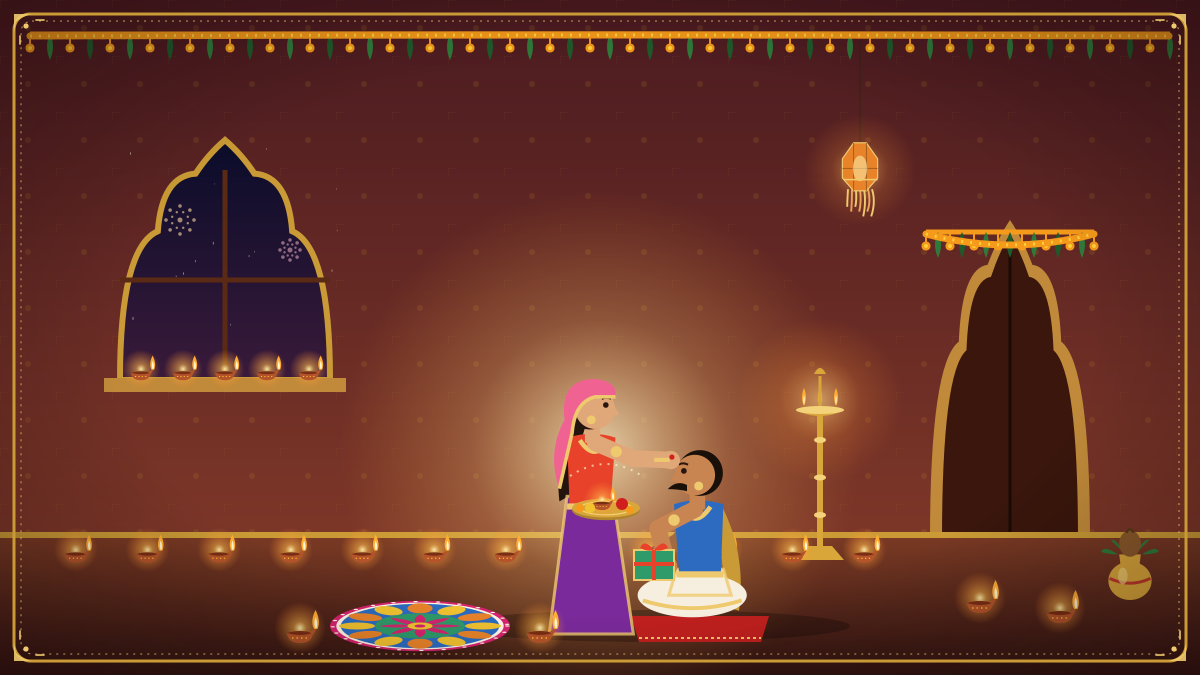
    On Bhai Bij, brothers go to their sisters’ homes. The sister puts a tilak on her brother’s forehead, prays for his long and happy life, and feeds him a meal with love. The brother gives her a gift and promises to always stand by her.

    The story behind it is old and sweet. Yamraj, the lord of death, once went to visit his sister Yamuna. She welcomed him warmly and fed him with great love. Pleased, Yamraj gave a blessing: a brother who visits his sister and eats at her home on this day will be protected. That is why it is also called Yama Dwitiya.

    What families do

    • Brothers visiting their sisters’ homes
    • Tilak and aarti for the brother
    • A meal cooked by the sister
    • Gifts and blessings exchanged

Stories behind Diwali

Shri Rama returns to Ayodhya

Lord Rama spent fourteen years in the forest with Sita Mata and Lakshmanji, keeping the word of his father, King Dasharath. During that time Ravana carried Sita Mata away to Lanka. With the help of Hanumanji and the vanar army, Shri Rama defeated Ravana and brought Sita Mata back.

When the fourteen years were over, Shri Rama returned to Ayodhya. The Ramayana tells how the whole city was decorated with joy to welcome him. By tradition, the people of Ayodhya lit rows of lamps along every street on that night, and we light diyas on Diwali in memory of that happy homecoming.

Shri Krishna and Narakasura

Narakasura was a powerful demon king who troubled the gods and people alike. He had captured thousands of princesses and kept them as prisoners, and even took away the earrings of Aditi, mother of the gods.

The Bhagavata Purana tells how Shri Krishna went to his city with Satyabhama, riding on Garuda, and defeated Narakasura. He freed all the captive women and gave them honour and a safe home. By tradition, this victory is remembered on Kali Chaudas, the day before Diwali, and people light lamps to celebrate the end of fear.

Goddess Lakshmi appears from the ocean

Long ago, the gods and the asuras churned the great ocean of milk to obtain amrit, the nectar of immortality. They used Mount Mandara as the churning rod and the serpent Vasuki as the rope, and Lord Vishnu supported the mountain in the form of a tortoise. Many precious things rose from the ocean, including Lord Dhanvantari with the pot of amrit.

Then Goddess Lakshmi appeared, seated on a lotus, shining with beauty and grace, and she chose Lord Vishnu as her husband. Many traditions remember her appearance at this time of year, and that is why she is lovingly worshipped on Diwali night as the goddess of wealth, good fortune and well-being.

Lord Vamana and King Bali

King Bali was an asura king, but he was generous and kind to his people. As his power grew, he took over the heavens. Lord Vishnu came to him as Vamana, a small Brahmin boy, and asked for just three steps of land. Bali happily agreed.

Vamana then grew enormous. With one step he covered the earth and with the second the skies. For the third step, Bali humbly offered his own head. Pleased by his devotion, the Lord sent him to rule the world of Sutala and blessed him. By tradition, Bali is remembered on the day after Diwali, called Bali Pratipada.

A simple Lakshmi–Ganesh puja at home

You do not need anything grand for Diwali puja. What matters most is a clean home, a calm mind and a heart full of devotion. Here is a simple way many families worship on Diwali evening.

  1. 1Clean the homeClean the house, especially the puja corner and the entrance. Lakshmiji is welcomed into a clean and tidy home.
  2. 2Rangoli and diyasDraw a rangoli at the doorstep, hang a toran of leaves or flowers on the door, and keep clay diyas ready.
  3. 3Prepare the placePlace a low stool with a red or yellow cloth. Keep the images or idols of Lakshmiji and Ganeshji on it, with a kalash of water, a lamp and incense.
  4. 4Take the sankalpSit with the family, take a little water in the right hand and pray in your own words for the well-being of the home. Then let the water go.
  5. 5Worship Ganeshji firstOffer kumkum, rice, flowers and a sweet to Lord Ganesh, and pray that all work goes well without obstacles.
  6. 6Worship LakshmijiOffer kumkum, rice, flowers, sweets and fruit to Goddess Lakshmi. Keep silver coins and the new account books near her and worship them too.
  7. 7AartiLight the lamp and sing the aarti of Lakshmiji and Ganeshji together as a family. Children can ring the bell.
  8. 8Prasad and blessingsShare the prasad with everyone and take the blessings of elders in the home.
  9. 9Lamps through the nightLight diyas all around the house and keep at least one lamp burning safely through the night.

Customs differ from family to family and region to region. Please follow your family tradition, or ask your family priest for the right time and method.

Diwali in Gujarat

In Gujarat, Diwali and the New Year come together, so the festival feels like the end of one chapter and the start of another. Businesses close their old account books and open new ones, families visit relatives, and the streets stay bright for many days.

Here are some of the traditions that make Diwali in Gujarat special, many of which our elders have followed for generations.

Chopda Pujan

On Diwali evening, traders and shopkeepers worship their new account books, writing “Shubh” and “Labh” and drawing a swastik with kumkum.

Saal Mubarak

On New Year’s morning everyone says “Saal Mubarak” or “Nutan Varsh Abhinandan”, and younger family members visit elders to touch their feet and take blessings.

Rangoli and toran

Colourful rangoli is drawn at the doorstep every day, and torans of mango or ashopalav leaves and marigold flowers are hung on the doors.

Sweets and snacks

Homes are filled with the smell of mathiya, chorafali, ghughra, suvali and many sweets, made at home and offered to every guest.

Annakut

On New Year’s day, temples offer the Lord a huge Annakut of many dishes, and devotees come for darshan and prasad.

Labh Pancham

On Kartak sud 5, many shops and businesses reopen after the Diwali holidays with a small puja, praying for a year of honest gain.

Celebrate safely and kindly

Choose clay diyasClay diyas are simple and traditional, and buying them supports the potters who make them by hand.
Be careful with fireKeep lamps away from curtains and clothes, keep water nearby, and never leave small children alone with lamps or fireworks.
Keep the noise lowLoud crackers can frighten elders, babies, sick people and animals. A quiet, glowing Diwali is just as joyful.
Share with othersShare sweets, clothes or a meal with those who have less. Their smiles are the best blessing of the festival.
Keep surroundings cleanAfter the celebrations, help clean the street and your area, just as you cleaned your home for Lakshmiji.

Did you know?

  • The word Deepavali comes from Sanskrit and means “a row of lamps”.
  • Diwali falls on Amavasya, the new-moon night, which is the darkest night of the month.
  • For Gujaratis, Diwali is the last day of the Vikram Samvat year, and the new year begins the next morning.
  • Annakut means “a mountain of food”, and temples often offer the Lord dozens or even hundreds of dishes.

Questions and answers

Why do we light diyas on Diwali?

A diya stands for light, hope and knowledge. Lighting lamps on the darkest night of the month reminds us that goodness always drives away darkness. By tradition, we also remember the lamps lit to welcome Shri Rama home to Ayodhya.

Why is Goddess Lakshmi worshipped on Diwali?

Lakshmiji is the goddess of wealth, good fortune and well-being. Many traditions remember her appearance from the churning of the ocean at this time. We pray to her for a happy home and to use our wealth well, and we worship Ganeshji with her for wisdom and a good start.

Why do Gujaratis start the new year after Diwali?

Gujarat follows the Vikram Samvat calendar, in which the year begins on Kartak sud Ekam, the day after Diwali. So Diwali ends the old year and Bestu Varas begins the new one, with prayers, blessings and fresh account books.

What is Bhai Bij?

Bhai Bij is the last day of the Diwali festival, celebrating the bond of brother and sister. The brother visits his sister, she puts a tilak on his forehead and feeds him, and they exchange gifts and blessings. It comes from the story of Yamraj visiting his sister Yamuna.

What is Labh Pancham?

Labh Pancham falls on Kartak sud 5, the fifth day of the new year. “Labh” means gain or benefit. Many Gujarati traders reopen their shops on this day with a small puja, and Jains observe it as Gyan Pancham, the day of honouring knowledge.

Can we celebrate Diwali without crackers?

Yes, of course. The heart of Diwali is lamps, prayer, family and sharing, not noise. A Diwali with diyas, rangoli, sweets and kindness is complete and is gentler on elders, children, animals and the air we all breathe.

All festivals